
Kenya has urged urgent diplomatic efforts to de-escalate rising tensions in the Gulf region, warning that prolonged conflict could endanger its citizens abroad and disrupt global trade.
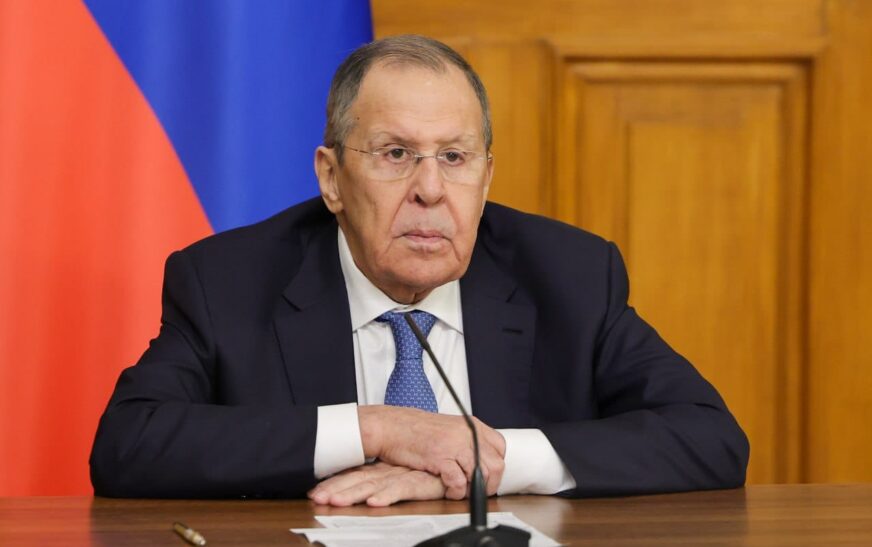
The call came during high-level talks in Moscow on March 16, 2026, between Kenya’s Prime Cabinet Secretary and Cabinet Secretary for Foreign and Diaspora Affairs, Musalia Mudavadi, and Russian Foreign Minister Sergey Lavrov.
“Our position is clear: diplomacy must prevail. Africa, and Kenya in particular, faces a high level of anxiety over this crisis,” CS Mudavadi said. He highlighted that roughly 400,000 Kenyans live across Gulf states, putting them at potential risk if the situation worsens.
He also noted the broader economic stakes: disruptions to maritime routes could stall exports of tea, coffee, and other key commodities, while essential imports such as energy, medicine, and fertilisers may also be affected.
The Moscow visit strengthened commitments to deepen political dialogue and practical cooperation. Areas discussed included trade, energy—including nuclear energy—telecommunications, agriculture, mining, space exploration, and the establishment of a Russia-Kenya Intergovernmental Commission on Economic Cooperation to formalise bilateral projects. Lavrov praised the historic Russia-Kenya friendship, saying, “These traditions help us develop our relations across all areas at this very important stage of global development.”
Both sides underscored the importance of humanitarian, cultural, and educational ties. Over 2,500 Kenyan graduates of Soviet and Russian universities continue to contribute to Kenya’s civic and political landscape.
Media cooperation was also highlighted, with Russian agencies like TASS, RIA Novosti, Sputnik, and RT maintaining a presence in Kenya.
Security issues formed a major part of the discussions. Kenya’s role in African peacekeeping was recognised, with focus on hotspots in the Horn of Africa, the Great Lakes, and the Sahara-Sahel region—including Sudan, South Sudan, the Central African Republic, and Somalia.
Lavrov stressed that African-led solutions, supported by the international community, were essential. Both countries reaffirmed efforts to strengthen Africa’s voice in international affairs, particularly within the UN and its Security Council.
Lavrov said, “Reforming the UN should prioritise the stronger role of the World Majority and the Global South, fully considering the positions of African Union members.”

On the Middle East, Lavrov reiterated Russia’s position on US and Israeli actions against Iran and highlighted the ongoing crisis in Palestine.
“There is no sign of improvement in sight,” he said, urging an immediate halt to hostilities that harm civilians and infrastructure. Regarding the Strait of Hormuz, Lavrov warned that attacks on Iran’s facilities also threaten Gulf countries and pose global risks. CS Mudavadi echoed the concern, noting that protecting citizens abroad and safeguarding trade routes is vital. “If this is prolonged, evacuating that number of people will be extremely challenging,” he said.
Lavrov also raised the global energy implications, citing threats to tankers and pipelines in the Mediterranean and Black Sea, alongside strategic chokepoints such as Bab-el-Mandeb and the Strait of Hormuz. “The consequences are no longer regional—they are global,” he stressed.
Kenya also sought clarity on its citizens involved in Russia’s special military operation in Ukraine.
Lavrov clarified that participation is voluntary, fully legal under Russian law, and managed by the Defence Ministry.
He emphasised that these cases should not overshadow the broader Russia-Kenya relationship, grounded in “a rich history of joint struggle for justice.” Labour migration and employment were also addressed, with Lavrov stressing that no illegal recruitment occurs, and Kenya expressed interest in formal agreements to create stable avenues for its citizens seeking work in Russia.
The talks concluded with a shared commitment to expand cooperation in trade, humanitarian exchanges, culture, science, education, security, and counter-terrorism. For Kenya, the stakes are clear: diplomacy in the Gulf, protection of citizens abroad, freedom of navigation in critical trade routes, and amplifying Africa’s voice in global decision-making remain top priorities.