
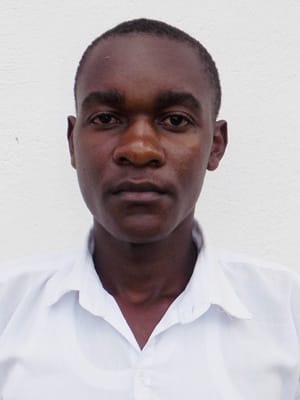
When the 2025 Uganda Certificate of Education (UCE) results were released, thousands of candidates across the country anxiously refreshed their phones or gathered at school noticeboards. But for 19-year-old Bernard Mperirwe, the moment found him in a very different place — bent over in his family’s garden, weeding crops under the morning sun.
At his home in Kazo District, Western Uganda, the day had started like any other. Results or not, there was work to be done. Determined to finish before the midday break, Mperirwe focused on the task at hand, unaware that his academic future was about to take a decisive turn.
It was around 1 p.m. when a classmate called, urging him to check his results.
“With four As and six Bs, I was overjoyed,” he recalled. “I performed very well in my sciences. I am excited to join A-Level, although my family’s financial situation may hinder my progress.”
The third of five children born to Tumugeize Mildred and Balugumira Donozio, Mperirwe understands hardship all too well. His family survives on subsistence farming, often supplementing their income with loans from the village SACCO to cover basic needs and school fees.
As a day scholar at Ndeija PEAS High School in Rwampara District, he faced daily obstacles — from transport costs to limited scholastic materials. To bridge the gap, he regularly worked on nearby farms, juggling books and manual labour in equal measure.
Yet the challenges never dimmed his ambition.

Now, with strong UCE results behind him, Mperirwe hopes to pursue science subjects at A-Level and eventually train as a medical doctor. His dream is not just personal success, but service — establishing an affordable health facility in his home area to support families like his own.
His achievement reflects a broader story of progress within the PEAS school network, which this year registered 3,328 candidates and recorded a remarkable 99.9 per cent pass rate in the 2025 UCE examinations. Ninety-two per cent of learners earned A–C grades in at least five subjects — a significant rise from previous years.
Education leaders attribute the improved performance to strengthened school leadership, continuous teacher training, and effective implementation of the new curriculum, particularly in hard-to-reach communities where access to quality education remains limited.
For Mperirwe, however, the statistics are secondary. What matters most is the door that has opened — a chance to continue his education despite the odds.
His story is a reminder that sometimes, the seeds of success are planted not only in classrooms, but also in gardens where determination quietly takes root.