
Recently, during a Russian children’s summer camp at King Caesar University, I had the chance to experience the Maslenitsa food festival, a vibrant Eastern Slavic celebration held annually from February 16 to 22. The festival marks the farewell to winter and the welcome of spring, blending folk traditions with Orthodox customs as Christians prepare for Lent.
Central to the festivities are the buttery Russian pancakes called blini, symbolizing the sun and the warmth of the approaching season. Alongside the pancakes, an effigy known as “Lady Maslenitsa” or Morena, a straw-stuffed doll dressed in traditional Russian attire, is paraded through communities before being set ablaze in a symbolic farewell to winter’s cold grip.
Maslenitsa is celebrated primarily in Russia, Ukraine, Belarus, and Kazakhstan, but diaspora communities worldwide also host events. Nearby countries in the Balkans, as well as Poland, Germany, Armenia, the Czech Republic, and Slovenia, observe similar festivals with local twists.
The festival at the camp was coordinated by Olga Atubo, a Russian language teacher in Uganda and head of the Rosinka (Russian Speaking Women Association). She introduced participants to a variety of traditional Russian foods that contrasted sharply with the usual Ugandan buffet fare.
Blini were the star of the show. Thin, crepe-like pancakes made from wheat or buckwheat flour, they were served with butter, sour cream, jam, or even caviar. Some of the children jokingly referred to them as “Russian Rolexes,” comparing them to the beloved Ugandan delicacy. On my first bite, the blini were soft yet tender, slightly thicker than a crepe, with a gentle chew and a subtle tang that lingered pleasantly.

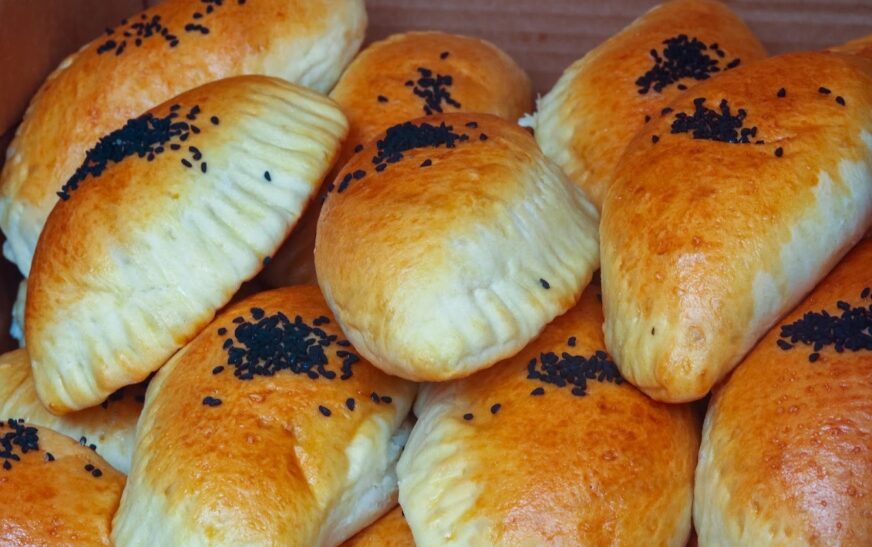
We also sampled pirozhki, traditional Russian yeast-leavened buns or hand pies filled with meat, cabbage, rice, or fruit. Olga likened them to Uganda’s posho, saying they quickly satisfy hunger and are often packed for lunch in Russia, shared among family and friends. Beyond their nutritional value, pirozhki carry deep cultural meaning as symbols of hospitality, communal warmth, and family tradition. “A house is not made beautiful by its corners, but by its pies,” Olga noted, quoting a Russian proverb.
As the festival drew to a close, we left the event contented, full of blini, pirozhki, and the warmth of a centuries-old tradition transplanted to Uganda. Maslenitsa is more than food; it is a celebration of culture, community, and the simple joys of sharing a meal with others.