
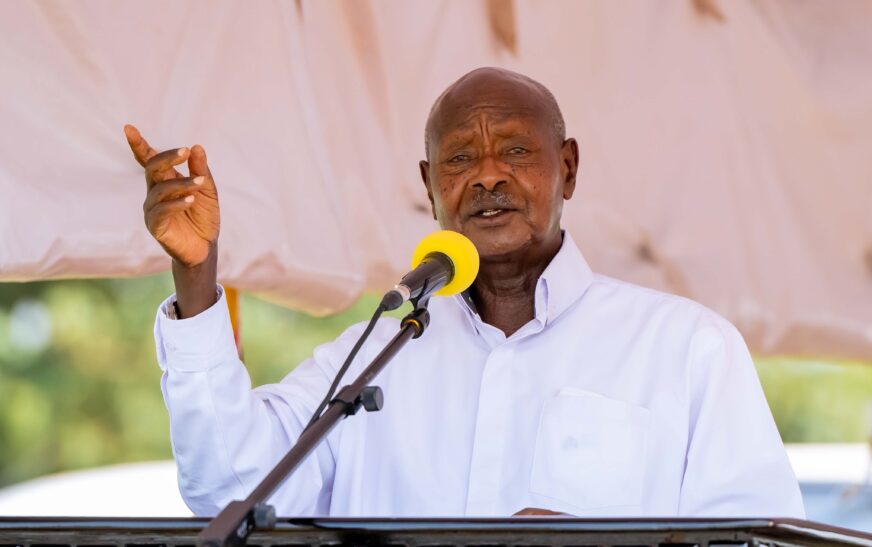
President Museveni has rejected two key tax amendment bills, sending them back to Parliament with a stern warning that some of the proposed measures could distort competition, fuel tax avoidance and hurt the economy.
Museveni declined to assent to the Income Tax (Amendment) Bill, 2026 and the Excise Duty (Amendment) Bill, 2026, effectively halting their implementation just weeks before the start of the new financial year.
The two bills had earlier been passed by the 11th Parliament ahead of the June budget reading, forming part of government’s broader revenue mobilisation strategy.
However, Deputy Speaker Thomas Tayebwa, revealed that Museveni had raised strong objections to specific clauses, particularly those relating to taxation of betting winnings and the proposed hike in excise duty on single-use plastics.
At the centre of the dispute is Clause 11 of the Income Tax (Amendment) Bill, which sought to introduce a withholding tax on betting and gaming winnings. The clause, however, exempted land-based casinos licensed under the Lotteries and Gaming Act, 2016.
Museveni faulted this exemption, arguing that it creates an uneven playing field in the gaming industry and opens loopholes for tax avoidance.
“The exemption creates opportunities for tax avoidance and revenue leakage,” the President noted, warning that operators could restructure transactions to exploit the disparity.
He questioned the logic behind taxing similar businesses differently, insisting that there is no justification for granting preferential treatment to one category of gaming operators over another.
The President also pushed back against Parliament’s decision to sharply increase excise duty on single-use plastics.
Lawmakers had approved a steep jump from 2.5 percent or $70 (about Shs 259,000) per tonne to 25 percent or $1,500 (about Shs 5.5 million) per tonne, whichever is higher, in a bid to curb plastic pollution.
But Museveni argued that the increment is too drastic and risks hurting Uganda’s fragile manufacturing sector.
He warned that the proposed rates would significantly raise production costs, potentially affecting investment, output and jobs in the plastics industry.

“The proposed increase is substantial and is likely to impose significant cost pressures on manufacturers,” he cautioned.
Museveni further noted that Uganda is not yet ready to transition away from plastic packaging, citing limited availability of affordable and viable alternatives.
“Viable alternatives to plastic packaging are not yet readily available in Uganda,” he said, recommending more studies before implementing such a policy shift.
Meanwhile, the return of the bills has sparked debate in Parliament over whether the current House can reconsider legislation passed by the previous Parliament.
Bbale County MP Charles Tebandeke argued that the dissolution of the 11th Parliament may have rendered the process obsolete, suggesting that the bills should be reintroduced afresh.
But Tayebwa dismissed concerns over procedural timelines, maintaining that the President acted within the constitutional requirement of returning bills within 30 days.
“The Constitution is very clear 30 days from the date the bill is presented to him,” Tayebwa said.
The development sets the stage for fresh scrutiny of the contested tax measures, as Parliament weighs the President’s concerns against its revenue and environmental policy ambitions.