
Uganda’s Deputy Speaker of Parliament and President of the Organisation of African, Caribbean and Pacific States (OACPS) Parliamentary Assembly, Thomas Tayebwa, has urged member states to make value addition, industrialisation and trade reforms the centre of their development agenda.
Tayebwa said the continued export of raw minerals and agricultural commodities has denied developing countries the opportunity to create jobs, grow industries and retain more wealth from their natural resources.
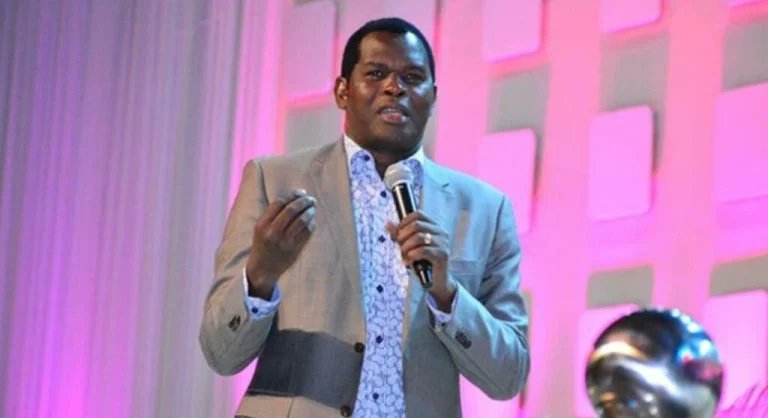
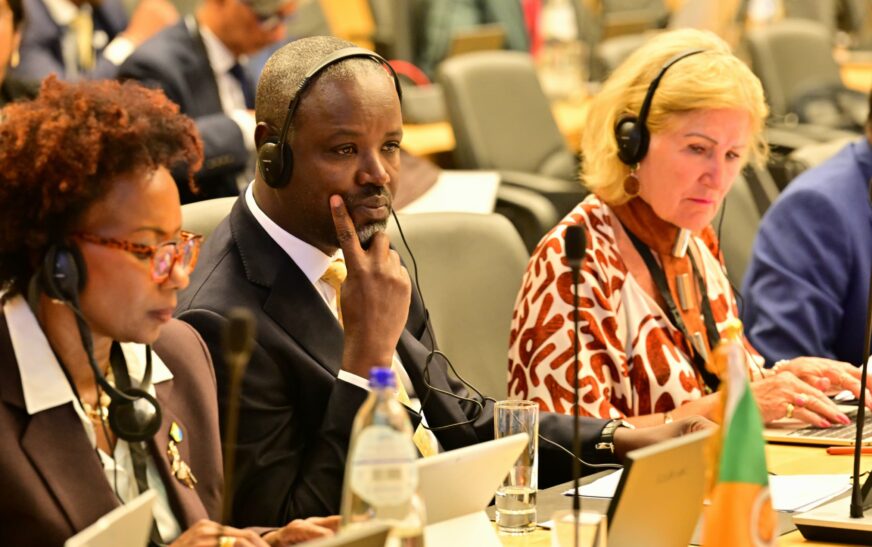
He made the remarks while addressing the 121st OACPS Council of Ministers meeting at Egmont Palace in Brussels, Belgium, where he challenged the 79-member bloc to focus on economic issues that directly improve the livelihoods of citizens.
“The relevance of OACPS will increasingly be judged by its ability to champion policies that create jobs, strengthen industries and enable member states to derive greater value from their resources,” Tayebwa said.
He identified the export of unprocessed minerals as one of the biggest challenges facing Africa and other developing regions, arguing that countries continue to lose billions of dollars by selling raw materials and importing finished products.
Tayebwa said the concern has been repeatedly raised by President Yoweri Museveni, who has argued that Africa cannot achieve meaningful economic transformation while it remains dependent on exporting raw materials.
“At the level of the Council of Ministers, we need to start tackling the hard questions relevant to our people. One of them is the issue of Africa and the developing world exporting unprocessed minerals as raw materials,” Tayebwa said.
He noted that Africa is endowed with vast mineral resources estimated at US$29.5 trillion, accounting for about 20 per cent of the world’s mineral wealth, but continues to capture only a small share of the value generated from these resources.
According to Tayebwa, most African minerals leave the continent as ores and concentrates, with countries elsewhere benefiting from processing, manufacturing and the higher-value stages of the supply chain.
“This means Africa is not only exporting minerals, but also exporting employment opportunities and industrial growth,” he said.
He cited the Democratic Republic of Congo’s cobalt sector as an example of how investment in domestic processing can increase revenues and transform economies.

Tayebwa urged OACPS member states to adopt deliberate policies that promote mineral beneficiation, manufacturing and industrial development to ensure communities benefit from their natural resources.
He also used the coffee value chain to illustrate the economic losses caused by exporting raw commodities.
Tayebwa referenced President Museveni’s example that although the global coffee market is worth about US$465 billion, producing countries receive only a fraction of that value, with Africa taking a small share despite being a major producer.
“I remember my President gave us some feedback… the coffee market was worth around US$465 billion and out of that only US$25 billion was going to coffee-producing countries, with Africa taking only three per cent,” he said.
He warned that unless OACPS redefines its priorities and focuses on issues affecting ordinary citizens, the organisation risks losing relevance.
“If we don’t tackle such issues, then the organisation will not be relevant to our people. We should look at topics that speak to the hearts of our people and the transformation of our people. That is the only way the organisation will be relevant,” Tayebwa said.
The OACPS brings together countries from Africa, the Caribbean and the Pacific to promote cooperation in trade, sustainable development and political dialogue.
Tayebwa said the organisation should use its collective voice to promote policies that support value addition, regional integration and industrialisation, allowing member states to create jobs, increase revenues and accelerate economic transformation.