
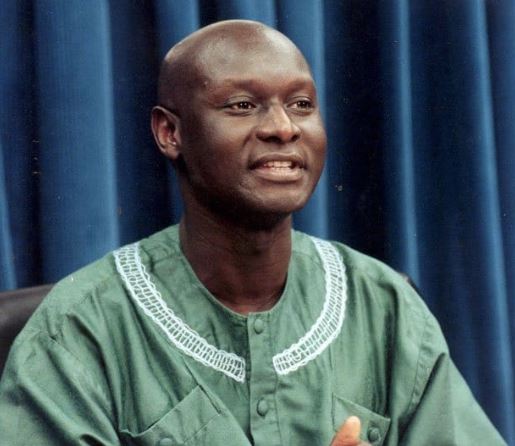
President Yoweri Museveni has nominated veteran diplomat Olara Otunnu for the position of secretary-general of the United Nations.
The nomination was formally communicated to member states by Annalena Baerbock and Zenon Ngay Mukongo, who confirmed Uganda’s submission in a joint letter.
“We have the honour to jointly inform Member States that the Republic of Uganda has presented the nomination of Olara Otunnu as candidate for the position of Secretary-General,” the two leaders said in their communication, referencing the agreed UN selection process.
They added that the nomination, dated July 24, 2026, had been formally transmitted by Uganda’s permanent mission to the United Nations.
Otunnu brings decades of diplomatic and international experience, having served as Uganda’s permanent representative to the United Nations between 1980 and 1985 under President Milton Obote.
During that period, he held several high-level roles, including president of the UN Security Council in 1981, where he presided over the election of then secretary-general Javier Pérez de Cuéllar.
He is also credited with introducing the “straw polling” method commonly referred to as the Otunnu Formula still used in the selection of UN secretaries-general.
From 1982 to 1983, Otunnu served as vice president of the UN General Assembly and chaired the Contact Group on Global Negotiations. He later chaired the UN Commission on Human Rights.

Between 1985 and 1986, Otunnu served as Uganda’s minister of foreign affairs, where he played a role in the Nairobi Agreement.
He later became president of the International Peace Institute in 1990, a position he held until 1998, expanding the organisation’s global profile.
In 1997, he was appointed by then UN secretary-general Kofi Annan as under-secretary-general and special representative for children in armed conflict, a role he assumed in September of that year.
Otunnu’s nomination places Uganda among countries seeking to influence the leadership of the United Nations, with the selection process expected to involve consultations and possible voting within both the Security Council and General Assembly.
If successful, he would become the first Ugandan to lead the global body, at a time when multilateral institutions face increasing pressure to respond to complex global challenges.