
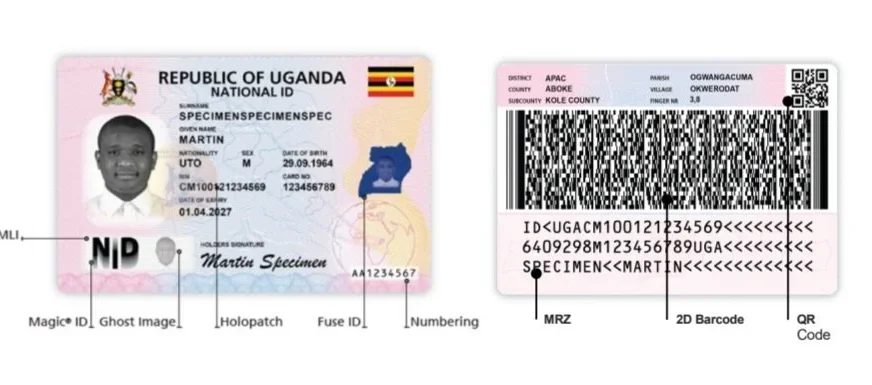
The National Identification and Registration Authority (NIRA) is holding more than 5.4 million national identity cards that have not been collected, Parliament has learnt.
The massive backlog has been blamed largely on inadequate staffing after the expiry of a temporary workforce that was deployed during the mass enrolment and renewal exercise.
NIRA Executive Director Rosemary Kisembo told Parliament’s Committee on Commissions, Statutory Authorities and State Enterprises (COSASE) that the authority does not have enough staff to cope with its expanding workload.
“The authority’s existing workforce is insufficient for the scale of its statutory responsibilities,” Kisembo said.
She said NIRA currently has an approved establishment of 571 positions, but only 418 are filled, including just 201 staff who directly serve clients.
Kisembo said the authority has printed approximately 15.4 million new national identity cards, but only about 10 million have been issued, leaving roughly 5.4 million cards in NIRA’s custody.
“The workload vis-à-vis the staffing structure does not match,” she told MPs.
The authority is now asking government to increase its approved staff establishment from 571 to 998 positions and provide at least 2,700 temporary workers for 18 months to address the backlog and other registration demands.
The temporary workers would help NIRA complete the renewal of approximately six million people, register about 10.9 million people who are not yet on the national register, process changes of particulars and support birth and death registration.
Kisembo said NIRA would require approximately nine months to distribute the outstanding identity cards if enough personnel were dedicated exclusively to card issuance.

The authority previously relied on temporary workers during the mass enrolment and renewal exercise that began on May 27, 2025.
NIRA initially deployed about 9,800 temporary workers, although the number fluctuated between roughly 9,800 and 12,000 because of high staff attrition.
However, Kisembo warned that relying on temporary workers would only provide short term relief unless government addresses the authority’s permanent staffing gaps.
“At the end of three months, we shall go back to the point of 418 staff, of which 201 are client-facing,” she said.
Under the Registration of Persons Act, 2015, as amended in 2024, NIRA is responsible for maintaining the National Identification Register and registering citizens, lawful non-citizens, births and deaths.
The 2024 amendments also transferred civil registration functions, including marriage registration, to NIRA as part of government’s rationalisation of public agencies.
The staffing crisis comes as NIRA faces an expanding mandate and a growing demand for national identity services, raising concerns over delays in the issuance and collection of identity cards.