
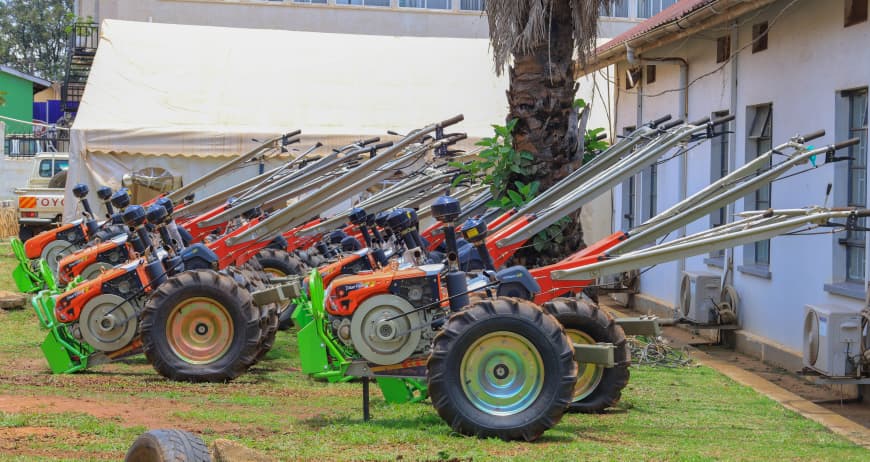
The Ministry of Agriculture, Animal Industry and Fisheries (MAAIF) has commissioned and handed over 150 single-axle tractors and implements to farmer groups and institutions across the country as it seeks to expand access to agricultural mechanisation.
The equipment, commonly known as power tillers or walk-behind tractors, is targeting farmers, particularly smallholders who still depend largely on hand hoes or struggle to access high-capacity tractors.
However, MAAIF says agricultural mechanisation equipment currently covers only about four per cent of national demand, highlighting the scale of the machinery gap facing farmers.
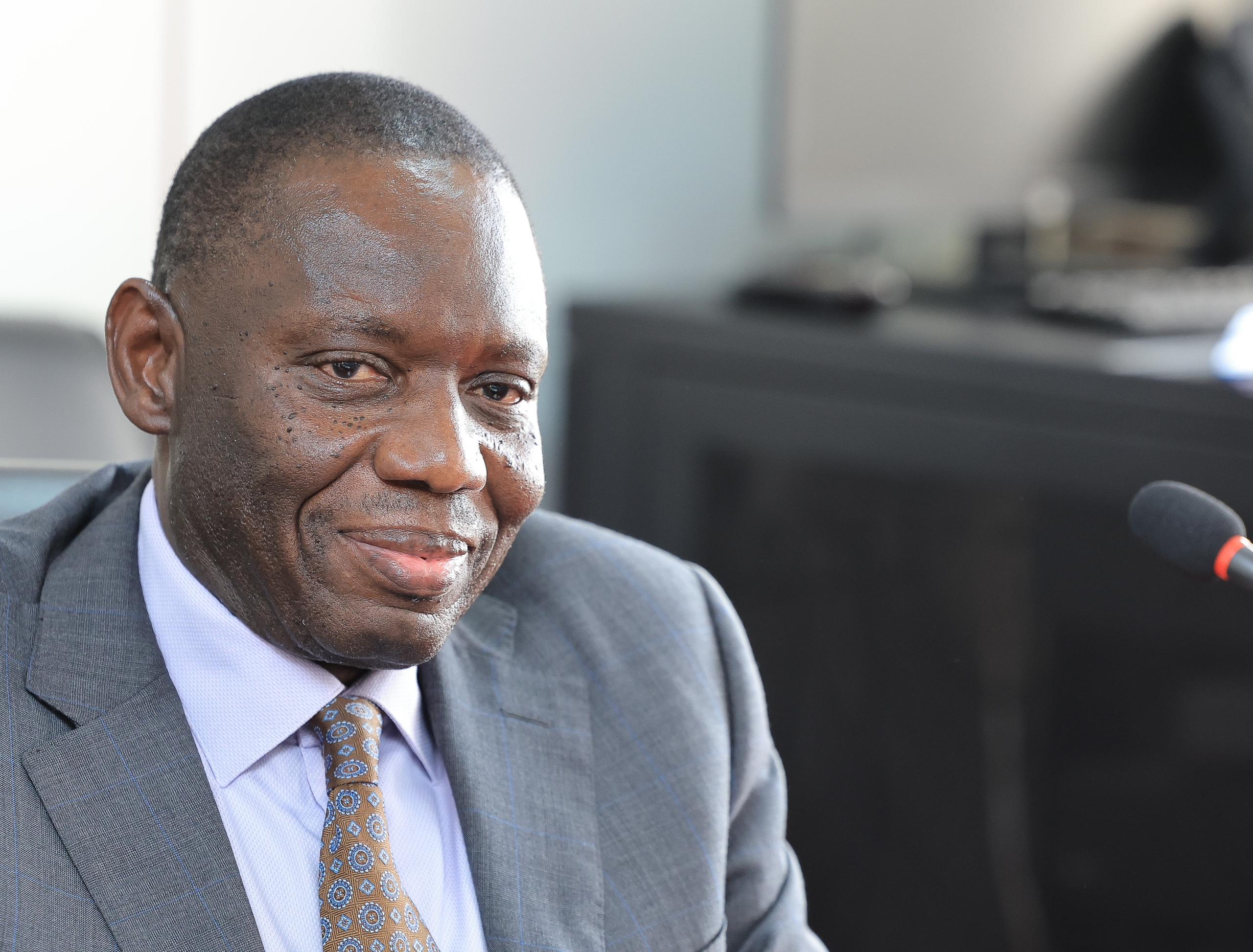
State Minister for Agriculture Desire Muhooza said the limited coverage means more investment is needed to enable farmers to access appropriate and affordable machinery.
“Today marks another milestone as we launch this additional equipment and hand over tractors and implements to selected farmer groups and institutions across the country, particularly smallholder farmers who, until now, have relied on the hand hoe or had to wait for access to high-capacity tractors,” Muhooza said.
She was speaking on Saturday at MAAIF headquarters in Wandegeya, Kampala, during the commissioning and handover of the equipment.
Muhooza said MAAIF plans to procure additional machinery to expand coverage, but this will require increased budgetary allocations.
“The Ministry has plans to procure additional units to expand coverage and will accordingly require increased budgetary allocation to meet this demand,” she said.
The latest equipment adds to MAAIF’s previous investments in agricultural mechanisation.
Muhooza said MAAIF has previously procured and distributed 650 high-capacity tractors with matching implements and 1,000 single-axle tractors to farmers across all 146 district local governments.
She said the interventions have contributed to increasing the acreage under cultivation.
During the 2025/2026 financial year, MAAIF allocated Shs57.2 billion for the procurement of 200 additional single-axle tractors with accessories, while other mechanisation units remain under procurement.
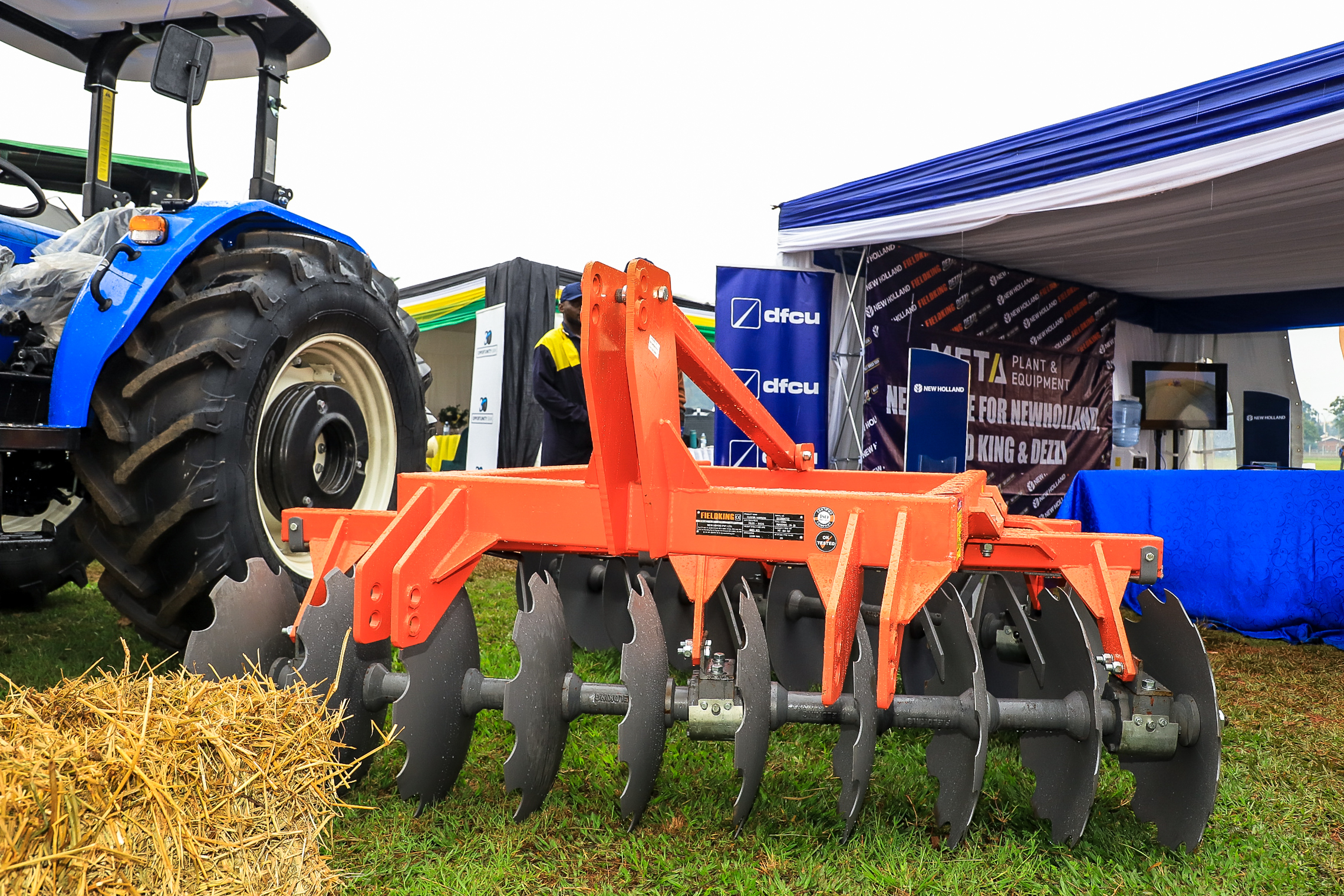
The equipment is intended to support activities including bush clearing, land opening, ploughing, transportation and value addition.

Beneficiaries will access the machinery through renewable three-year memoranda of understanding with MAAIF, subject to successful utilisation.
MAAIF will provide routine maintenance support for up to 1,000 hours of use, while equipment operators will receive training before deployment.
According to Muhooza, operator training will begin on September 28 in the respective districts, followed by regular monitoring of equipment use, utilisation and maintenance.
She said the monitoring is intended to reduce frequent breakdowns and extend the operational life of the machinery.
Beyond distributing equipment, MAAIF is also developing infrastructure to support the growing mechanisation programme.
The ministry has started rehabilitating and equipping the Namalere National Agricultural Mechanisation Referral Centre, which will serve as a centre of excellence for training, skilling, upgrading and accreditation of machinery operators, mechanics and technicians.
MAAIF also plans to construct 20 Zonal Agricultural Mechanisation Centres across the country, beginning with Mbale, Dokolo, Iganga, Nabilatuk, Soroti, Mpigi, Kiryandongo and Kiruhura.
The centres are intended to widen farmers’ access to mechanisation and farm machinery services.
Muhooza said expanding mechanisation is central to MAAIF’s effort to move farmers from subsistence production to commercial agriculture.
She said the intervention is also intended to reduce dependence on rudimentary hand tools while promoting a more competitive, profitable and sustainable agricultural sector.