
dfcu Bank has called for stronger financing partnerships, improved business readiness and increased access to long-term capital to accelerate Uganda’s industrialisation agenda.
Kate Kiiza, dfcu Bank’s Executive Director and Chief Corporate and Institutional Banking Officer, said financial institutions must go beyond traditional lending and develop innovative financing solutions that enable businesses to expand, add value to local products and compete sustainably.
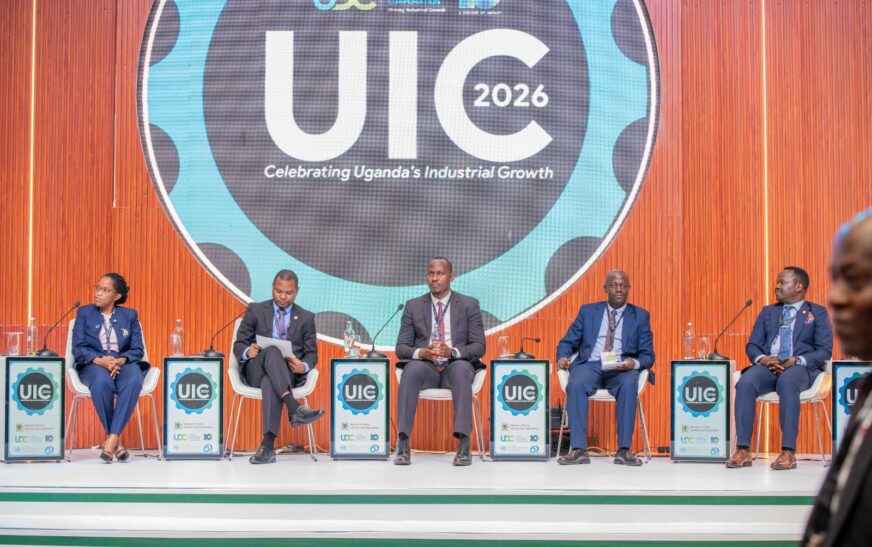
She made the remarks during a panel discussion at the Uganda Industrialisation Conference 2026, held at Speke Resort Munyonyo and Convention Centre on Thursday, November 19, as part of celebrations marking the 10th anniversary of the Uganda Development Corporation (UDC).
The discussion, held under the theme “Financing Africa’s Industrialisation Agenda”, brought together representatives from commercial banking, development finance institutions, pension fund management and capital markets to examine how Uganda can mobilise the long-term financing required to support industrial growth.
Kiiza said access to financing alone was not enough to guarantee the success of industrial projects, arguing that businesses must demonstrate commercial viability, identify and manage operational risks, and have competent teams capable of implementing their investment plans.
She identified project feasibility, effective risk identification and mitigation, and the technical capacity and experience of project teams as key considerations in financing decisions.
“Unlocking industrial financing begins with preparing businesses to attract and effectively utilise investment,” she said.
Kiiza also highlighted the importance of partnerships between commercial banks, government institutions and development finance organisations in financing projects that require substantial capital.

She cited dfcu Bank’s collaboration with the Uganda Development Corporation and other development finance institutions as part of efforts to connect businesses to appropriate financing arrangements.
Agriculture, she said, remains central to Uganda’s industrialisation ambitions, particularly through agro-processing, value addition and the development of stronger local supply chains.
Through initiatives involving the dfcu Foundation, the bank supports agricultural enterprises at different stages of growth, including primary production, business development, certification and preparation for value addition and processing.
Kiiza also pointed to the bank’s support for women entrepreneurs through targeted financial solutions and business development programmes, including initiatives such as GROW and green financing.
The panel further examined