
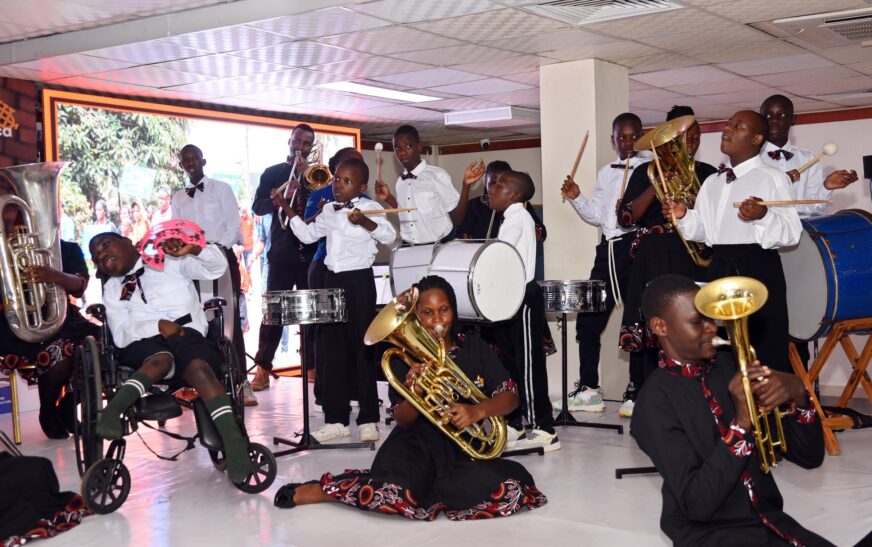
The hall pulsed with anticipation as the Brass for Africa Disability Inclusion Gala began. Then—like a spark catching fire—the children living with disabilities lit up the stage, their instruments breathing life into the room. Every drumbeat synced with every note, weaving a symphony so powerful that even the air seemed to vibrate.
For many in the audience, the event was more than a performance; it was a promise fulfilled—an inclusive space where children with disabilities could shine without restraint. Songs like How Are My Friends? by Johnny Drille and When the Saints Go Marching In by Louis Armstrong floated through the room, but it was the performers’ joy that truly stole the show. Their smiles were loud, their confidence louder, proof that music had given them a renewed sense of purpose.
As cheers rose and hands clapped in rhythm, the audience witnessed something deeper than entertainment. They saw how one act of inclusion—one stage, one opportunity—could alter the direction of a child’s life.
Speaking at the sidelines of the gala, Ronald Kabuye, the Country Manager of Brass for Africa, explained that disability inclusion has been central to the organization’s mission since it launched in Uganda in 2009. Over the last 16 years, he said, music has become their vehicle for uncovering the brilliance, skill, and potential hidden in children with disabilities.
Kabuye described the annual gala as a celebration of possibility—a reminder of what children can achieve when given equal opportunity and support. As the world marked International Disability Day on December 3, he emphasized that Brass for Africa remains committed to amplifying the capabilities of children with special needs.
He urged the public to look beyond stereotypes and recognize the value these children bring to society. And he called for increased attendance at such events, insisting that seeing the talent firsthand was the surest way to change minds.
Kabuye also appealed for stronger government support, including tax exemptions on imported equipment used by the organization. Empowering groups that champion disability inclusion, he noted, leads to greater visibility, opportunity, and dignity for young people who are too often overlooked.
Andrew Agari, the CEO of Brass for Africa, pushed the conversation further, stressing that Uganda must shift from policy talk to meaningful action.
“Uganda has strong laws and progressive policies—some inspired by countries like the UK—but the real challenge is implementation,” he said.
He pointed out that although disability inclusion is a constitutional right, funding remains shockingly low. Budget allocations for disability-related programs—including inclusive education—remain below 1%, a figure he described as “unacceptably low.”
Agari urged leaders, legislators, and private entities to stop speaking in promises and start acting on the policies already in place. Change, he said, happens only when talk turns into commitment.
He also highlighted the data gap: while the national census reports that 5.13% of Ugandans live with disabilities, detailed, accurate information remains scarce. Without knowing who people with disabilities are, where they are, or what specific challenges they face, planning becomes guesswork. Investment in proper data collection, documentation, and analysis, he stressed, is the foundation for any real progress.

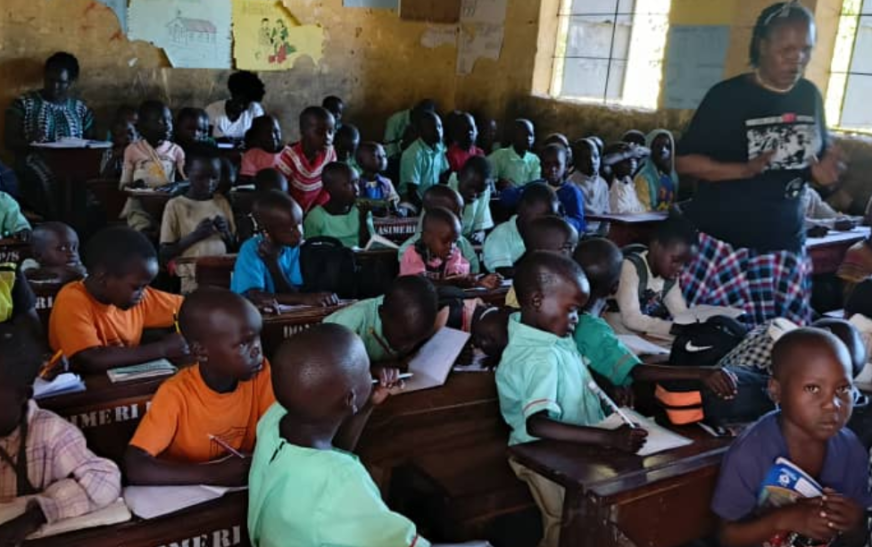
Agari further noted that although Uganda has inclusive schools, many lack trained teachers and specialized support. With only Kyambogo University offering community-based rehabilitation through its Faculty of Special Needs and Rehabilitation, he called for greater investment in training professionals and reinforcing inclusion in schools across the country.
Florence Nakachwa, a music and life-skills teacher, appealed directly to parents. Acceptance, she said, begins at home.
“Every child—disabled or not—has a unique gift. With love, patience, and the right support, that gift can bloom,” she shared. She encouraged parents to seek medical care, choose schools that understand special needs, and resist the temptation to hide or isolate their children.
Kamukama Tadeo, a music and inclusive teacher at Brass for Africa who also lives with a disability, echoed her message.
“Disability is not a curse. It is not a family disgrace,” he said firmly.
He urged parents to bring their children into society instead of shielding them in shame. Exposure, he explained, is what allows their abilities to emerge. Reflecting on performances by children with autism, hearing impairments, and other disabilities, he said their teamwork and talent proved a simple truth: disability is not inability.
Tadeo called on communities to abandon negative attitudes and offer patience and guidance. Some skills—like using cutlery—take longer for certain children, he noted, but are entirely achievable with the right support.
He also challenged government institutions and building planners to prioritize accessibility, pointing out the contradiction of preaching inclusion while maintaining steep staircases and buildings inaccessible to wheelchair users.
In his closing remarks, Tadeo offered a vision: if communities, organizations, and government join forces, Uganda can build a society where persons with disabilities are truly seen, supported, and empowered.