
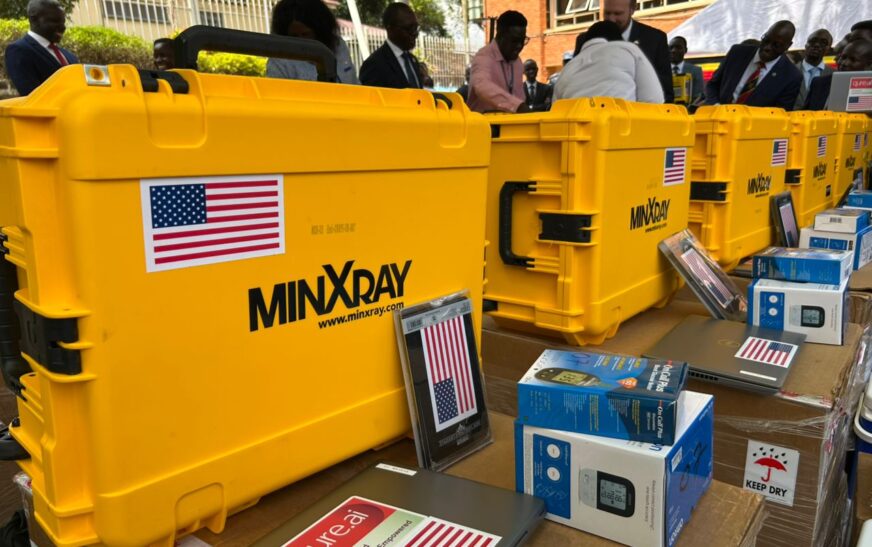
The United States Embassy in Uganda has commissioned 14 ultra-portable, AI-powered MinXray units to strengthen community-based tuberculosis (TB) screening across the country.
The units are aimed at ensuring more Ugandans are diagnosed quickly and accurately, enabling timely access to treatment and care. Each system is accompanied by a three-year extended warranty and software licenses, ensuring sustained functionality and long-term impact. The initiative highlights the application of American innovation in strengthening Uganda’s health sector.
Tuberculosis remains a major public health challenge in Uganda, with an estimated 250 people falling ill and about 30 deaths recorded daily from a disease that is both preventable and curable.
Despite the burden, Uganda has made notable progress in TB control through innovative approaches such as the Active Case Finding (ACF) toolkit and the Community Awareness, Screening, Testing Plus (CAST Plus) campaigns. These efforts have been strengthened through close collaboration with the United States government.
With the addition of the new MinXray units, Uganda’s total number of mobile digital X-ray and computer-aided diagnosis platforms has risen to 95, extending coverage to more than half of all districts and enabling TB screening for up to 140,000 additional people annually. This milestone reflects strong American–Ugandan leadership in reducing TB incidence and improving lung health nationwide.
Speaking at the commissioning ceremony, U.S. Ambassador to Uganda William Popp reaffirmed America’s commitment to supporting Uganda’s health sector.
“For the next five years, under our new health cooperation MOU, the United States will continue to support Uganda’s efforts to build a strong, unified health workforce and resilient health systems to strengthen disease surveillance, expand primary care, and improve community-level readiness,” Ambassador Popp said.

He noted that this strategic approach will ensure Uganda’s health systems are integrated, resilient, and capable of addressing multiple health challenges, including TB, HIV, malaria, and emerging infectious diseases.
Ambassador Popp added that the U.S. government looks forward to working closely with the Ministry of Health and the National Tuberculosis and Leprosy Program (NTLP) to ensure effective use of the equipment, including training health workers to fully utilize the new technologies for the benefit of all Ugandans.
The commissioning comes at a historic moment, following the signing of a five-year Memorandum of Understanding (MOU) on Health Cooperation between Uganda and the United States, valued at nearly US$2.3 billion (Shs 8.1 trillion). The agreement underscores a shared commitment to life-saving services, resilient health systems, and the responsible use of American taxpayer resources.
Earlier this year, the U.S. government also provided 48 additional digital X-ray units to the Ministry of Health, bringing the total to 65 machines. These have already screened more than 150,000 people and identified over 4,600 TB cases, enabling timely treatment and saving lives.