
The Criminal Investigations Directorate (CID) and the State House Anti-Corruption Unit have launched investigations into allegations of abuse of office, embezzlement of funds, and false accounting involving officials of Uganda Airlines. The investigations relate to several financial transactions carried out by the national carrier.
According to a leaked letter addressed to Uganda Airlines Chief Executive Officer, Jennifer Bamuturaki, the Deputy Director of CID in charge of Economic Fraud and Anti-Corruption, Lumala Fred, confirmed that the two government agencies are jointly probing the airline’s financial conduct. In the letter, Lumala requested certified copies of the approved National Airline Business and Implementation Plan, the budget for the 2024/2025 financial year, and Contracts Committee minutes that sanctioned the purchase of Boeing aircraft.
Uganda Airlines has also been directed to submit procurement files relating to Mihmet Flight Support Services, Associated Energy Group, Nyanzi Tours and Travel, and Aircraft Leasing Services (ALS) Limited. Investigators further requested procurement records for the construction of Uganda Airlines offices in Entebbe, as well as the airline’s internal audit report for the 2024/2025 financial year.
Additionally, the airline is required to provide revenue accounting and ticketing records, banking and cash receipt statements, expenditure and supplier transactions for fuel, and a list of companies that supported the launch of the Uganda Airlines London route during the same financial year.
The investigations come at a time when Uganda Airlines has faced growing public criticism following operational disruptions at Entebbe International Airport. Passengers reported missed flights, repeated rescheduling, and limited assistance from airline staff. Many frustrated travellers shared images and accounts on social media showing passengers stranded at check-in counters with little or no communication from the airline.
In a statement issued on December 13, Uganda Airlines acknowledged the disruptions and said efforts were underway to restore normal flight schedules. However, the reassurance did little to calm public anger online. Passengers recounted multiple cancellations, including a midweek flight to Zanzibar that was postponed to the following day, while a return flight was delayed late into the night before being postponed again.
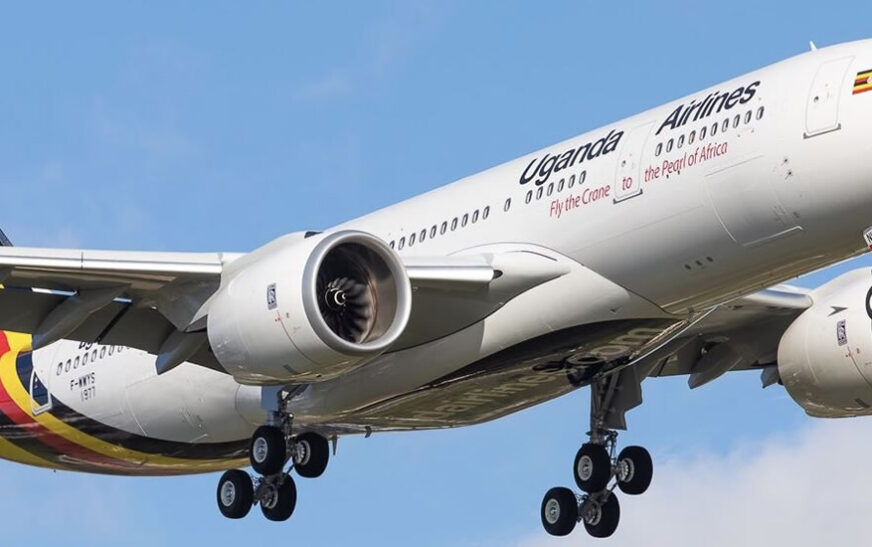
Sources within the airline indicated that capacity constraints linked to an Airbus A330-800neo contributed to the disruptions. Uganda Airlines later confirmed that technical challenges affecting parts of its fleet were responsible for the delays and cancellations, adding that corrective measures were being implemented.

Chief Executive Officer Jennifer Bamuturaki apologised to affected passengers, stating that the airline was working to stabilise operations. She explained that technical issues involving even a small number of aircraft can significantly disrupt operations for airlines with limited fleets. “With a fleet of seven aircraft, grounding one or two for maintenance or technical checks inevitably affects the entire network,” she said.
Bamuturaki dismissed claims circulating online that the airline’s long-haul aircraft had been stranded in destinations such as London and Lagos. She insisted that international services remain operational and cited the recent arrival of a flight from London as proof that long-haul operations were continuing. She also pointed to industry-wide challenges, including Notices to Airmen (NOTAMs) that restrict airport slot availability and reduce scheduling flexibility when unexpected disruptions occur.
As passenger dissatisfaction continues to grow, the situation has sparked wider public debate about Uganda Airlines’ overall performance. Investigative journalist Andrew Mwenda described the developments as a sharp operational decline, alleging mismanagement and calling for either a leadership overhaul or the closure of the airline, which he characterised as an unsustainable burden on public finances.
Aviation analysts, however, urge caution, noting that airlines with small fleets are particularly vulnerable to technical setbacks because they lack spare aircraft to cushion disruptions. They add that delays in aircraft deliveries and global supply-chain challenges have further complicated operations for newer carriers.
Despite the turbulence, Uganda Airlines maintains that restoring operational stability and rebuilding passenger confidence are its immediate priorities, as aviation regulators prepare to scrutinise both the operational disruptions and the airline’s financial management going forward.