

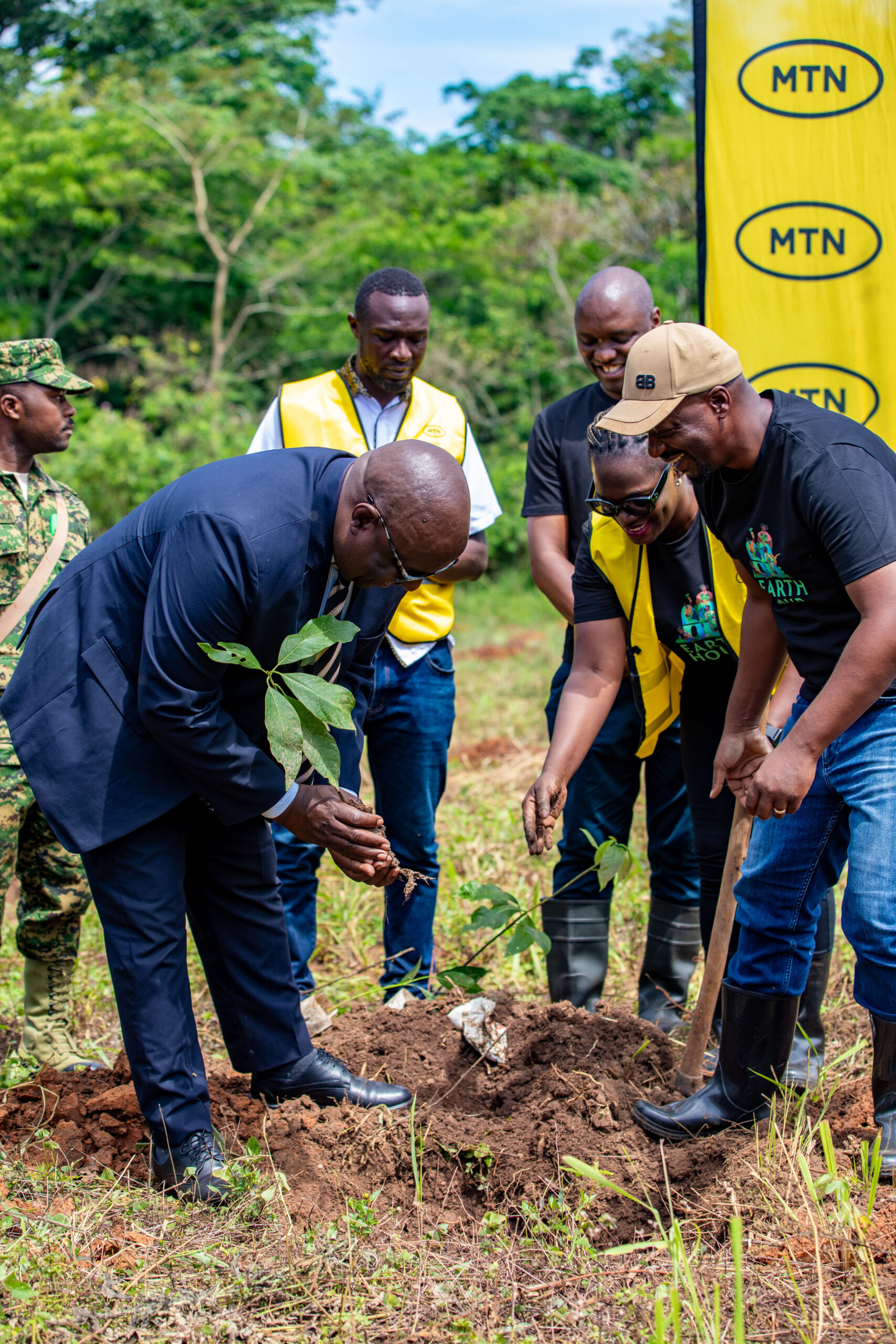
MTN Uganda, in collaboration with the World Wide Fund for Nature (WWF) and the Bunyoro Kingdom, has unveiled a 12.4-acre sustainable woodlot in Kikuube District, merging youth skills development with environmental conservation in one of Uganda’s booming oil regions.
The initiative, launched at St. Joseph Vocational Training Institute during Earth Hour events, aims to restore degraded land while embedding climate-conscious practices into vocational training programs.
“When WWF Uganda approached us, we saw an opportunity to create something lasting,” said Ibrahim Senyonga, General Manager, Enterprise Business Unit at MTN Uganda. “This woodlot is a commitment to our youth, our forests, and Uganda’s future.”
The woodlot doubles as a practical classroom where students learn technical skills while participating in environmental stewardship. The project seeks to transform young people into active climate solution champions rather than passive observers.
Uganda faces mounting deforestation and land degradation due to population growth and energy demands. Conservationists argue that community-based woodlots not only restore forests but also create economic opportunities for local residents.
WWF noted that the Kikuube initiative builds on Uganda’s pioneering role in hosting the world’s first Earth Hour Forest in 2013, strengthening the country’s reputation as a regional leader in grassroots climate action.
Kikuube, in the heart of the Albertine Graben oil zone, is a critical area for Uganda’s energy development. “This district represents the country’s economic future, but that future must be sustainable,” said Annet Proscovia Mugisa, District Natural Resources Officer.

The woodlot exemplifies responsible development and MTN’s commitment to sustainability, ensuring that growth goes hand-in-hand with ecological protection. Other partners include Uganda National Oil Company, Uganda Red Cross Society, and Roofings Group, highlighting a rising trend of private-sector engagement in climate-focused projects.
Earth Hour, observed globally, encourages individuals and organizations to switch off lights at 8:30 p.m. Projects like the Kikuube woodlot complement the symbolic gesture with measurable environmental impact.
Students and local communities will take ownership of maintaining the woodlot, which is expected to improve biodiversity, provide shade, and promote cleaner air over time.
MTN Uganda says it plans to deepen such partnerships, particularly in regions experiencing rapid economic growth, aligning environmental sustainability with national development goals.