
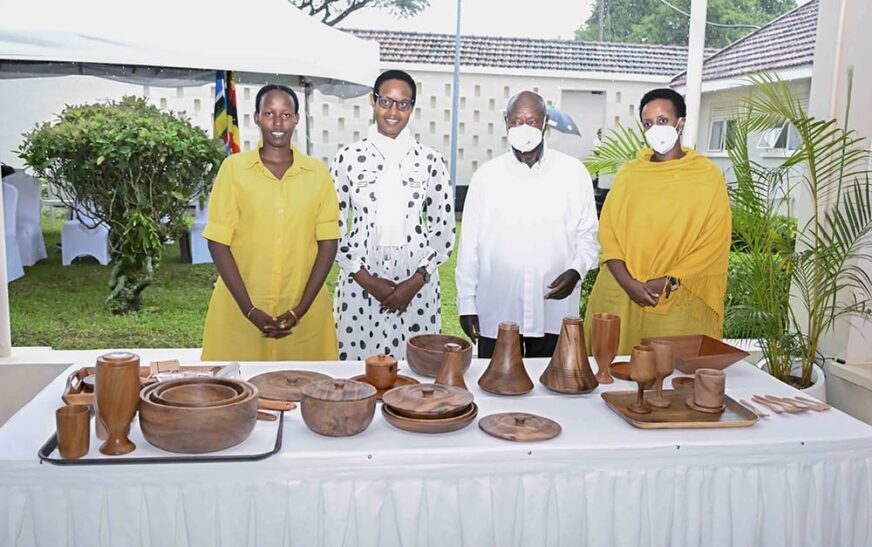
Yoweri Kaguta Museveni has endorsed the use of traditional wooden food containers after a scientific assessment by a government Chemical, Biological, Radiological and Nuclear team cleared the materials as safe for food handling and storage.
In a message shared on his official X platform, the President said findings from the assessment confirmed that wooden utensils made from omunyama, commonly known as mahogany, and omusisa, also known as albizia, do not release harmful substances into food and are suitable for household use.
“Fellow Ugandans, especially the Bazzukulu, following a scientific assessment by our CBRN team, I have written to Matongo Wood Works Company confirming that traditional wooden food containers made from omunyama and omusisa are safe and durable,” he said.
He added that government would support the initiative to scale up production, describing it as part of efforts to reduce reliance on what he called fragile and unsafe “ebyatika,” or breakable utensils.
The President also used the platform to rally Ugandans to embrace indigenous knowledge systems, saying traditional practices had sustained communities for generations and should be revived to support a self-reliant economy.
Details of a March 27, 2026 communication attributed to the President indicate that State House has directed full funding for Matongo Wood Works Company to expand production of wooden crockery. The directive was copied to key institutions, including the Uganda National Bureau of Standards and the Ministry of Health Uganda, for implementation and oversight.
The directive also called for wide dissemination of both the presidential communication and the CBRN findings through official government channels to raise public awareness about the safety of indigenous food handling technologies.
According to the CBRN report titled Wooden Crockery Report Summary – March 2026, samples were subjected to controlled laboratory testing under conditions simulating real-life use, including exposure to hot and cold water, acidic and alkaline substances, and different food types.

The assessment, which employed advanced analytical methods such as GC-MS/MS and XRF, found no evidence of toxic chemical, biological, radiological or nuclear substances in the wooden materials or food served in them. The report also confirmed the absence of heavy metals.
However, the study noted that albizia wood may release colour into liquid foods under certain conditions, although this was not linked to any health risk. Mahogany, on the other hand, showed no colour transfer and was recommended as more suitable for serving liquids.
The report further outlined handling and maintenance guidelines, including proper cleaning, avoiding prolonged soaking, and periodic conditioning with food-grade oils such as olive and linseed oil to maintain durability and hygiene.
President Museveni underscored the long-standing cultural use of wooden and clay utensils, noting that traditional items such as milk pots and wooden bowls had served communities effectively for decades.
The endorsement is expected to fuel debate on integrating indigenous knowledge into modern manufacturing and food safety standards, as government pushes for greater local innovation and reduced dependence on imported household products.