
As Uganda edges closer to its first oil, a new narrative is taking shape in the country’s petroleum sector, one where pipelines and rigs share the stage with data, connectivity, and digital systems.
At the 11th Annual Oil and Gas Convention held at Speke Resort Munyonyo, MTN Uganda positioned itself not just as a telecom provider, but as a central player in the digital infrastructure expected to power the country’s oil future.
The two-day convention, held under the theme “First Oil, Fulfilling the Promise, Forging the Future,” attracted hundreds of global delegates, reflecting growing investor confidence in Uganda’s emerging petroleum industry.
Opening the event, Deputy Speaker of Parliament Thomas Tayebwa called for stronger collaboration and innovation, saying Uganda’s oil sector must be deliberately structured to deliver long-term economic transformation.
Energy Minister Dr Ruth Nankabirwa Ssentamu said the country is now transitioning from planning to implementation.
“With first oil now within reach, decades of preparation are turning into reality. This convention is where partnerships are formed and opportunities for the next phase of Uganda’s petroleum journey are secured,” she said.
But beyond the political and policy messaging, the conversation repeatedly returned to one defining factor, digitisation.
Uganda Chamber of Energy and Minerals CEO Humphrey Asiimwe noted that the oil industry is entering a phase where efficiency, speed, and transparency will determine competitiveness.
MTN Uganda amplified that message, arguing that the oil economy of the future will depend as much on digital systems as on physical infrastructure.
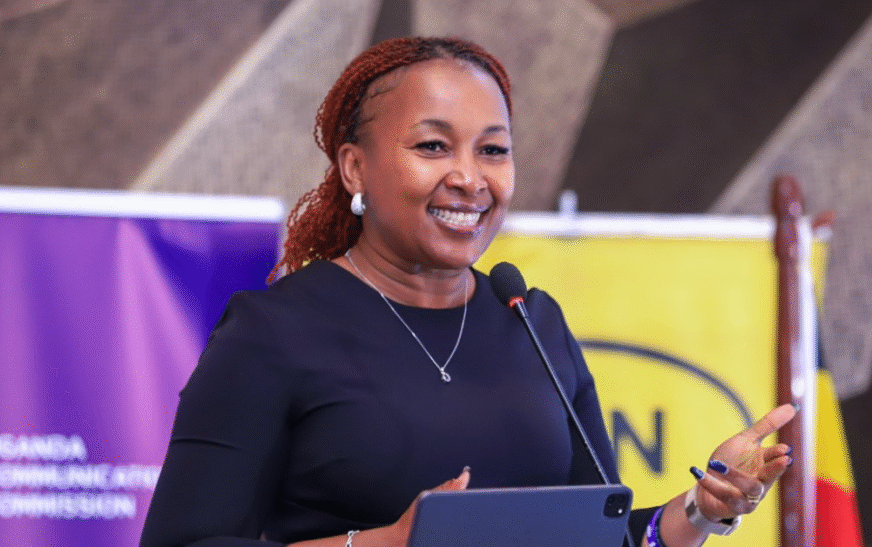
MTN Uganda Chief Executive Officer Sylvia Mulinge said digitisation is fundamentally reshaping how industries operate.

“Digitisation creates an ecosystem where operations are interconnected, data-driven, and seamlessly integrated, enabling real-time decision-making, improved efficiency, and scalable growth across the value chain,” she said.
The company showcased how its TechCo and FinCo capabilities are already being deployed across industrial operations, including predictive maintenance systems, AI-enabled surveillance tools, and secure data storage platforms designed to reduce downtime and enhance security.
From upstream exploration sites to downstream distribution channels, MTN is building what it describes as an integrated digital ecosystem linking operations, financial transactions, and logistics into a single connected network.
The ambition, according to the company, is to eliminate inefficiencies, improve transparency, and enable faster decision-making across the entire oil and gas value chain.
The shift marks a broader transformation in Uganda’s energy strategy, where digital infrastructure is increasingly being treated as core infrastructure rather than a supporting service.
As discussions wrapped up at the convention, a consensus emerged that the impact of digitisation will extend far beyond oil and gas, potentially reshaping financial inclusion, enterprise growth, and national productivity.
For Uganda, the first barrel of oil is no longer the only milestone in sight. The real test lies in how efficiently the sector is executed, managed, and connected.