
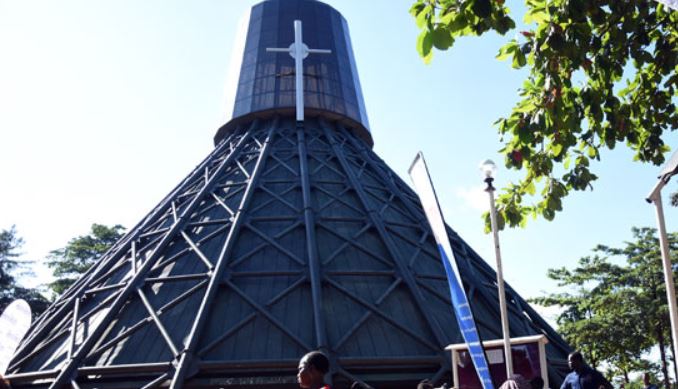
Every year on June 3rd, the global spotlight falls squarely on the Namugongo Uganda Martyrs. Thousands of pilgrims from different parts of Uganda and regions trek to the Namugongo Shrine.
The Pilgrimage is about honoring the Ultimatum of King Mwanga ii, the defiance led by Charles Lwanga, the walk to death of the young men who defied the king’s orders, dozens of young men were wrapped in reed mats and burned alive however of crushing the moment, their resilience sparked an explosion of faith across all regions.
The events of 1886 were the climax of a journey that spanned kingdoms, connected cultures, and permanently altered the social fabric of East Africa. From the landing site of the early missionaries at Kigungu in Entebbe, to the initial trials at Munyonyo, to the quiet brilliance of Mackay’s Cave in Asenge, the landscape is marked by landmarks of unmatched historical value.
Yet, as public health guidelines necessitate a shift away from massive national gatherings this year, Uganda is presented with a profound moment of reflection. The Ministry of Health and the National Epidemic Response Task Force emphasized that the biological nature of the virus which spreads through direct contact with bodily fluids makes dense mass gatherings an ideal environment for rapid, super-spreader transmission.
Millions of pilgrims mixing in congested spaces entirely neutralizes social distancing and hygiene protocols, while the influx of international travelers from cross-border endemic zones creates an exceptionally high risk of importing the pathogen into congested urban centers.
Furthermore, from a disease-surveillance standpoint, the uncontrolled mobility and anonymity of a crowd that scale makes effective epidemiological contact tracing structurally impossible, necessitating a pivot to localized, restricted environments to break the chain of potential transmission.
Spiritual tourism serves as a highly resilient economic engine and a catalyst for community development because it is driven by deep personal conviction rather than seasonal leisure trends. This distinct motivation gives faith-based travel high economic immunity to global recessions and weather changes, providing destination nations with a steady, predictable source of year-round revenue.
Furthermore, because sacred sites and historical trails are often decentralized, pilgrim expenditure naturally bypasses large corporate hospitality chains to flow directly into rural and peri-urban economies funding local transport, community-run accommodations, and grassroots artisans.
Ultimately, this steady economic influx provides governments and local communities with the financial justification to invest in long-term infrastructure and preserve intangible cultural heritage, transforming historical memory into a sustainable tool for national development.
Cultural identity, however, is permanent. It does not migrate, and it does not have an off-season.

The true weight of the Uganda Martyrs’ story cannot be contained within a single calendar day or a single geographic location.
The path forward for Uganda’s tourism ecosystem lies in shifting focus from event management to year-round asset development. By aggressively documenting and physically mapping the Uganda Martyrs Trail as a multi-day, comprehensive cultural circuit, the industry can decentralize the narrative. This turns a 24-hour religious pilgrimage into an extended, immersive historical journey that can be experienced 365 days a year.
When a traveler spends five days tracing this historic circuit while staying in local accommodations, employing regional guides, and purchasing crafts from neighborhood artisans, the economic impact shifts dramatically.
Tourism stops being an abstract figure in national balance sheets and becomes a tangible, direct source of income for everyday households. This is the essence of sustainable, community-led growth.
To achieve this, public-private integration is paramount. Corporate partners, the hospitality sector, and cultural institutions must look at these heritage sites not merely as points of reverence, but as world-class cultural real estate.
Investment in uniform signage, well-curated site museums, and standardized guide training will elevate the visitor experience to global standards, appealing equally to the devout pilgrim and the secular history enthusiast.
By looking beyond the horizon of current public health challenges and embracing a broader view of cultural preservation, Uganda can build a resilient tourism model.
The country’s heritage is rich and its history is deep and it is time to step onto the trail and explore the full depth of the Pearl of Africa.