

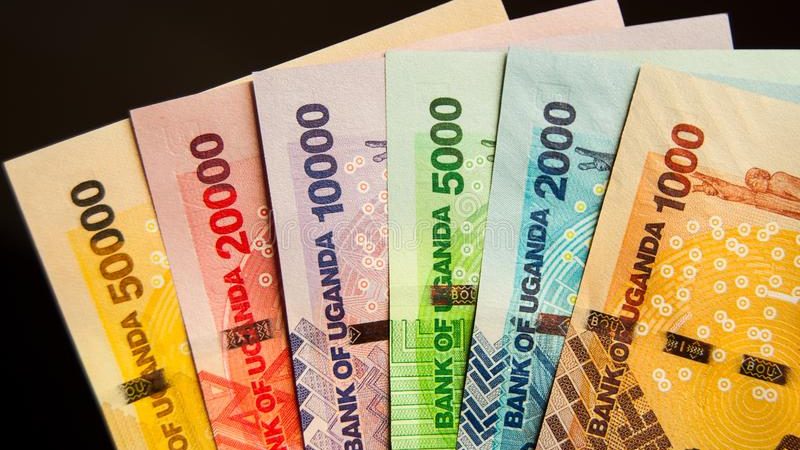
The Uganda shilling strengthened this week, supported by end-of-financial-year tax conversions and steady dollar inflows from remittance firms, commodity exporters and offshore players, amid subdued corporate demand.
By Friday morning, the local unit was trading at 3,645/3,655, an appreciation from the week’s opening levels of 3,690/3,700.
Market analysts attribute the gains to seasonal foreign exchange inflows, which helped offset limited demand from the corporate sector.
Richard Nsubuga, acting head of trading in CIB Markets at Absa Bank Uganda, said corporate activity is expected to pick up at the start of the new financial year, a development that could exert some pressure on the shilling.
However, he noted that continued inflows from commodity exports are likely to cushion the local unit, with projections placing the currency within a broader range of 3,600–3,720 in the near term.
Liquidity and money markets
The money market remained liquid the week, with overnight and one-week lending rates averaging between 9.0 per cent and 10.5 per cent.
In response to the excess liquidity, the Bank of Uganda conducted open market operations on Thursday, mopping up Shs 1.085 trillion through the issuance of treasury bills and a seven-day repurchase agreement (REPO).
Regional currency outlook
In the region, the Kenyan shilling remained relatively stable, with the USD/KES pair trading within the 129.20–129.80 range the week in a session characterised by balanced liquidity.
Analysts expect a near-term boost to Kenya’s foreign exchange reserves following the approval of $500 million in World Bank funding. The currency is projected to trade within the 129.20–129.90 range as month-end flows take effect.
Global commodities and currencies

On the global front, crude oil prices were largely unchanged, hovering around $69 per barrel on Friday, close to levels seen before tensions in the Middle East escalated earlier this year.
The relative stability reflects improving shipping conditions through the Strait of Hormuz, supported by progress in US–Iran negotiations. Saudi Arabia’s crude exports have reportedly recovered to nearly 90 per cent of pre-conflict levels, while the United Arab Emirates has fully restored output, aided by alternative pipeline routes that bypass the strategic chokepoint.
Meanwhile, the US dollar index remained below the 101 mark, extending recent losses following weaker-than-expected employment data.
The US economy added 57,000 jobs in June, significantly below expectations of 110,000, while the unemployment rate stood at 4.2 per cent. The softer labour market data has reinforced expectations that the Federal Reserve may ease its monetary tightening stance.
Major currencies and gold
The British pound strengthened towards $1.34, its highest level in two weeks, buoyed by dollar weakness and improved investor sentiment. However, Bank of England governor Andrew Bailey maintained a cautious outlook, citing persistent inflationary pressures despite signs of slowing economic activity.
The euro also gained ground, rising $1.1490, supported by the weaker dollar. Gains, however, were limited by softer inflation data in the Eurozone and dovish signals from European Central Bank president Christine Lagarde. Headline inflation slowed to 2.8 per cent in June, while core inflation eased to 2.4 per cent, both below market expectations.
Gold prices climbed towards $4,200 per ounce, supported by the softer US dollar and reduced expectations of further interest rate hikes. The outlook for lower rates has increased the appeal of the non-yielding asset, boosting demand for the precious metal.
As markets transition into the new financial year, attention will remain on corporate demand, central bank actions, and global economic signals, all of which are expected to shape currency and commodity movements in the near term.