
The African Commission on Human and Peoples’ Rights (the Commission) has expressed concern over violations of freedom of expression and access to information in Uganda.
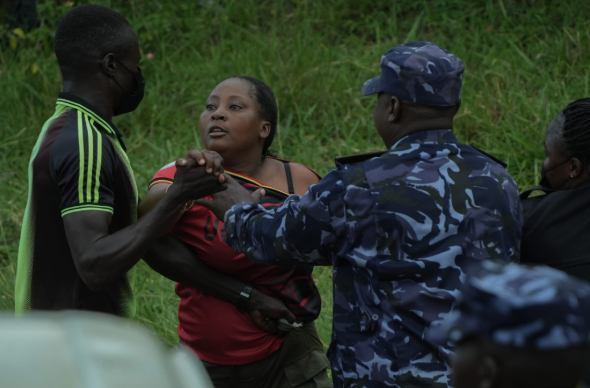
Since the kickoff of the 2026 presidential campaigns, there have been reports of violence and deaths of supporters of the National Unity Platform (NUP). These include the killing of Misaki Okello, who was shot dead in November 2025 shortly after a Bobi Wine rally in Iganga, and Otim Leon Joshua, a 16-year-old student at Excel High School in Mukono, who was beaten and later died at Lacor Hospital in Gulu City, where he had been admitted for treatment.
The Commission also expressed concern over the growing acts of harassment, intimidation, arbitrary arrest, and abuse directed at journalists and media practitioners in the Republic of Uganda in the lead-up to the general elections scheduled for 15 January 2026.
Reports received by the Commission indicate that in 2025, journalists were subjected to, or were at heightened risk of being subjected to, various forms of physical assault, intimidation, and harassment, both offline and online.
Specifically, during the Kawempe North by-election in March 2025, at least 32 journalists, including three women, were reportedly assaulted by security operatives, while others had their equipment confiscated or damaged.
In July 2025, a well-known investigative journalist with NBS Television, Canary Mugume, was violently attacked in Kampala by unknown assailants. He was reportedly pulled from his vehicle late at night, punched in the face and eyes, and had his mobile phone stolen.
In October 2025, the offices of the independent media outlet The Observer were ransacked, and 12 computers were stolen. During the same month, journalists working with NTV Uganda and The Daily Monitor reportedly had their accreditations to cover parliamentary and presidential proceedings revoked, allegedly in retaliation for critical reporting.
The Commission further noted with concern statements attributed to authorities following assurances by the Uganda Communications Commission (UCC) that the internet would be shut down.
In particular, the Commission expressed concern over reported threats against individuals using Virtual Private Networks (VPNs) to access Facebook, which has remained blocked in Uganda since the 2021 elections. It also cited remarks by the Acting Secretary–Commissioner of the Electoral Commission suggesting that an internet shutdown may be necessary due to the alleged “uncontrollable nature” of election-related misinformation. The Commission warned that such threats raise serious human rights concerns.
“The Commission recalls that internet shutdowns and undue restrictions on digital communications constitute violations of Article 9 of the African Charter on Human and Peoples’ Rights, which guarantees the right to receive information and the right to express and disseminate opinions,” the Commission stated.

The Commission added that such measures are also contrary to its Guidelines on Freedom of Association and Assembly.
“Everyone has the right to assemble freely with others. The right to freedom of assembly applies to meetings on private as well as public property,” the Commission said.
The right to freedom of assembly extends to peaceful assemblies. An assembly should be deemed peaceful if its organizers have expressed peaceful intentions and if the conduct of participants is generally peaceful.
States are required to fully respect, in law and practice, the right to freedom of expression through assembly and must not discriminate among assemblies based on the expression involved.
The Declaration of Principles on Freedom of Expression and Access to Information in Africa further provides, under Principle 10, that: “Freedom of expression, including the right to seek, receive and impart information and ideas, either orally, in writing or in print, in the form of art or through any other form of communication or medium, including across frontiers, is a fundamental and inalienable human right and an indispensable component of democracy.”
The Commission urged the Government of Uganda to ratify the African Charter on Democracy, Elections and Governance.
Uganda signed the African Charter on Democracy, Elections and Governance on 27 January 2013. The Charter emphasizes the importance of consolidating a political culture of democratic change of power on the continent through regular, free, fair, and transparent elections conducted by competent, independent, and impartial national electoral bodies.