

The High Court has dismissed a petition filed by Mathias Walukagga challenging his disqualification by the Electoral Commission (EC) from contesting in the parliamentary race.
Led by Kawempe North Member of Parliament Luwimbazi Nalukoola, Walukagga’s legal team argued that he met the required academic qualifications and that the EC acted unlawfully in rejecting his nomination.
Walukagga also expressed concern over the delay in the Commission’s decision, stating: “It is deeply regrettable that the Electoral Commission issued its decision on November 25, 2025, but only delivered it on December 9, despite being fully aware that time was of the essence in this matter.”
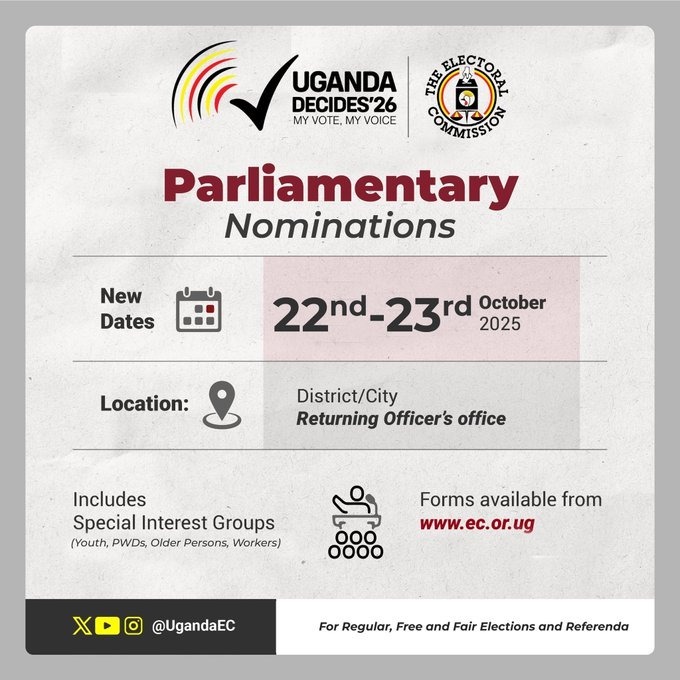
On December 9, 2025, the Electoral Commission formally disqualified Walukagga, citing his failure to meet the nomination requirements. The decision followed a petition filed on November 4, 2025, by Medard Seggona, who challenged Walukagga’s eligibility.
Seggona argued that the Mature Age/Aptitude Test Certificate Walukagga used during his nomination on October 23, 2025, had expired and was therefore invalid.
In response, Walukagga’s legal team contended that because he is currently enrolled at a university and pursuing a Bachelor’s degree in Public Administration using the same certificate, it should have been considered valid for nomination purposes.
However, Justice Simon Byabakama ruled that the certificate had indeed expired by the time of nomination.

“Candidate Mathias Walukagga lacked the requisite minimum formal qualifications for the elective office of Member of Parliament, as stipulated under Section 4(1)(c) of the Parliamentary Elections Act,” Justice Byabakama stated.
In his ruling, Justice Simon Peter Kinobe observed that an expired certificate at the time of nomination cannot form the basis of a valid nomination.
“The petitioner did not possess a valid academic qualification at the time of nomination,” Justice Kinobe noted.
He added that Walukagga’s nomination was invalid and was therefore rightly set aside by the Electoral Commission.
“In the end, I dismiss this petition. I decline to award costs to the respondents because the petition raised an issue of public importance that has not previously been tested in our jurisprudence. Each party shall bear its own costs,” he ruled.