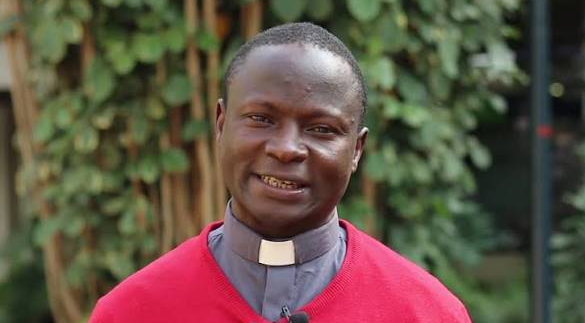

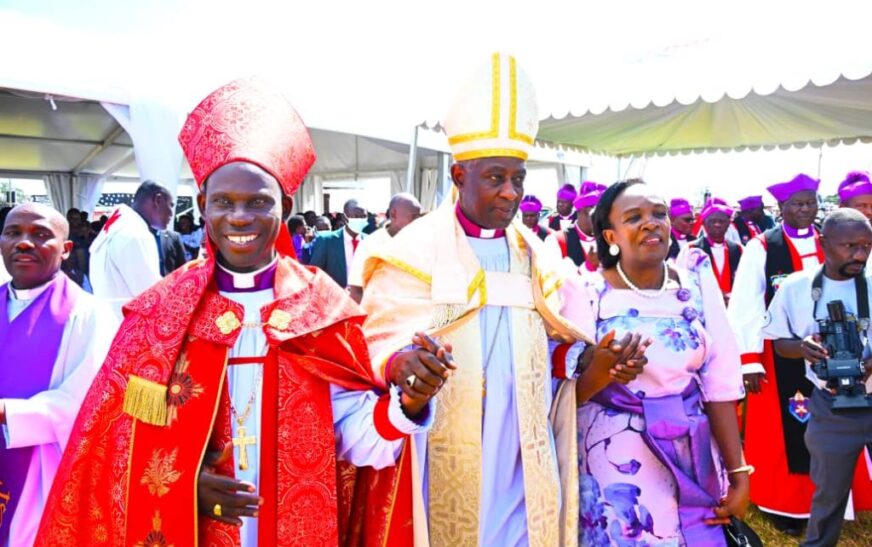
Amid jubilation at Kyabazinga Stadium, Rt. Rev. Prof. Dr. Grace Lubaale was consecrated and enthroned as the 4th Bishop of Busoga Diocese, marking a significant moment for the Church of Uganda. The ceremony, presided over by His Grace the Most Rev. Dr. Stephen Samuel Kaziimba, Archbishop of the Church of Uganda, and assisted by Bishop Onesimus Asiimwe of North Kigezi Diocese, was attended by political and religious leaders, including Vice President Jessica Alupo, representing President Yoweri Kaguta Museveni.
Dr. Lubaale’s election by the House of Bishops in October 2025 was hailed as a step toward spiritual renewal and unity in the diocese. However, observers note that his appointment also coincides with intensified calls for the Church to engage actively in national development agendas, particularly in poverty reduction and wealth creation.
In his remarks, President Museveni congratulated Dr. Lubaale and emphasized the Church’s role in socio-economic transformation. “The Church has leveraged private sector–friendly policies to extend social services, from schools to hospitals,” Museveni said, highlighting the expectation that religious institutions not only lead spiritually but also contribute tangibly to economic growth.
The President’s message carried an implicit challenge: while the Church has historically been a stabilizing moral force, there is growing pressure for its leaders to mobilize congregants toward active participation in wealth creation initiatives. Museveni cited the need for every household to adopt an economic enterprise—agriculture, industry, ICT, or services—to transition from subsistence to the modern economy.
Archbishop Kaziimba reinforced the theme, urging Busoga residents to harness the River Nile’s potential for economic empowerment while maintaining peace during the ongoing election period. The Premier of Busoga Kingdom, Joseph Muvawala, added that exemplary leadership and stewardship would be critical in aligning church efforts with government development goals.

In his first address as bishop, Dr. Lubaale acknowledged these expectations, pledging to promote good governance, capacity building, resource mobilization, and family ministry. He framed his mission not only as spiritual leadership but also as a catalyst for socio-economic transformation in the diocese.
Born in 1978 in Kamuli District, Dr. Lubaale has a Doctor of Philosophy in Development Studies, multiple theological and development degrees, and extensive ecclesiastical experience. He is married with four children.
As the 4th Bishop of Busoga Diocese takes office, the dual role of spiritual guide and socio-economic influencer becomes clear: while the consecration celebrated faith, it also subtly spotlighted the increasing intersection of church leadership with national development imperatives—a dynamic that could reshape expectations for religious institutions in Uganda.