
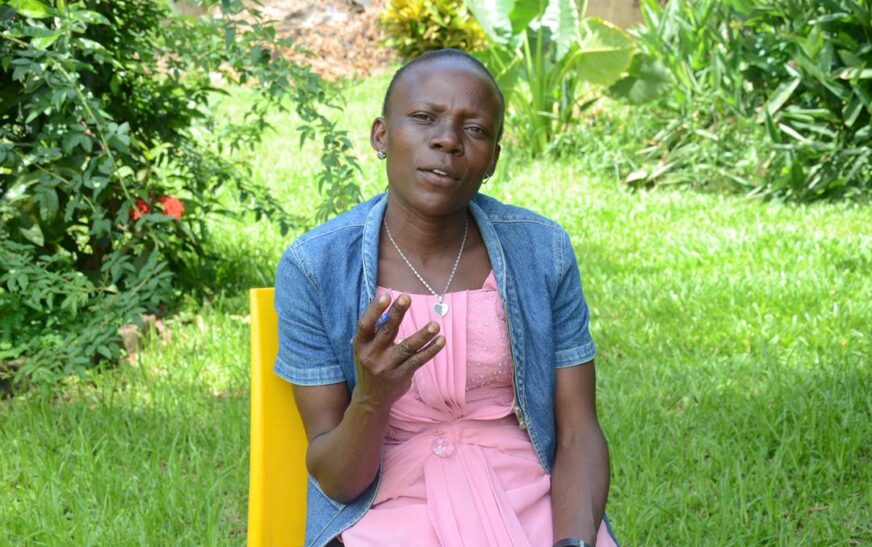
For years, Sylvia Namukose tilled her small garden in Kibale, growing just enough groundnuts to get by. Today, she speaks in tonnes.
Her transformation mirrors the stories celebrated at a Women’s Day event organised by Heifer International, where women from across Uganda gathered not just to be recognised, but to showcase how agribusiness is reshaping their lives.
“Before, I used to grow groundnuts in small quantities. But after joining the SAYE project, I started producing in tonnes,” Namukose said, her voice carrying both pride and relief.
Like many others, her journey began with a simple radio announcement and encouragement from local leaders. What followed was a shift not just in farming, but in mindset.
“We were taught to save first. That discipline helped us access loans and grow,” she explained.
With training in record keeping, improved farming methods, and access to an agri hub, Namukose expanded her farm to six acres. Today, she produces over seven tonnes of crops and has diversified into poultry, which supports her household and pays school fees for her two children. But it is not just traditional farming that is evolving.
Hundreds of kilometres away in Mbarara, Nakalema Assumption is quietly transforming poultry farming using technology. An IT engineer and founder of Hatch Rite Company Limited, she is helping farmers hatch bigger opportunities.
“At Hatch Rite, we are changing poultry farming through incubation technology,” she said.
Her idea was born in a university lab at Mbarara University of Science and Technology, where she noticed a gap in access to incubators. Using her background in sensors and software, she built a prototype with fellow students.
After winning the AYUTE Africa Challenge in 2024 and securing a Shs50 million grant from Heifer International Uganda, Assumption scaled production. Her incubators now record hatching success rates of up to 90 percent.
“In Iganga, one farmer grew their flock from 200 to over 2,000 birds after using our incubator,” she said.
Today, her company employs seven people and supports about 1,000 farmers, proving that innovation is increasingly taking root in Uganda’s agriculture.
The two women were among dozens of beneficiaries attending the celebration at Nile Hotel in Jinja under the SAYE project, a multimillion dollar initiative by the Mastercard Foundation and Heifer International aimed at equipping young people with skills, financing, and market access.
Beyond the success stories, the event struck a deeper chord, placing women at the centre of Uganda’s agricultural future.
Associate Professor Biira Saphina, Deputy Vice Chancellor of Busitema University, challenged women to move beyond production.
“It is not enough to grow food. We must process it, package it, and take it to markets beyond our borders,” she said.
She urged farmers to embrace modern technologies such as irrigation, solar drying, and better storage systems to reduce losses and meet quality standards.

“With the right tools, we can cut post harvest losses and compete globally,” she added.
The conversation also turned to the realities women still face, particularly limited access to land.
“Only a small percentage of women own land, yet they do most of the agricultural work,” Saphina noted, calling for stronger support systems and inclusive policies.
Wendy Joanne Lalum from the Private Sector Foundation Uganda warned that productivity alone is not enough without proper money management.
“You can produce a lot, but without records, planning, and discipline, the business will not grow,” she said.
She encouraged women to treat farming as a business, emphasising savings, smart borrowing, and reinvestment.
“Loans should help you climb, not trap you,” she said.
For Heifer International, the stories shared at the event reflect years of deliberate investment in women.
“We ensure women are at the centre of our programmes. In SAYE, 65 percent of participants are women,” said Neumbe Nabudere, the organisation’s People and Human Resource Director.
She noted that Heifer’s approach has shifted from simply providing livestock to enabling access to finance, technology, and markets.
“When women are empowered, entire communities benefit,” she said.
Across Uganda, that impact is already visible. More than one million farming families have been reached, with women making up the majority of beneficiaries and playing key roles across value chains from dairy to horticulture and poultry.
Women account for the bulk of agricultural labour in Uganda, yet still face barriers to land, finance, and markets. With agriculture contributing about a quarter of the country’s GDP and employing the majority of the workforce, unlocking women’s potential could redefine the sector.
Back in Kibale, Namukose is already living that change.
What began as a small garden has become a business, a source of stability, and a glimpse into what is possible when women are given the tools to grow.