
The government has suspended the operating license of the African Centre for Media Excellence (ACME) over alleged engagement in activities deemed prejudicial to the security and laws of Uganda.
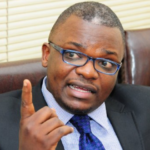
The suspension was confirmed by Peter Mwesigye, a founding member of the organisation.
“ACME, the organisation that I co-founded 15 years ago to champion media excellence, has joined the growing list of Ugandan NGOs suspended by the National Bureau for NGOs over engaging in activities which are said to be prejudicial to the security and the laws of Uganda,” Mwesigye said.
Mwesigye described the suspension as part of a broader effort to silence scrutiny of public affairs as the country heads into general elections.
“Now more than ever, independent media must rise to the occasion to provide accurate and credible information about the elections, monitor the exercise of official power and the activities of other actors, and facilitate vibrant public debate. That is what ACME has always stood for,” he added.
ACME joins a growing list of non-governmental organisations whose licenses have been suspended, including Chapter Four Uganda and the Human Rights Network for Journalists–Uganda.
The suspension comes barely two days before the national presidential elections scheduled for Thursday, January 15, 2025.
The Electoral Commission nominated eight presidential candidates on September 23 and 24, 2025. It later nominated candidates to represent 353 directly elected Members of Parliament, 146 District Woman Representatives, and five representatives each for Older Persons, Persons with Disabilities, Workers and Youth on October 22 and 23, 2025.

The presidential candidates include Robert Kyagulanyi Ssentamu, popularly known as Bobi Wine (National Unity Platform – NUP); incumbent President Yoweri Kaguta Museveni (National Resistance Movement – NRM); Elton Joseph Mabirizi (Conservative Party – CP); and Robert Kasibante (National Peasants Party – NPP).
Others are Nathan Nandala Mafabi (Forum for Democratic Change – FDC); Mugisha Muntu (Alliance for National Transformation – ANT); Munyagwa Mubarak Sserunga (Common Man’s Party – CMP); and Bulira Frank Kabinga (Revolutionary People’s Party – RPP).
Bobi Wine has emerged as President Museveni’s strongest challenger, setting the stage for a high-stakes political contest.
Observers say the race has dominated Uganda’s political discourse, reigniting debates on leadership, democracy and the country’s future.
In the previous presidential election held on January 14, 2021, 11 candidates contested for the presidency. Of the 18,103,603 registered voters, 10,350,819 cast their ballots, representing a voter turnout of 57.2 percent.
President Museveni won that election with 6,042,898 votes (58.38 percent), while Bobi Wine finished second with 3,631,437 votes (35.08 percent), extending Museveni’s rule beyond four decades.