
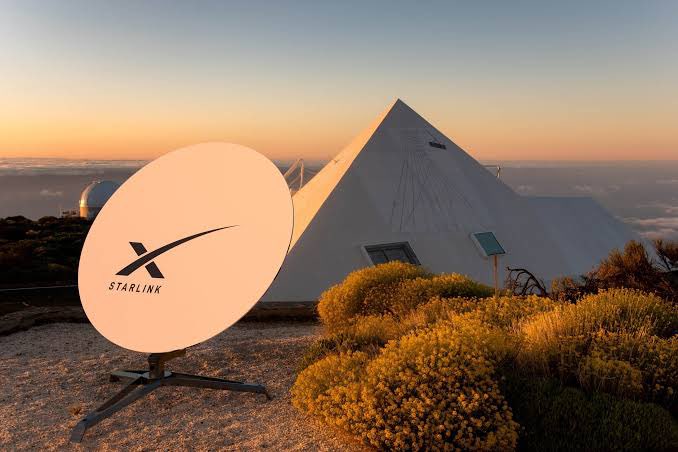
Earlier this year, SpaceX entered into a purchase agreement with EchoStar for 50 MHz of exclusive S-band spectrum in the U.S., along with global Mobile Satellite Service (MSS) spectrum licenses. This agreement enables the company to develop and deploy its next-generation Starlink Direct-to-Cell constellation, capable of providing broadband service directly to cell phones worldwide.
In January 2024, SpaceX began deploying Starlink satellites with Direct-to-Cell capabilities to eliminate mobile dead zones. At the time, over 20% of the U.S. land area and 90% of the Earth remained without terrestrial coverage.
Just days after launching the first satellites, the Starlink team successfully sent text messages using unmodified cell phones on the ground. By spring, video calling capabilities were demonstrated.
A year and a half later, with more than 600 Direct-to-Cell satellites in orbit, the first-generation constellation is fully operational across five continents, connecting over six million users. Starlink Direct-to-Cell has become the largest 4G coverage provider on Earth.
The Direct-to-Cell constellation connects to the broader Starlink network of over 8,000 satellites via a laser mesh, enabling global coverage. Operating at 360 km above Earth, these satellites fly lower than any other constellation to optimize the link between cell phones and satellites.
Building this constellation required designing, manufacturing, launching, and operating “cell towers in space,” including the system’s eNodeB payload, phased array antennas, and core network. This allows seamless integration with standard roaming networks. The service works with existing LTE phones wherever the sky is visible—no hardware changes, firmware updates, or special apps are needed.
SpaceX is also collaborating with device manufacturers and app developers to enhance services. Beyond basic messaging, users can access social media and messaging apps like X and WhatsApp, navigation tools like Google Maps, and weather apps such as AccuWeather. Starlink Direct-to-Cell also supports Internet of Things (IoT) connections in remote areas.
These capabilities are delivered in partnership with mobile network operators including T-Mobile (U.S.), Optus and Telstra (Australia), Rogers (Canada), One New Zealand, KDDI (Japan), Salt (Switzerland), Entel (Chile & Peru), and Kyivstar (Ukraine), along with several unannounced partnerships. This has connected millions of people in regions that previously lacked cellular service, even during emergencies that impact terrestrial networks.

During hurricanes, floods, and wildfires in the U.S., Starlink Direct-to-Cell enabled life-saving communication. More than 1.5 million people stayed connected when terrestrial networks failed, millions of SMS messages were exchanged, and hundreds of Wireless Emergency Alerts were delivered. In New Zealand, a woman in a cellular dead zone used Starlink Direct-to-Cell to report a car crash, enabling first responders to arrive within minutes.
Despite these achievements, over 50% of the world’s land remains without terrestrial coverage. SpaceX is committed to expanding the next-generation Direct-to-Cell constellation in partnership with global mobile operators to provide ubiquitous connectivity.
Through its agreement with EchoStar, SpaceX will access exclusive U.S. S-band spectrum (AWS-4 and PCS-H) and global MSS licenses. Combined with optimized 5G protocols for satellite connectivity, this will significantly enhance Starlink Direct-to-Cell performance.
The next-generation satellites will fully leverage this spectrum. Equipped with SpaceX-designed silicon and advanced phased array antennas, these satellites will support thousands of spatial beams and deliver approximately 20× the throughput of first-generation satellites. With these improvements, overall system capacity is expected to increase over 100×, enabling full 5G cellular connectivity comparable to terrestrial LTE, augmenting high-capacity 5G networks.
With state-of-the-art satellite technology, exclusive spectrum, and Starship’s unmatched payload capacity to low-Earth orbit, the next-generation Starlink Direct-to-Cell service will provide unparalleled performance to standard, unmodified cell phones and IoT devices—closing coverage gaps and helping eliminate mobile dead zones worldwide.