

Iran’s Foreign Minister Abbas Araghchi has said the strategic Strait of Hormuz remains open to international shipping but is effectively closed to vessels belonging to countries Tehran considers hostile.
Speaking on MS Now, Araghchi said Iran had not blocked the crucial maritime route to the global community despite the escalating conflict in the Middle East.
“The Strait of Hormuz is open. It is only closed to tankers and ships belonging to our enemies — to those who are attacking us and their allies. Others are free to pass,” he said.
However, the Iranian diplomat acknowledged that some vessels are avoiding the passage because of security fears following rising tensions involving Iran, the United States and Israel.
“That has nothing to do with us,” Araghchi said, insisting that the waterway remains open to the rest of the world.
The Strait of Hormuz is one of the world’s most vital energy shipping corridors, linking the Persian Gulf to global markets and carrying a significant share of international oil and energy exports.
During the interview, Araghchi also addressed Iran’s relations with Russia and China, describing the two countries as strategic partners.
“Russia and China are our strategic partners. We have had close cooperation in the past which continues still, and that includes military cooperation as well,” he said, declining to provide details.
He added that cooperation between the three countries extends across political, economic and military spheres.
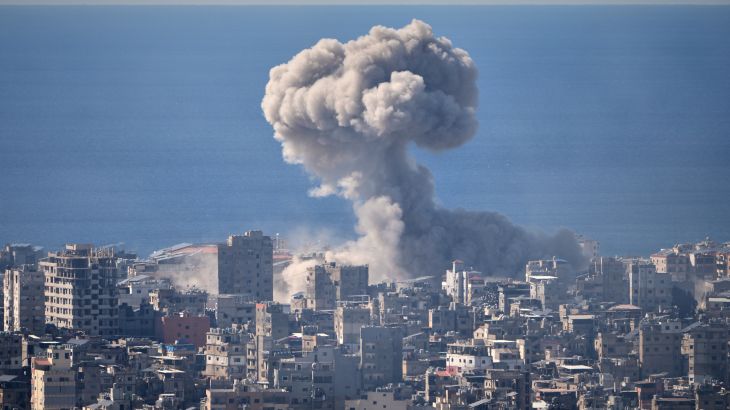
On the ongoing conflict, Araghchi maintained that Iran was responding to what it sees as an imposed war.
“This is not our war. This is an imposed war against us. We didn’t start this war. It was an unprovoked, unwarranted, illegal act of aggression and we will continue to defend ourselves for as long as it takes,” he said.

Araghchi also rejected accusations that Iran was targeting civilian infrastructure in Gulf countries, saying Iranian strikes were directed at American military assets located in the region.
“What we are doing, as an act of self-defence, is targeting American bases, American installations and American interests — which are, unfortunately, located in the territory of our neighbours,” he said.
He accused Washington of striking civilian facilities inside Iran, including a school, hospitals and a bank building, saying Tehran had responded according to the principle of “an eye for an eye.”
Araghchi further disclosed that negotiations between Iranian and American officials had made progress shortly before the outbreak of hostilities. He said talks mediated by Oman had produced a summary agreed upon by both delegations on February 26, only for the situation to deteriorate days later.
Addressing concerns about Iran’s nuclear programme, Araghchi said Tehran had been willing to reduce its stockpile of enriched uranium.
“I never said we are going to make bombs,” he said, adding that Iran currently possesses about 440 kilograms of uranium enriched to 60 percent — material he noted could theoretically produce several nuclear weapons if enriched further.
“We were ready to give it up, to downblend it,” he said.
His remarks come as tensions continue to escalate across the Gulf region, raising global concerns over shipping security, energy supplies and the stability of international trade routes.