
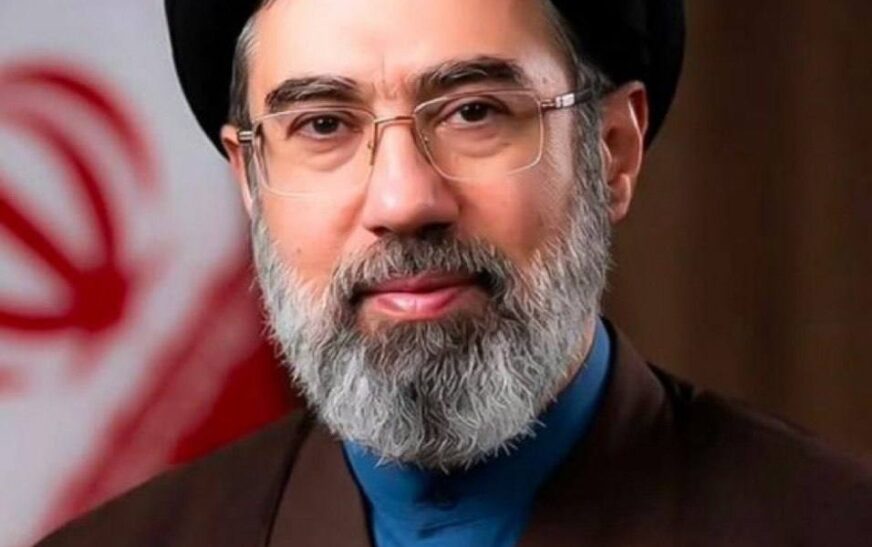
Iran has appointed Ayatollah Seyyed Mojtaba Khamenei as the new Supreme Leader following the death of his father, Ayatollah Ali Khamenei, according to an official statement broadcast by Iranian state television and carried by state media.
The announcement was made by the Assembly of Experts, the clerical body responsible for selecting the country’s Supreme Leader. The Assembly said it voted with an overwhelming majority during an extraordinary session to introduce Mojtaba Khamenei as the third Supreme Leader of the Islamic Republic of Iran.
In its statement, issued in the name of God and addressed to the “noble and free people of Islamic Iran,” the Assembly expressed condolences over what it described as the martyrdom of Ali Khamenei and other victims, including commanders, members of the armed forces and students of the Shajareh Tayyebeh School in Minab County.
The statement also condemned what it described as “brutal aggression” by the United States and the “Zionist regime” of Israel.
According to the Assembly, the decision to appoint a new leader was made swiftly to prevent a leadership vacuum. Members convened an emergency session despite wartime conditions and direct threats against the institution.
The body said offices of its secretariat had been bombed, resulting in the deaths of several staff members and security personnel, but arrangements were made to gather representatives from across the country for the extraordinary meeting.
The Assembly noted that while Article 111 of Iran’s constitution provides for the formation of a temporary leadership council during transitions, it proceeded to appoint a new leader in line with its constitutional responsibilities under Article 108.
“After thorough and extensive review and utilizing the capacity of Article 108 of the Constitution, Ayatollah Seyyed Mojtaba Hosseini Khamenei is appointed and introduced as the third leader of the sacred system of the Islamic Republic of Iran,” the statement said.
The Assembly also thanked members of the temporary council formed under Article 111 and called on Iranians—especially scholars from seminaries and universities—to pledge allegiance to the new leader and maintain unity around the leadership. The statement was dated 1404/12/17 in the Iranian calendar.
IRGC pledges loyalty
Following the announcement, the Islamic Revolutionary Guard Corps issued a declaration supporting the decision of the Assembly of Experts and pledging loyalty to the new leader.
“As the soldier and powerful arm of the leadership, the IRGC is ready for complete obedience and self-sacrifice to the divine orders of the Supreme Leader of the time, Ayatollah Seyyed Mojtaba Khamenei,” the statement said.
The Guard also reaffirmed its commitment to preserving the values of the Islamic Revolution established by Ayatollah Ruhollah Khomeini and continued under Ali Khamenei.
Reports on the succession process
Earlier, Reuters reported that a senior Iranian cleric involved in the leadership selection process had indicated Mojtaba Khamenei was likely to succeed his father.
Hosseinali Eshkevari, a member of the Assembly of Experts, said in a video published by Iranian media that “the name of Khamenei will continue,” adding that the vote had already been cast and the result would be announced soon.
Under Iran’s constitution, the Assembly of Experts—an 88-member clerical body—is responsible for electing the Supreme Leader by majority vote.
During the transition period, an interim three-member council reportedly handled leadership duties until the appointment was finalised. Individuals mentioned in connection with the temporary arrangement include Gholam-Hossein Mohseni-Ejei and Alireza Arafi.
The leadership transition has drawn international attention. Donald Trump previously suggested that the United States should have a role in shaping Iran’s post-war leadership, a proposal Tehran rejected.
Who is Mojtaba Khamenei?
Ayatollah Mojtaba Khamenei was born in 1969 in Mashhad and is the second son of the late Iranian leader Ali Khamenei.

He began his early seminary studies at the school of Ayatollah Mojtahedi Tehrani and was present among Iranian fighters on the frontlines during the Iran-Iraq war, known in Iran as the “Sacred Defense.”
After the war, he moved in 1989 to Qom to continue his seminary education before returning to Tehran in 1992, where he studied for five years.
In 1997 he married Zahra Haddad Adel, the daughter of Iranian politician Gholam-Ali Haddad-Adel. In the same year he returned to Qom to continue advanced religious studies.
During his studies he attended lessons by several prominent clerics including Javad Tabrizi, Hossein Vahid Khorasani, Mousa Shabiri Zanjani, Mojtaba Tehrani and Mohammad Momen Qomi.
Academic career
Iranian sources say Mojtaba Khamenei has taught advanced jurisprudence and principles courses for more than 17 years. His teaching style—described as combining mastery of classical scholarship with critical analysis—reportedly attracted large numbers of seminary students.
Before the COVID-19 pandemic, more than 400 students attended his advanced lessons in Qom.
During the pandemic, his courses were conducted online. At the beginning of the academic year 1402 (2023–2024), more than 1,300 students registered for his lessons and over 700 attended the first session.
However, he unexpectedly cancelled the classes shortly afterward and asked for forgiveness from students, saying the decision was based on a spiritual reason he preferred not to disclose publicly.
Following the cancellation, about 1,000 students and professors from the Qom seminary wrote to Ali Khamenei requesting the resumption of the lessons, but Mojtaba Khamenei reportedly maintained his decision and encouraged students to study under other professors.
He advised students to select teachers based on “scientific merit, revolutionary spirit and purity of soul.”
At the recommendation of his father, he later focused on scholarly work including annotations to the Shiite jurisprudence text Urwa al-Wuthqa and revising his jurisprudential writings.
Religious and political connections
Alongside his academic work, Mojtaba Khamenei maintained close relations with senior religious authorities and scholars in Qom and Mashhad.
He also maintained connections with figures known for ethics and mysticism, including Mohammad-Taqi Bahjat, Mirza Javad Kashmiri and Sheikh Jafar Mojtahedi.
According to seminary accounts, he also assisted his father in managing some national affairs and held working meetings with senior officials in Iran’s political system.
He is said to have been involved in discussions on governance issues including economic stability, price control of essential goods, large-scale housing construction, agricultural reforms and development of artificial intelligence and knowledge-based industries.
Mojtaba Khamenei also maintained relations with military commanders and figures linked to Iran’s regional alliances, including the late Hezbollah leader Hassan Nasrallah and Iranian commander Qasem Soleimani.
Supporters say these roles made him a target of hostility from Iran’s adversaries but also positioned him as an influential figure within the country’s political and religious establishment.
The Supreme Leader holds the highest authority in Iran’s political system, commanding the armed forces and exercising decisive influence over major state policies.