
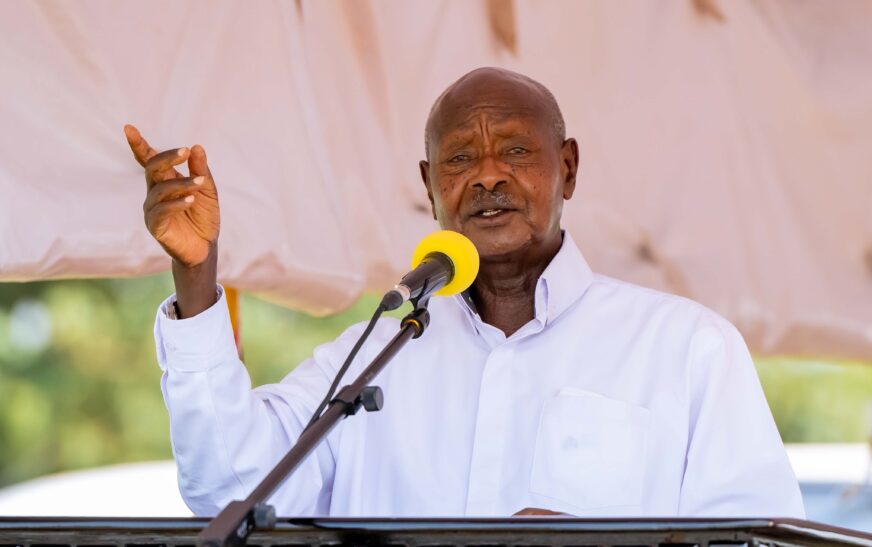
During the recent International Buyers Week at Speke Resort Munyonyo organized by the Presidential Advisory Committee on Imports and Exports Development President Museveni called on international partners to invest in Uganda’s export infrastructure.
Represented by Vice President Jessica Alupo, the President emphasized that Uganda has halted the export of raw materials and is now prioritizing investments that support value addition and industrial development. He noted that government efforts have led to the creation of industrial hubs to enhance processing and value addition.
Museveni encouraged global partners to channel investment into processing facilities, cold-chain systems, packaging plants, and other export-related infrastructure. These efforts, he said, align with Uganda’s ongoing expansion of trade offices and market hubs in key regions to strengthen buyer seller linkages and logistics.
“The focus of this week is to turn interest into real orders and those orders into lasting partnerships that create jobs and incomes for our people,” the Vice President said, urging the attending international buyers to work with Ugandan exporters committed to meeting global standards.
The International Buyers Week also showcased Uganda’s strategic position as a gateway to East and Central Africa. The country boasts a young, educated workforce; year-round agricultural potential; improved infrastructure; and sustained economic and political stability.
While delivering the President’s message, Alupo underscored the need for more capital, entrepreneurship, and knowledge to fully convert Uganda’s potential into wealth and employment. She explained that although land and labor are abundant, Uganda has long lacked the other key production factors capital, entrepreneurship, and know-how.
“Without capital, entrepreneurship, and knowledge, our land and labor will remain underutilized as they have been for centuries,” Museveni stated. He pointed to investment opportunities across commercial agriculture, industry, services, and ICT.
Highlighting the NRM government’s progress, Museveni noted that programs such as Operation Wealth Creation have played a role in moving Ugandans into the money economy.
“In 1986, more than 90% of our people were trapped in subsistence farming. Today, that number has dropped to 43%, and we are working hard to ensure all Ugandans join the money economy,” he said, stressing that increased purchasing power is essential for business growth.
Museveni reaffirmed the NRM’s commitment to raising Uganda’s GDP from USD 61 billion to USD 500 billion by creating a conducive investment environment grounded in national peace and stability. He highlighted priority investments in infrastructure and private-sector-friendly policies, noting strong export performance in coffee, dairy, gold, and avocado.
Uganda’s exports in the first half of 2025 reached USD 5.23 billion. Coffee exports posted impressive gains, strengthening Uganda’s standing as a top African supplier, while milk production rose to 5.4 billion liters in 2024 supported by new dairy markets in Algeria and Nigeria.

“These figures show strong momentum and reinforce the need for diversification and value addition,” Museveni said. He added that the Presidential Exports Advisory Team continues to promote Ugandan food products abroad, establish trade locations, and improve exporter performance standards.
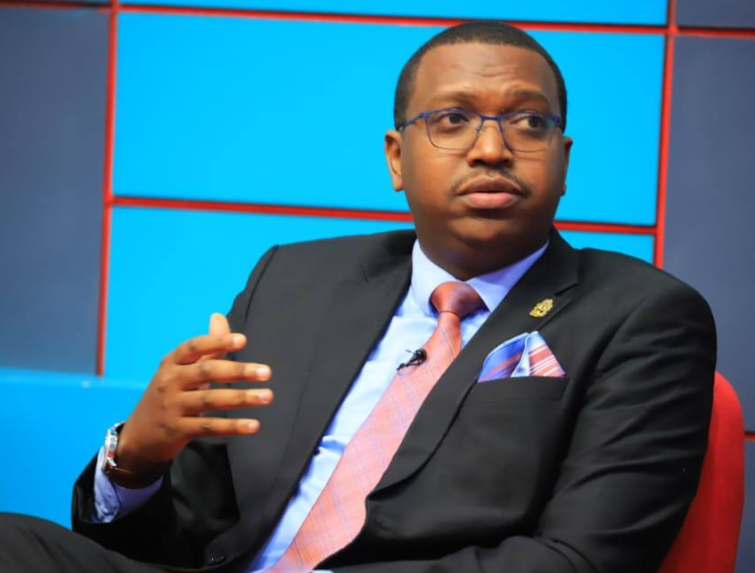
At the event, Odrek Rwabwogo, Chairman of the Presidential Advisory Committee on Exports and Industrial Development (PACEID) and Senior Presidential Advisor on Special Duties stated that PACEID’s mission extends beyond promoting trade to attracting investments and building partnerships. Uganda, he noted, is seeking major investment in agro-processing and mineral processing to strengthen its post-COVID growth and expand its ability to serve regional and global markets.
Rwabwogo praised the improved collaboration between Uganda’s embassies and the market, noting that embassies now have marketing budgets to actively promote Ugandan products. He emphasized that strong cooperation between government and private enterprise can transform Uganda’s economy from one reliant on raw commodity exports to one driven by science and industry.
He also pointed to the government’s USD 400 million investment into 3.6 million households through the Parish Development Model calling it a groundbreaking initiative.
“For the first time, ordinary citizens are receiving direct funding from the national budget. If you never held USD 10 before, you now have USD 320 enough to start small ventures like poultry, sesame, or pineapple production. This will trigger massive agricultural output,” he said.
Rwabwogo stressed the urgency of investing in refrigeration, transport, drying, and storage to accommodate this production surge. Uganda’s current refrigeration capacity, he revealed, meets only 30% of national demand. Government plans to establish aggregation parks industrial zones designed to ensure quick order fulfillment and consistent export supply.
In a passionate address, Rwabwogo called for a shift in mindset toward high-value manufacturing. While Uganda’s food export boom is encouraging, he warned that it is “only a temporary advantage.”
“Our goal must be to manufacture high-value goods electronics, pharmaceuticals, and eventually, perhaps even aviation components and semiconductors,” he said. “We have the raw materials. All we need is confidence and consistency.”
He emphasized ongoing government programs that train young innovators with practical industrial skills and announced plans to establish trade houses to ease market entry for exporters, alongside stronger food-safety systems to address non-tariff barriers.