
Global crises often unsettle financial markets. Yet they can also create opportunities for investors willing to take a longer-term perspective.
That was the message from analysts and investment advisers during a webinar hosted by SBG Securities Uganda Limited. Economists argued that while the escalating conflict in the Middle East may trigger short-term market volatility, it could also present opportunities for disciplined investors and policymakers in Uganda.
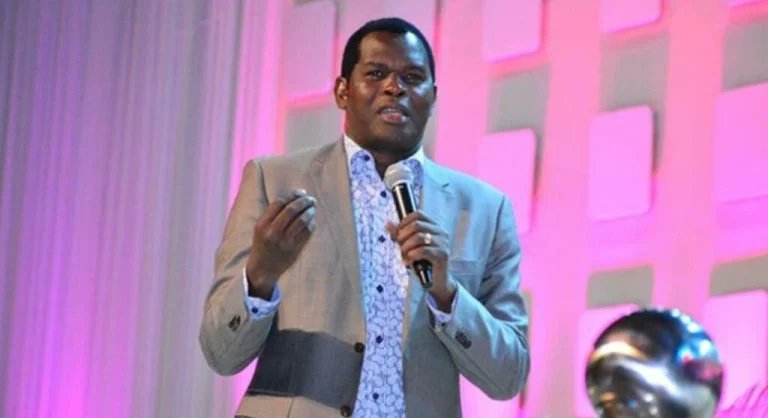
“Such times come with a lot of uncertainty,” said Grace Semakula, chief executive of SBG Securities Uganda Limited, the investment and brokerage arm of Stanbic Uganda Holdings Limited.
“But these are not times to panic. They are times to take a patient, long-term view and consistently allocate funds.”
Semakula noted that geopolitical disruptions often create moments for investors to reposition portfolios and identify emerging opportunities, provided they remain focused on long-term fundamentals rather than short-term market noise.
A strong starting point
Uganda enters the current period of global uncertainty from a relatively strong economic position. Inflation has remained subdued, economic growth robust, and exports—particularly gold and coffee—have expanded significantly over the past year.
However, economists caution that prolonged global conflict could still ripple through the domestic economy.
“We might see a protracted conflict,” said Christopher Legilisho, an economist at Standard Bank Group. “That could weigh on global growth and create spillovers to different countries, including Uganda.”
Central banks are already turning more cautious. For much of 2024 and early 2025, policymakers around the world were preparing to ease monetary policy as inflationary pressures began to subside.
That outlook may now be shifting. Rising geopolitical tensions have increased the likelihood of higher oil prices and renewed inflationary pressure, forcing policymakers to reassess their strategies.
“Because of the conflict, we are starting to see expectations that inflationary pressures could return,” Legilisho said. “Central banks may become more cautious or preventative in their policy stance.”
Uganda’s central bank, Bank of Uganda, has kept its benchmark policy rate steady at 9.75% since October 2024. If inflation accelerates, analysts say the bank could delay planned rate cuts or even tighten policy.
Risks and opportunities
Uganda’s trade links with the Middle East also expose it to potential disruptions.
Gold exports—now the country’s largest export earner—are heavily concentrated in that region. Uganda ships roughly $6 billion worth of gold annually, with about $5.2 billion destined for the United Arab Emirates.
Any disruption to that trade route could temporarily affect exporters.
“If producers are unable to ship gold to the UAE, refiners and exporters may struggle to find immediate alternative markets,” Legilisho said.
Yet such disruptions could also accelerate domestic policy initiatives. Bank of Uganda has been preparing to launch a domestic gold purchase programme aimed at strengthening foreign-exchange reserves—an initiative that could gain urgency if export flows slow.

Energy markets add another layer of complexity.
Higher oil prices would increase Uganda’s import bill in the short term because the country still depends heavily on imported refined petroleum products, much of which originates from the Middle East.
“You could see Uganda’s oil import requirements rise significantly if prices spike,” Legilisho said.
However, the longer-term outlook may be more favourable. Uganda expects first oil production from its petroleum sector later this year, a development that could gradually transform the country’s trade balance.
Market volatility already visible
Financial markets have already begun to react. The Ugandan shilling has weakened by roughly 3% since the conflict escalated, and analysts warn that inflation could rise further if energy prices continue climbing.
In a worst-case scenario, Legilisho estimates inflation could reach around 8.3%, potentially forcing the central bank to raise interest rates. Higher borrowing costs would slow credit growth and could temper economic expansion.
Remittances may also be affected. Uganda receives significant inflows from citizens working in the Middle East, and any regional disruption could reduce those earnings.
Still, the scale of the impact will largely depend on how long the conflict persists.
“If the crisis is resolved within a month, the economic impact would likely be limited,” Legilisho said. “But if it continues for several months, the pressures on growth and inflation could become more significant.”
Looking beyond the turbulence
For investment advisers, the key message is that volatility should be managed rather than feared.
“Even through crisis, there are significant opportunities to explore,” Semakula said. “Our role as an investment partner is to help clients see beyond the immediate noise and make informed, long-term decisions.”
SBG Securities Uganda Limited ended 2025 with more than UGX540 billion in assets under management, adding over 4,000 new clients during the year.
The firm was also recognised by the Capital Markets Authority as Collective Investment Scheme Manager of the Year.
For Uganda’s economy, the coming months may test resilience. But as Semakula suggested, periods of uncertainty can also reward investors willing to look beyond the immediate horizon.