

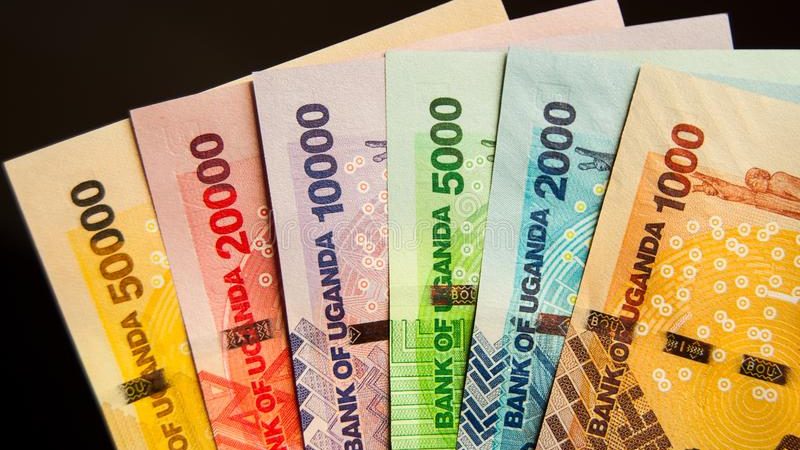
The Uganda shilling gradually lost ground on Friday morning, trading at the 3550/3560 levels, compared to the 3535/3545 levels at the start of the day.
Earlier in the week, the market leaned toward a stronger local unit, supported by dollar selling from commercial banks, commodity exporters, and steady inward remittances from the diaspora—typical inflows ahead of the festive season. This momentum pushed the shilling to mid-week highs of 3520/3530.
However, the intra-week dip attracted demand from offshore players as well as the manufacturing and energy sectors. This renewed buying pressure slowed the shilling’s advance, causing it to weaken past the 3550 mark and briefly touch the 3565/3575 levels before losing momentum.
The new levels encouraged commodity exporters to sell dollars during the brief currency spike on Thursday. In the near term, the shilling is expected to trade within a wide range of 3525–3625.
Richard Nsubuga, Acting Head of Trading, CIB Markets at Absa Bank Uganda, noted that money markets remained relatively liquid during the week, with interbank overnight and one-week rates averaging 9.76% and 10.07%, respectively.
The Bank of Uganda mopped up excess liquidity amounting to Shs 130 billion through a 28-Day BoU Bill auction on Thursday. There were no securities auctions this week, but a Treasury bill auction is scheduled for 17 December 2025, with Shs 355 billion on offer.
Nsubuga added that the Kenya shilling traded with a stronger bias throughout the week, supported by dollar inflows from remittances and subdued demand from banks and corporates. On Thursday, the currency traded at 128.80/129.10, stronger than the 129.25/129.35 levels recorded last Friday. The unit is expected to remain firm into the festive season on continued inflows.

He also highlighted the weakening of the US Dollar Index (DXY), which fell to 98.15—its lowest level of the week—from highs of 99.30. The shift followed the long-anticipated Federal Reserve interest rate cut of 25 basis points, bringing the target range to 3.50–3.75%. The Fed’s tone suggested no urgency to tighten policy further unless economic data changes significantly. Fed Chair Jerome Powell additionally noted that goods inflation, heavily influenced by tariffs, would be trending below 2% if such distortions were removed.
The pound sterling touched highs of 1.3430 on Thursday after the Fed’s third consecutive rate cut boosted global risk appetite, weakening the dollar. However, technical resistance triggered a gradual correction, with sterling hovering around the 1.3400 level on Friday morning in what appeared to be a consolidation phase near recent highs.
Brent crude oil traded at $61.70 on Friday morning, up slightly from the weekly low of $60.80. Despite the intraday uptick, oil remains poised for a significant weekly loss amid diplomatic efforts to end the war in Ukraine and growing expectations of an oversupplied market next year.
Gold continued its firm upward trajectory, trading at $4,315 an ounce on Friday morning—close to the recent peak of $4,380 reached on October 21. The precious metal is on track for a weekly gain following the Fed’s rate cut and has surged more than 60% this year, marking its strongest annual performance since 1979. The rally has been supported by strong central-bank buying and a retreat by investors from sovereign bonds and major currencies.