
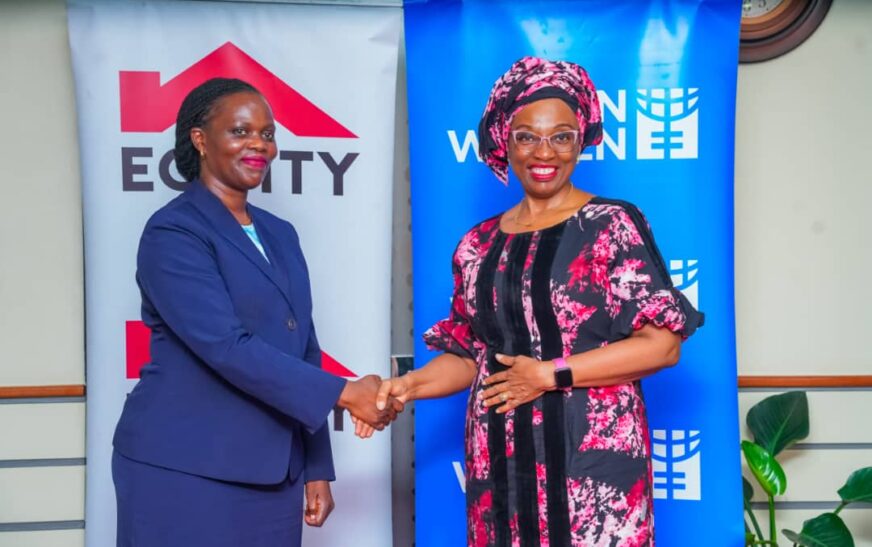
UN Women and Equity Bank Uganda Limited are taking a bold step to transform the economic landscape for Ugandan women. In a landmark collaboration signed Thursday at Equity Bank’s Boardroom in Church House, the two powerhouses launched a two-year initiative (April 2026–March 2028) aimed at unlocking financial opportunities, boosting entrepreneurship, and promoting sustainable livelihoods especially for women in underserved and refugee-hosting communities.
The partnership promises more than just financial products. It will deliver financial literacy programs, digital skills training, clean energy financing, and targeted support for women-led agribusinesses and cooperatives. Together, UN Women and Equity Bank are tackling the barriers that have long held women back from fully participating in Uganda’s economy.
“This is about giving women the tools, resources, and opportunities to thrive,” said Adekemi Ndieli of UN Women. “By joining forces with the private sector, we are fast-tracking inclusive growth and sustainable development for communities that need it most.”
Gift Shoko of Equity Bank Uganda echoed the sentiment: “Inclusive finance is the backbone of economic growth. Beyond banking, we are offering training, digital literacy, and clean energy solutions to ensure women can compete and succeed in today’s market.”
The initiative also aims to integrate women into national and regional trade opportunities, including the African Continental Free Trade Area (AfCFTA), helping scale women-led businesses and expand market access across borders.

Catherine Psomgen described the partnership as a milestone for resilience, emphasizing that empowering women is critical not just for families, but for entire communities.
The collaboration blends UN Women’s technical expertise, community engagement, and policy support with Equity Bank Uganda’s tailored financial services and advisory programs. A clear work plan with measurable targets will guide the partnership, with thousands of women expected to directly benefit from enhanced financial inclusion, entrepreneurial growth, and digital skills.
This alliance signals a growing recognition that public-private partnerships are key to driving inclusive economic development and ensuring that women are not just participants, but leaders in Uganda’s economic future.