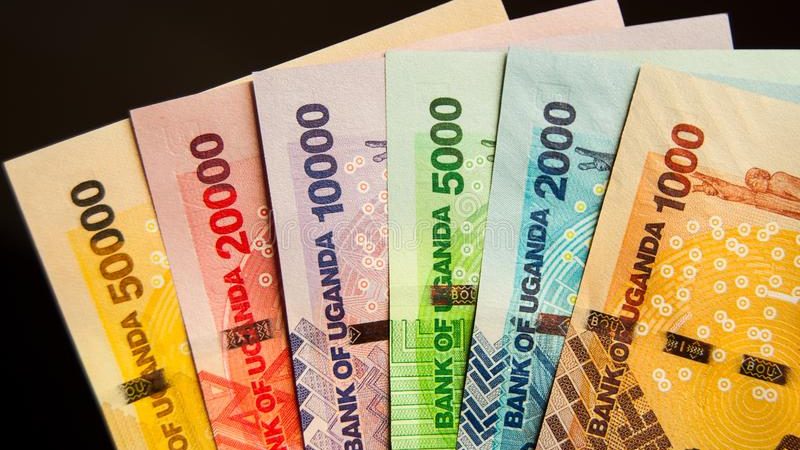

The Uganda shilling weakened slightly against the US dollar during the week as sustained corporate demand for foreign currency outweighed available inflows, although increased receipts from commodity exporters and remittances helped limit the losses.
The local currency closed the week at Shs3,715/3,725 per US dollar, compared with Shs3,705/3,715 at the beginning of the week.
Richard Nsubuga, Ag Head of Trading, CIB Markets at Absa Bank Uganda, said demand from the energy and manufacturing sectors, alongside interbank activity, exerted pressure on the shilling early in the week.
“Continued inflows from commodity exporters and remittances, coupled with subdued corporate demand in the latter part of the week, helped the shilling recover some of its losses,” Nsubuga said.
He said the shilling’s near-term performance would largely depend on the balance between corporate foreign currency demand and inflows from exporters and remittances.
“The unit is projected to trade within the Shs3,650 to Shs3,820 range against the US dollar,” Nsubuga said.
Money market remains liquid
Money market conditions remained largely liquid during the week, supported by government cash releases and ample liquidity in the financial system.
According to Nsubuga, overnight lending rates averaged within the single-digit range, reflecting comfortable liquidity conditions across the banking sector.
The Bank of Uganda largely stayed on the sidelines for most of the week, refraining from open market operations despite the excess liquidity.
However, towards the end of the week, improved liquidity following repo maturities prompted the central bank to intervene through the sale of Bank of Uganda bills and a seven-day mop-up repo.
The interventions absorbed Shs727.6 billion from the market.
Nsubuga said liquidity nevertheless remained sufficient to support interbank activity, with short-term interest rates remaining relatively stable.
Kenya shilling also weakens
The Kenya shilling also weakened slightly during the week, largely driven by interbank activity.
It traded at Shs3,707.5/3,708.9 against the Uganda shilling equivalent of the dollar?
[This conversion is not supported by the source provided, so it is better to retain Nsubuga’s original Kenya shilling quotation.]
The currency traded at 129.45/129.50 against the US dollar on Friday, compared with 129.20/129.30 at the close of the previous week.
Nsubuga said the Kenyan currency remained within a well-defined 129.20/129.60 range and was broadly anchored in the near term.
Oil prices rise on Middle East tensions
International oil prices recorded strong gains during the week, with WTI rising 1.8 per cent and Brent crude gaining 2.5 per cent as escalating tensions in the Middle East increased concerns over possible supply disruptions.
The geopolitical risk premium intensified following a dispute involving the United Arab Emirates and Iran, alongside reports that US actions were constraining Iranian crude exports.
Stronger refinery demand also supported prices, with US refiners increasing crude consumption while Asian refiners bought more US cargoes for September delivery.

Brent climbed to $93.78 per barrel on Thursday, its highest level since July 24, before easing slightly on Friday as investors took profits.
Nsubuga said discussions between Iraq and Saudi Arabia over Iraq’s OPEC production allocation had also emerged as another supply-side factor for traders.
Dollar recovers after strong US data
The US dollar initially weakened after the US Treasury announced plans to increase buybacks of longer-dated government bonds, a move that supported risk appetite and reduced demand for the safe-haven currency.
However, the dollar recovered after economic data pointed to continued resilience in the US economy.
Initial jobless claims fell to 206,000, from 209,000 previously, beating the market expectation of 210,000. The Philadelphia Federal Reserve Business Index also rose to 47.4, from 41.4, significantly above the consensus forecast of 25.0.
The US Dollar Index opened at 99.8350, fell to a low of 98.5570 and closed at 98.8950.
Euro gains against dollar
The euro strengthened for much of the week as investor sentiment continued to favour the currency.
German Producer Price Index data surprised on the upside, with annual producer prices accelerating to 3 per cent, from 1.8 per cent previously, above the market expectation of 2.7 per cent.
On a monthly basis, PPI rose 1.1 per cent after declining 0.3 per cent in the previous month and against expectations of a 0.7 per cent increase.
The euro opened the week at $1.1580 and closed at $1.1706.
The British pound also extended its recent gains as markets continued to assess the UK’s inflation outlook and interest-rate prospects.
Sterling opened at $1.3544 and rose to a high of $1.3659.
Gold posts third consecutive weekly gain
Gold prices rose by about 3.8 per cent during the week, increasing from $4,415.99 per ounce to $4,584 on Friday, marking the precious metal’s third consecutive weekly gain.
The rally was largely attributed to the US Treasury’s announcement that it would increase buybacks of long-dated government bonds.
The announcement pushed Treasury yields and the US dollar lower, triggering a 3.2 per cent one-day increase in gold prices.
Nsubuga said investor demand remained strong, with gold exchange-traded funds recording their largest daily inflow in 11 months, adding about 583,500 ounces, valued at approximately $2.6 billion.
Although continued sales from Russian gold reserves exerted some supply-side pressure, market sentiment remained bullish, supported by stronger technical momentum and expectations that a break above $4,650 per ounce could trigger further gains.