
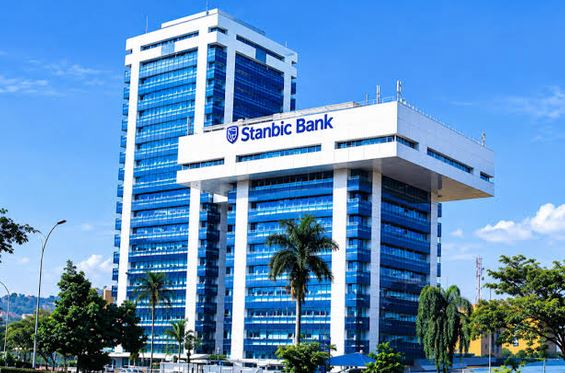
Stanbic Bank has been fined Shs40 million and ordered to pay Shs50 million in general damages for blocking a customer’s account in violation of a court order, an action that allegedly disrupted his political campaigns and contributed to his election loss.
Acting Judge Dr Melody Ngwatu found that the bank knowingly disobeyed a temporary injunction issued on June 27, 2012, which expressly allowed Dr James Rutanga Akampumuza to operate his account at the bank pending determination of the substantive suit.
The injunction also barred the bank from blocking the account on any of the grounds raised in the main case.
The dispute resurfaced in July 2025 when Akampumuza went to Stanbic Bank’s Kabale branch to withdraw money but was allegedly informed that his account had been blocked by the bank’s headquarters. He was reportedly told that he would only access his money after opening a new account.
Akampumuza told court that his account had sufficient funds to meet his immediate financial needs, but the bank insisted that he complete new account-opening forms. He declined, arguing that the proposed account would not contain the money held in his existing account.
He further argued that the denial of access to his funds affected his ability to finance his political campaigns, ultimately contributing to his defeat in the elections.
His application was supported by affidavits from Emmanuel Tumusiime, Winnie Kiconco, Emmanuel Rwemereza and Tarsis Natukwasa, who corroborated his claims that the account had been blocked, crippling his campaigns.
Through his lawyers, Akampumuza wrote to the bank on July 17, 2025, demanding immediate access to his funds. He said he had been denied access on July 16 and on several previous occasions despite the existing court order. He warned that failure to restore access would force him to institute contempt proceedings against the bank and its officers.
Stanbic Bank denied blocking the account, maintaining that its investigations had established that Akampumuza’s account was active and accessible.
The bank said it had contacted its Metro branch, which reported that it was unaware of any incident involving the customer on July 16, 2025. It also maintained that there was no lien or freeze order preventing him from accessing his funds.
The bank instead attributed the dispute to Akampumuza’s failure to update his Know Your Customer (KYC) information.
According to the bank, Akampumuza first visited its Kabale branch on July 1, 2025, seeking to withdraw Shs10 million. During the transaction, a teller reportedly discovered that his national identity card was invalid and that his KYC information was outdated.
The teller advised him to complete the necessary documents to update his details and protect the account against fraud. However, Akampumuza requested more time, although his withdrawal was approved.
On July 12, 2025, he returned to withdraw Shs12 million, but another teller again asked him to update his KYC information. He reportedly declined, although the bank said the withdrawal was still approved.

The bank said that on July 16, 2025, both the teller and branch manager asked him to complete the KYC documents, but he refused and chose to leave the premises.
Stanbic maintained that Akampumuza was never sent away or denied access to his account, arguing that he voluntarily left after declining to comply with the request to update his customer information.
The bank also challenged the legal basis of the application, arguing that the remedies of mandamus and certiorari sought by Akampumuza were available under judicial review proceedings rather than contempt proceedings.
It further argued that claims for general, punitive and aggravated damages required a formal hearing and could not properly be determined through affidavit evidence. The bank also opposed the request for specific orders against individual officials, saying they were not parties to the proceedings.
However, Justice Ngwatu rejected the bank’s defence, finding that it was aware of the injunction issued in 2012 and was therefore expected to comply with its terms.
“I find that the respondent had knowledge of the existence of the temporary injunction order issued by the court on 27th June 2012,” the judge ruled.
The judge noted that although Akampumuza relied on his affidavit and those of four other witnesses to demonstrate that the bank had blocked his account, the respondent had not produced sufficient evidence to disprove the allegations.
“Thus, court is convinced that the respondent blocked the applicant’s account and prevented him from accessing money on his account held with the respondent. The Bank knowingly violated the court order,” the judge held.
Court further found that Akampumuza had demonstrated that he suffered losses as a result of the bank’s actions and was entitled to compensation.
Although the applicant had sought a higher amount, the judge considered his claim excessive and awarded him Shs50 million in general damages.
On punitive damages, the judge reasoned that a fine or penalty served the same purpose as exemplary or punitive damages.
“In my considered view, a fine or penalty serve the same purpose as the exemplary of punitive damages. The applicant has already been awarded a fine of Shs40 million,” Justice Ngwatu ruled.