
As debates continue over education, youth employment and the skills needed to drive economic transformation, Adonai Family Uganda is making a case for greater investment in vocational training, arguing that practical skills offer young people an important pathway to economic independence.
The organisation, located in Nsaggu in Wakiso District, says education should not be measured exclusively by academic qualifications but also by the practical abilities young people acquire to earn a living, create employment and contribute to their communities.
Aloysius Luswata, the Founding Director of Adonai Family Uganda, says the organisation believes every child has potential, even when conventional academic education does not provide the most suitable route to success.
He argues that young people who struggle academically should not be regarded as failures but should instead be supported to identify their strengths and pursue vocational skills that match their abilities.
“If a child is academically unable to go very far, it does not mean that the child cannot succeed in life. We have to identify where that child’s strength is and channel them towards the right opportunity. Someone may not go far academically, but they can acquire skills in mechanics and become very good at repairing machines. That is also a meaningful way of earning a living,” Luswata said.
He noted that the organisation’s ambition is to prepare children to become self-reliant adults capable of supporting themselves and their families rather than remain dependent on assistance.
“Our focus is to raise purpose-driven and value-oriented children. We want that by the time a child completes our programme and moves into independent life, they should have something they can depend on. If they are academically unable to achieve certain qualifications, we should help them acquire practical skills that can enable them to earn a living,” he explained.
The world needs practical skills
Luswata believes that practical skills are central to the functioning of economies because societies depend on skilled people to produce food, maintain machinery, provide technical services and support various industries.
He cited mechanics and agriculture as examples of fields where young people can acquire practical abilities that translate into employment and income-generating opportunities.
“The world stands on skills. Sometimes we look at education as though the only successful person is the one who has gone through university and secured an office job. But society needs people who can do practical work. We need mechanics who can repair machines, people who can produce food and individuals who can provide technical solutions to everyday challenges,” he said.
He added that greater attention should be given to helping young people identify opportunities within their communities rather than limiting their ambitions to formal employment.
“Take agriculture, for example. We all need food, and somebody must grow that food. If a young person receives the right agricultural training and returns to their community to grow crops or rear animals, they can earn an income, support their family and contribute to feeding the country. We need people who can produce and create value, not only those who are looking for office jobs,” Luswata said.
Education should recognise different abilities
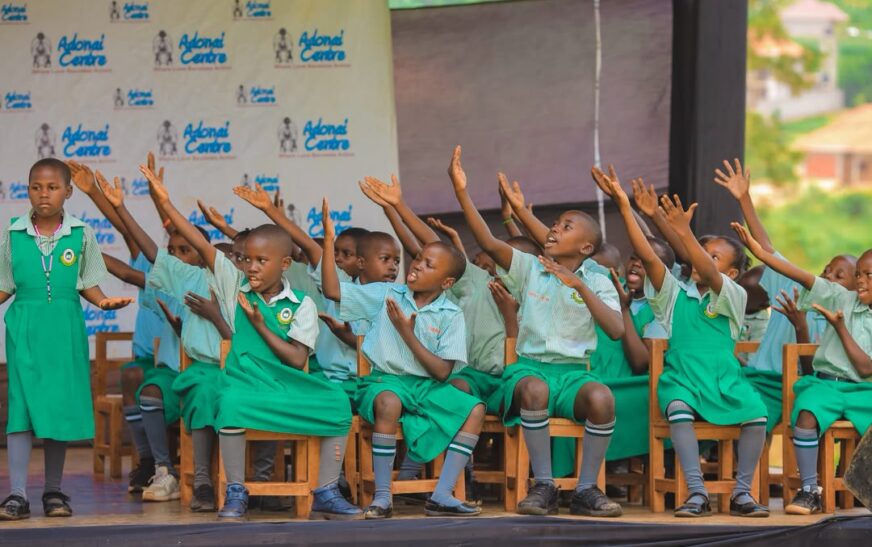
Through its education programmes, Adonai Family Uganda supports orphans and vulnerable children through Adonai Junior School and a sponsorship programme that extends to secondary education and, depending on available resources, higher institutions of learning.
The organisation currently provides direct support to approximately 300 children at primary level, with another estimated 500 benefiting indirectly. More than 100 students are also supported at secondary school level.
However, Luswata says the organisation’s long-term vision is not simply to ensure that beneficiaries complete school, but to prepare them for independent and productive lives.
He believes that education systems and development programmes should recognise that children have different abilities, interests and talents, which should inform the learning and career paths they pursue.
“Every child has a strength. Some children may perform very well in the classroom, while others may be more talented in practical activities. We should be able to recognise these differences and guide them accordingly. A child who is good at working with machines should be encouraged to develop that ability instead of making them feel that they have failed because they are not performing like others academically,” he said.
He added that vocational training should be viewed as a valuable form of education rather than a last resort for learners who do not perform well in conventional examinations.
Linking skills development to poverty reduction

For Adonai Family Uganda, vocational skilling is also part of a broader strategy to address poverty among vulnerable children and their families.
The organisation operates in three main areas: education, healthcare and community development. Through these programmes, it seeks to improve children’s access to learning and healthcare while strengthening the economic capacity of their households.
Luswata said that equipping children with practical skills can help them become economically independent and eventually support the families from which they come.
“We are trying to break the chain of poverty. When a child acquires a skill that enables them to work and earn an income, they are in a better position to support themselves and their families. We want children who come through our programmes to reach a point where they can stand on their own and also contribute to the welfare of others,” he explained.
The organisation also supports families through agricultural activities, small-business initiatives and a pig farming project under which selected households receive two piglets and support to establish productive livestock enterprises.
According to Luswata, strengthening family incomes complements children’s education by helping households meet their basic needs and provide a more supportive environment for learning.
Agriculture as an opportunity for practical learning
Adonai Family Uganda’s own agricultural activities reflect the organisation’s emphasis on practical production and self-reliance.
The NGO grows maize, cassava, potatoes, beans and vegetables to supplement the feeding programme for children under its care.
Luswata believes that agriculture offers significant opportunities for young people who receive appropriate practical training and are supported to apply their knowledge.
He said the organisation is also planning to establish a maize milling facility to reduce processing costs and generate additional income to support its programmes.
The proposed investment, he explained, is part of efforts to develop sustainable activities that can strengthen the organisation’s ability to support vulnerable children.
Call for greater investment in skills development
Luswata is calling for greater collaboration between government, development partners, training institutions and the private sector to expand opportunities for vocational skills development among vulnerable young people.
He said additional support would help organisations such as Adonai Family Uganda identify children’s abilities and connect them to practical training opportunities that can improve their prospects of earning a living.
He also appealed for support towards the organisation’s wider education programme, including qualified teachers, scholastic materials and resources to sustain its interventions.
“We need support to help these children discover their abilities and acquire the skills they need for the future. Not every child will follow the same path, but every child deserves an opportunity to become productive. If government and other partners can work with local organisations to provide the necessary training and resources, we can help more young people become independent,” he said.
He emphasised that the ultimate goal should be to produce young people who can create value within their communities rather than simply compete for a limited number of formal employment opportunities.
For Adonai Family Uganda, the future of vulnerable children should not be determined solely by their academic performance or family circumstances. Instead, providing them with opportunities to develop practical skills could help unlock their potential, improve household livelihoods and contribute to a more productive society.