
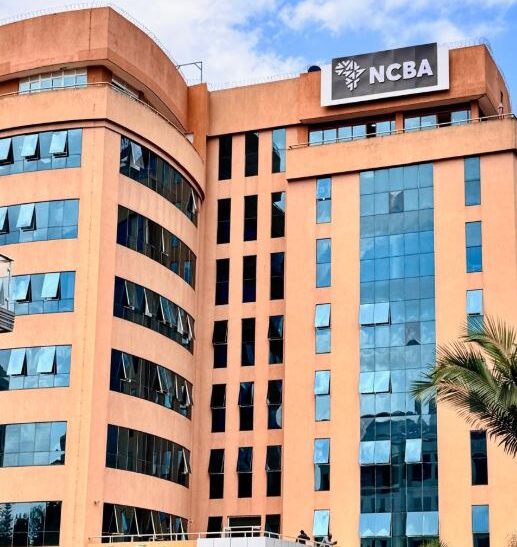
NCBA Group PLC has posted a 14.5 per cent increase in profit after tax to KES 18.8 billion for the nine months ended September 2026, up from KES 16.4 billion recorded during the same period last year, supported by stronger lending, digital transactions and growth in non-interest income.
The group’s operating income rose by 14.7 per cent to KES 61.3 billion, while profit before tax increased by 14.6 per cent to KES 23.4 billion, reflecting improved performance across its banking and non-banking businesses.
The growth was achieved despite an increase in credit impairment charges, which rose to KES 8 billion from KES 5.1 billion a year earlier, as the lender moved to strengthen provisions against selected corporate borrowers facing repayment challenges.
Operating expenses increased by 4.3 per cent to KES 29.1 billion, while customer deposits grew by 13.5 per cent to KES 554 billion. The group’s total assets expanded by 11.8 per cent to KES 744 billion.
Digital lending continued to underpin the group’s expansion, with loans disbursed through digital platforms increasing by 27.2 per cent to KES 1.3 trillion.
NCBA Group managing director and chief executive John Gachora said the improved earnings were driven by growth in lending and the group’s efforts to diversify its revenue streams.
He said net interest income increased by 19.8 per cent to KES 38.4 billion, supported by 10.7 per cent growth in loans, while non-funded income rose by 7.2 per cent to KES 22.9 billion.
The group recorded a return on average equity of 19 per cent, which Gachora said demonstrated the quality of its earnings and its ability to deliver value to shareholders.
However, the group’s non-performing loans ratio remained at 10.1 per cent, prompting management to increase impairment charges as part of efforts to improve provision coverage for selected corporate non-performing loans.
Its capital adequacy ratio stood at 21.4 per cent, above the regulatory minimum of 14.5 per cent, providing capacity to finance further investment and business growth.
Regional operations
NCBA Bank Kenya remained the group’s biggest profit contributor, accounting for 86 per cent of total profit before tax. Its performance was supported by prudent funding-cost management, revenue diversification and cost controls.
Operations in Uganda, Tanzania and Rwanda jointly generated KES 2.7 billion in profit before tax, driven by 21 per cent growth in lending and a 17 per cent increase in customer deposits.
The group’s non-banking subsidiaries, including NCBA Investment Bank, NCBA Insurance, Leasing and Bancassurance, contributed a combined KES 1.1 billion in profit before tax.
Beyond traditional banking, the group continued expanding its investment, insurance and SME financing businesses.
Assets under management at NCBA Investment Bank grew by 12.3 per cent to KES 105 billion, while its active customer base reached 61,000.
Gross written premiums at NCBA Insurance increased by 10 per cent to KES 3.3 billion, while the bancassurance business registered stronger growth of 86.2 per cent to KES 5.4 billion.
Lending to small and medium-sized enterprises (SMEs) increased by 10 per cent to KES 58.2 billion. The group said it was complementing financing with programmes targeting women entrepreneurs, international trade and businesses in the creative economy.
These initiatives include the AFAWA Women SME Acceleration Programme, an SME business trip to China and a partnership with the HEVA Fund to develop financing products for the creative economy.

Digital banking and green financing
NCBA also reported improvements in service delivery and digital banking, with system uptime reaching 99.7 per cent and processing service-level agreement performance improving to 92 per cent.
The group’s digital channels net promoter score rose to 71 per cent, while customer relationship management utilisation increased to 93 per cent.
It launched Property Duka, which it describes as East Africa’s first artificial intelligence-powered property ecosystem, and opened its 100th Kenyan branch at Nord Mall in Ruiru.
The regional rollout of its ConnectPlus corporate internet banking platform generated 91,000 transactions valued at KES 44 billion. Transaction banking fee income increased 2.5 times compared with the second quarter of 2026.
The group also stepped up financing for electric mobility, signing partnerships with ePure Motion and BasiGo in Kenya and Kason Motors in Rwanda to support individual and commercial electric vehicle purchases.
NCBA said it had converted 37 per cent of its corporate fleet to electric vehicles, while green financing disbursements reached KES 5.6 billion in 2026. New partnerships included the Raha Energies solar financing project in Tanzania.
On sustainability, the group said it had deployed more than KES 90 million towards community programmes, including education scholarships, golf tournaments, the Elev8 LIVE music platform, the Makerere Marathon and the Rwanda Golf Open.
The initiatives have reached more than 850,000 livelihoods, engaged over 13,000 participants through inclusive sports and supported the planting and growing of more than 490 million trees under its 15 Change The Story sustainability commitments.
Nedbank acquisition
The results follow the completion of South Africa’s Nedbank Group Limited acquisition of a 66 per cent controlling stake in NCBA.
The transaction, publicly announced on October 21, 2026, was settled on November 3, making NCBA a subsidiary of Nedbank. However, the bank will retain its listing on the Nairobi Securities Exchange, with the remaining 34 per cent shareholding held by the public.
Gachora said the acquisition would strengthen NCBA’s capacity to pursue growth opportunities across East Africa, while benefiting from the financial backing of Nedbank.
He said economic growth across the region was projected at between 4.8 per cent and 7.4 per cent despite global macroeconomic challenges.
The group is also implementing its UBUNTU 2026-2030 strategy, with more than 4,000 employees expected to drive growth through stronger customer relationships, disciplined execution and prudent risk management.
Gachora said the focus would remain on creating long-term value for shareholders and other stakeholders while positioning the lender to take advantage of emerging opportunities across the region.