
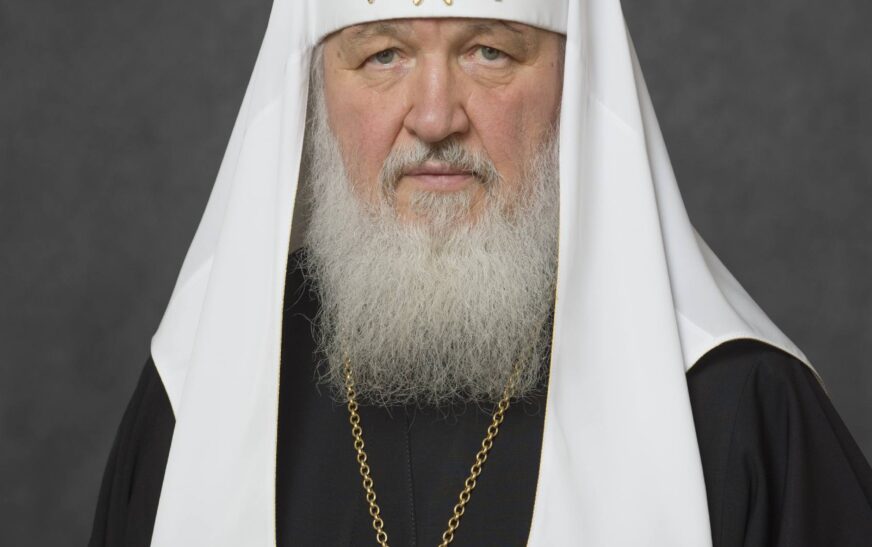
Patriarch Kirill of Moscow, head of the Russian Orthodox Church, has offered his profound condolences to the government and people of Iran following the assassination of Supreme Leader Ayatollah Ali Khamenei, according to the official website of the Moscow Patriarchate.
In a message to Masoud Pezeshkian, President of the Islamic Republic of Iran, the Patriarch conveyed what the website described as his “deep condolences in connection with the assassination of the Supreme Leader of the Islamic Republic of Iran, Ayatollah Ali Khamenei, and his relatives.”
“Please accept my deep condolences in connection with the assassination of the Supreme Leader of the Islamic Republic of Iran, Ayatollah Ali Khamenei, and his relatives,” the message, published on the Patriarchate’s website, reads.
Patriarch Kirill described Khamenei as “a man of deep religious convictions, a spiritual and national leader, strong in spirit and character,” reflecting on his decades-long prominence in Iran’s political and religious life.
“May the All-Merciful God grant them and the entire Iranian people the strength and fortitude to overcome the sorrow of loss,” the message adds, highlighting the Patriarch’s appeal for resilience during a period of mourning.
War and Escalation: A New Chapter in the Middle East
The assassination of Ayatollah Khamenei — confirmed by Iranian state television following a series of coordinated strikes by the United States and Israel — has occurred amid one of the most intense escalations in Middle Eastern conflict in decades. These strikes, which targeted Iranian military and governmental sites, mark a dramatic broadening of hostilities between Iran and Western-aligned forces.
Iran has responded with missile and drone attacks on targets across the region, including U.S. military bases and Israel, heightening fears of a prolonged and more widespread conflict.
The killing of a sitting supreme leader is historically unprecedented in modern warfare and signals a significant shift in how geopolitical adversaries engage each other. Targeted strikes on heads of state — traditionally avoided due to diplomatic consequences reflect a willingness by involved powers to take increasingly aggressive actions that risk broader retaliation and instability.

Regional Ramifications and Power Vacuums
Iran has formed an interim leadership council to steer the country through this turbulent period while preparations begin for the selection of a new supreme leader.
However, experts warn that the conflict is far from over. Iran’s military remains capable of significant offensive operations, including the use of an extensive arsenal of missiles and drones, and its network of allied militias from Lebanon’s Hezbollah to Iraqi factions has been drawn deeper into the fighting.
The broader Middle East now faces heightened uncertainty, with countries across the Gulf region on alert and energy markets fluctuating sharply due to disrupted supply routes and fears of extended hostilities.
International Reactions and Diplomatic Tensions
Global reactions have been mixed. Some nations have condemned the assassination as a violation of international law and warned that it risks emboldening further violence, while others characterize it as a blow against what they view as a destabilizing force in the region.
In Russia, President Vladimir Putin has condemned the killing as a “cynical violation of all norms of human morality and international law,” calling Khamenei a key figure in strengthening Russian‑Iranian relations.