
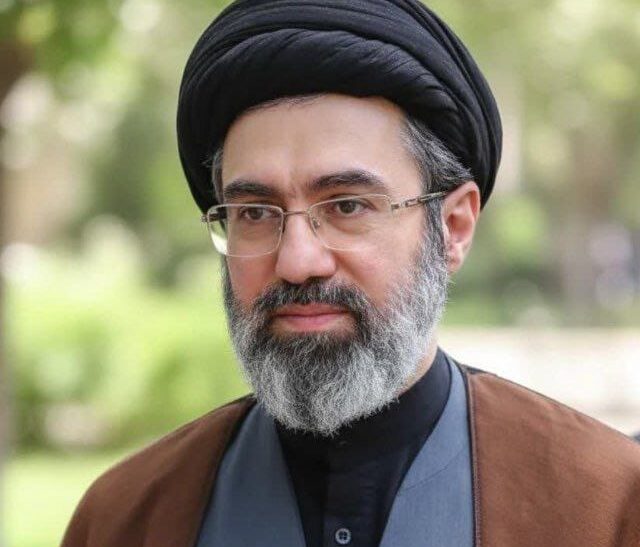
Iran’s Supreme Leader, Seyyed Mojtaba Hosseini Khamenei, delivered his Nowruz message marking the Persian New Year 1405 (March 2026) by framing the past year as one defined by conflict, loss, and resilience, while calling for national unity and renewed focus on economic self-reliance.
Khamenei opened with a religious invocation and highlighted the rare coincidence of Nowruz and Eid al-Fitr, describing it as a convergence of “spiritual and natural spring.”
He extended congratulations to Iranians and Muslims worldwide while offering condolences to families of those killed in what he described as multiple “imposed wars,” a January coup attempt, and ongoing operations involving border guards and intelligence personnel.
The Supreme Leader recounted three major military and security crises in 1404. The first, in June, involved Israeli attacks allegedly backed by the United States, which killed senior commanders, scientists, and around 1,000 civilians. Khamenei claimed the attackers had expected the Iranian system to collapse quickly but were forced to retreat due to public vigilance and resistance.
The second crisis, a January coup attempt, was described as a coordinated effort by the U.S. and Israel to exploit economic hardships through internal networks, resulting in destruction and casualties.
The third, ongoing conflict began with the killing of a “great leader” and continued to affect civilians, including children, as well as military personnel. Khamenei said adversaries expected leadership losses to weaken the country but instead triggered mass mobilization and unity.
He pointed to nationwide rallies, including Quds Day events, as evidence of cohesion beyond military capability. Khamenei thanked citizens and officials who “stood among the people,” describing political, cultural, and religious unity as a “divine blessing” that must be protected. He warned that hostile actors are attempting to exploit internal divisions through media and psychological operations, urging both the public and journalists to avoid amplifying weaknesses.

Acknowledging that this Nowruz is the first without key “martyred leaders,” Khamenei described it as a period of national mourning. Nevertheless, he encouraged citizens to maintain cultural traditions, such as family visits, while paying respect to bereaved families and local martyrs.
Marking the end of Ramadan, Khamenei expressed hope that prayers offered during the holy month would be accepted, “perhaps even better than requested.” He also thanked grassroots workers, volunteers, and service providers for their contributions, describing such efforts as essential to national resilience.
Khamenei announced the year’s slogan as “Resistance Economy under the Shadow of National Unity and National Security,” emphasizing insulation of Iran’s economy from external pressures. He highlighted plans to improve livelihoods, strengthen infrastructure, and enhance economic capacity to counter what he termed “economic warfare.”
On foreign policy, he reiterated Iran’s intention to deepen ties with neighbouring countries based on shared religion, culture, and strategic interests, with particular focus on Afghanistan and Pakistan. He rejected allegations of Iranian involvement in recent attacks in Turkey and Oman, describing them as false-flag operations aimed at sowing regional division.
Khamenei concluded by expressing hope that the new year would bring “victories and progress” for Iran, its neighbours, and the wider Muslim world, while cautioning that adversaries would continue efforts to destabilise the country.