
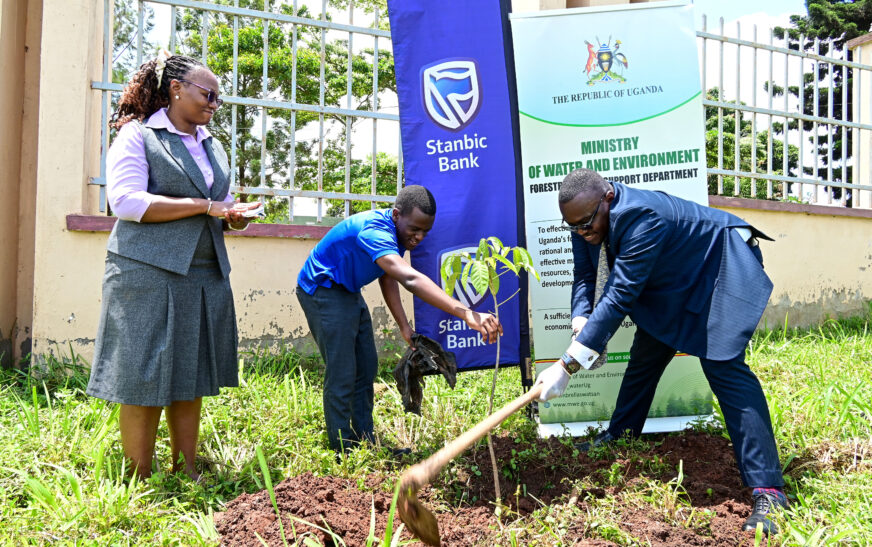
Stanbic Bank Uganda has joined the government and environmental stakeholders in a renewed push for collective action to address climate change, using this year’s Earth Day to urge a shift from pledges to practical solutions.
At an event held at the Ministry of Water and Environment headquarters in Kampala, the bank called for sustained, coordinated efforts to restore degraded ecosystems and safeguard the country’s environmental future.
Tunde Thorpe, Executive Head of Business and Commercial Banking at Stanbic Bank, said environmental protection must evolve from symbolic gestures into deliberate, long-term action.
“Marking Earth Day is important, but what matters most is what we do beyond today. We all have a responsibility, as individuals, institutions, and businesses, to protect the environment for future generations,” he said.
Anchored on the theme “Our Power, Our Planet,” this year’s commemoration highlights the urgency of transitioning to renewable energy, with a global ambition to triple clean electricity use by 2030.
Thorpe stressed that sustainability is central to Stanbic’s mission, noting that economic growth must go hand in hand with environmental stewardship.
“Uganda is our home, and we drive her growth, but that growth must be sustainable and inclusive. The old way of doing business is no longer an option,” he said.
He pointed to the bank’s continued investment in climate-smart solutions, including renewable energy, sustainable agriculture, and fisheries, as part of its broader commitment to green financing.
The Earth Day engagement also sets the stage for the rollout of Stanbic’s Blue Roots Campaign, a Standard Bank Group initiative targeting the planting of one million trees across Africa among its Business and Commercial Banking clients.
The campaign feeds into the bank’s Positive Impact Agenda, which focuses on financial inclusion, job creation, infrastructure development, climate resilience, and corporate social investment, particularly among women, youth, and farmers.
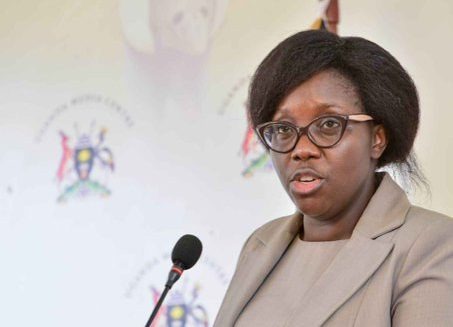
At the same event, Nasuuna Catherine, Undersecretary at the Ministry of Water and Environment, warned that climate change is already disrupting livelihoods across the country.

“We are seeing the effects in real time, prolonged droughts, floods, and declining agricultural productivity. The time for action is now, not later,” she said.
She emphasised that meaningful progress will depend on stronger collaboration between government, the private sector, and local communities.
Despite recent recovery efforts, Uganda’s forest cover remains under pressure, having dropped from over 30 percent at Independence to about 12 percent in the 1990s, and currently standing at approximately 13 percent.
Diana Ondoga, Stanbic Bank’s Manager for Corporate Social Investment, underscored the importance of going beyond tree planting.
“Planting is just the first step. The real work is in nurturing and protecting those trees to maturity. That responsibility belongs to all of us,” she said.
With nearly 70 percent of Uganda’s population made up of young people, stakeholders expressed optimism that growing youth awareness will drive the adoption of sustainable practices and climate solutions.
Stanbic Bank has been distributing about 75,000 tree seedlings annually through the Stanbic National Schools Championship, in partnership with Roofings Group.
This year, the bank plans to expand its environmental footprint through the creation of Stanbic Forests, targeting the planting of 50,000 trees in partnership with the Ministry of Water and Environment and the National Environment Management Authority.
The bank is also part of the Running Out Of Trees campaign, contributing to Uganda’s target of planting 200 million trees by December 2026.