

Several high-performing students have been denied admission to Makerere University and other public universities, Daily Star has learned, raising concerns over the growing competitiveness of government-sponsored placements.
The exclusion comes despite strong performances in the most recent Uganda Advanced Certificate of Education (UACE) examinations, where many candidates posted top grades.
Currently, the Uganda has 11 public universities which include; Makerere University (MAK), Kyambogo University (KYU), Mbarara University of Science and Technology (MUST),Busitema University, Gulu University, Kabale University,Muni University, Lira University,Soroti University, Mountains of the Moon University (MMU), Makerere University Business School (MUBS).
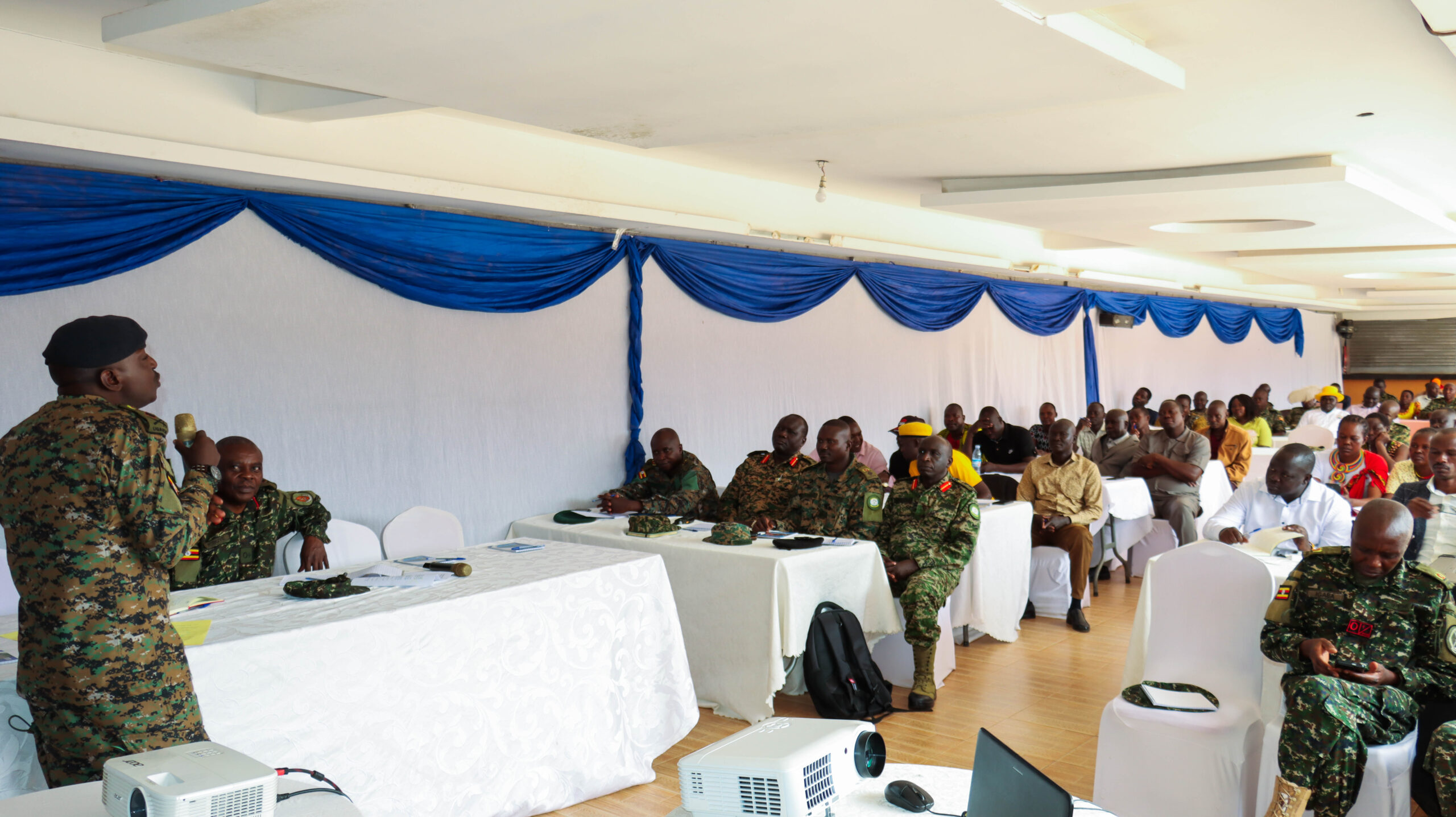
This publication has established that the Admissions Board convened recently, with competition for this year’s intake reaching unprecedented levels.
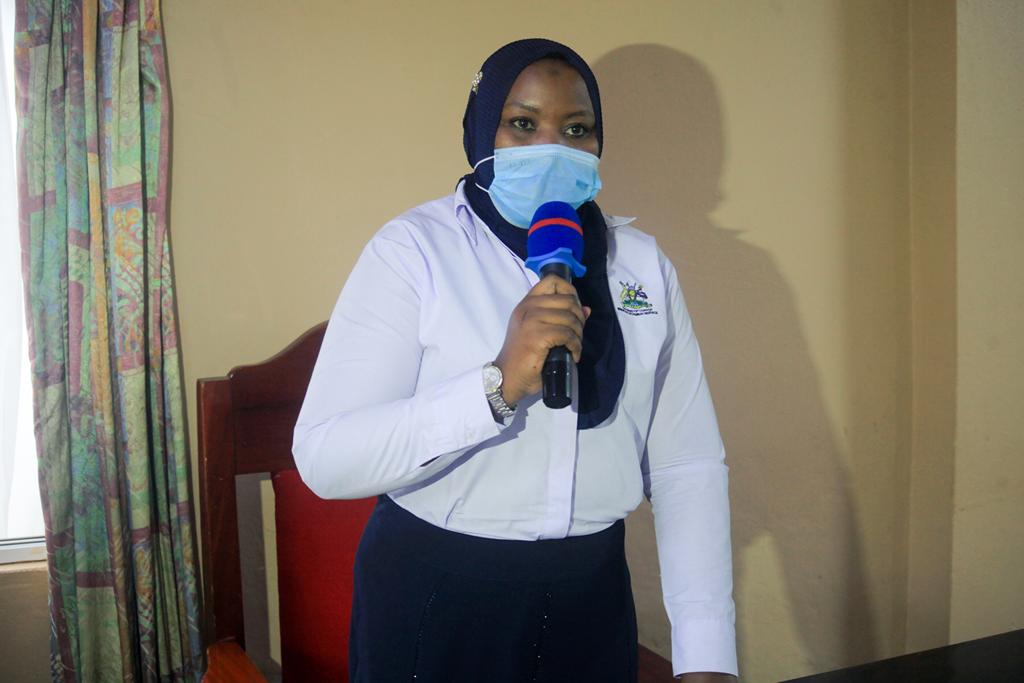
Prof. Buyinza Mukadasi, the Academic Registrar at Makerere University, said that for highly competitive programmes such as the Bachelor of Medicine and Bachelor of Surgery, attaining AAA or 20 points at A-Level alone was no longer sufficient.
He explained that successful candidates also demonstrated exceptional O-Level performance, often with aggregates as low as 9 in 9.
“The official lists for government-sponsored admissions will be published tomorrow. We appreciate your patience and understanding during this highly competitive process,” he said.
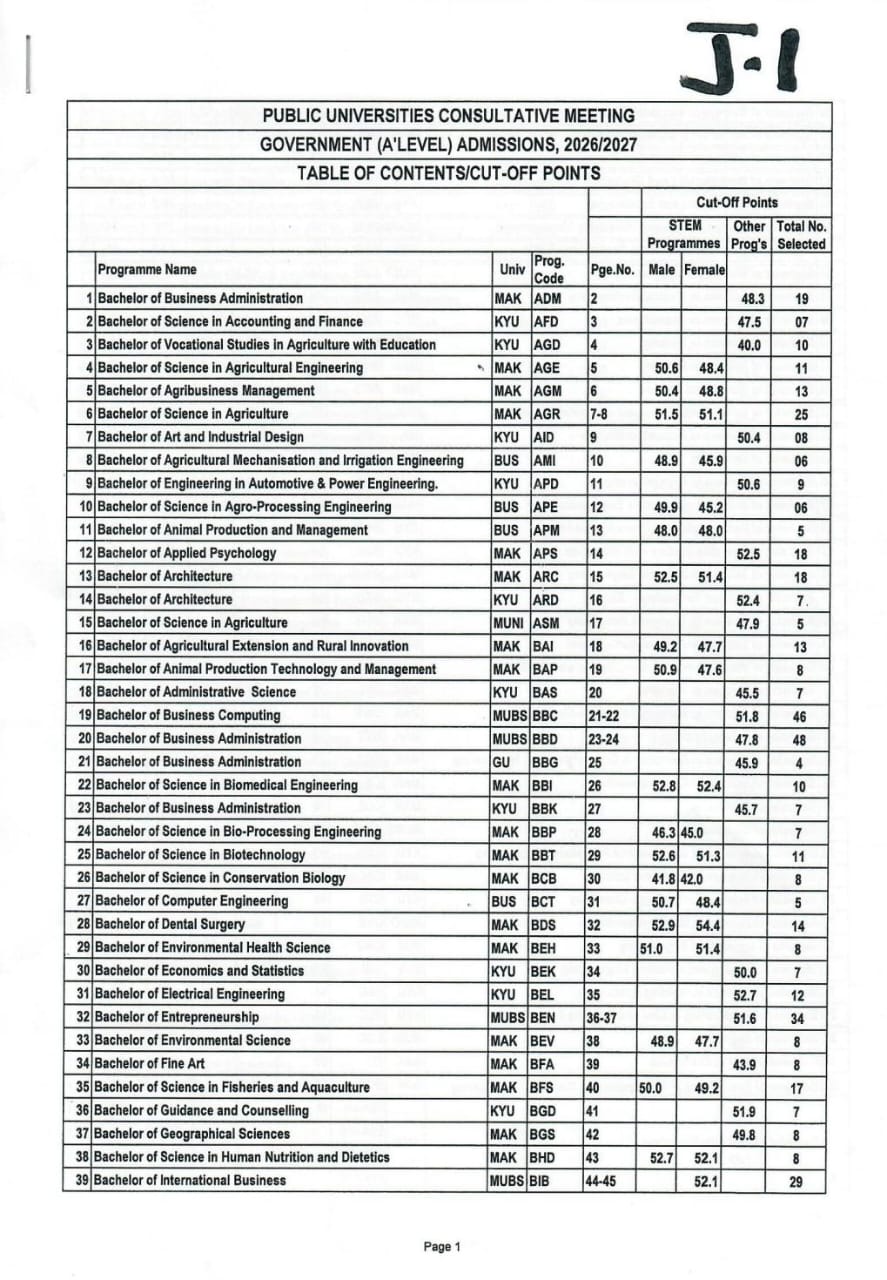
It is understood that cut-off points for most professional programmes have become increasingly similar across public universities, reflecting the intense competition for limited slots.

One concerned observer cited the case of a female candidate who studied Biology, Chemistry and Mathematics (BCM), scored AAB at A-Level, and had an O-Level aggregate of 9 in 8, yet failed to secure admission to any public university, including for Nursing.
“This raises concerns that even private sponsorship slots will face equally stiff competition,” the source noted.
Further analysis indicates that even programmes such as Bachelor of Statistics now demand more than excellent A-Level results. Candidates are increasingly required to have strong O-Level grades, including at least three distinctions and six credits, in addition to high A-Level scores and subsidiary points, to meet the competitive cut-offs.
The developments highlight mounting pressure on Uganda’s public university system, as the number of qualified candidates continues to outstrip the available government-sponsored positions.