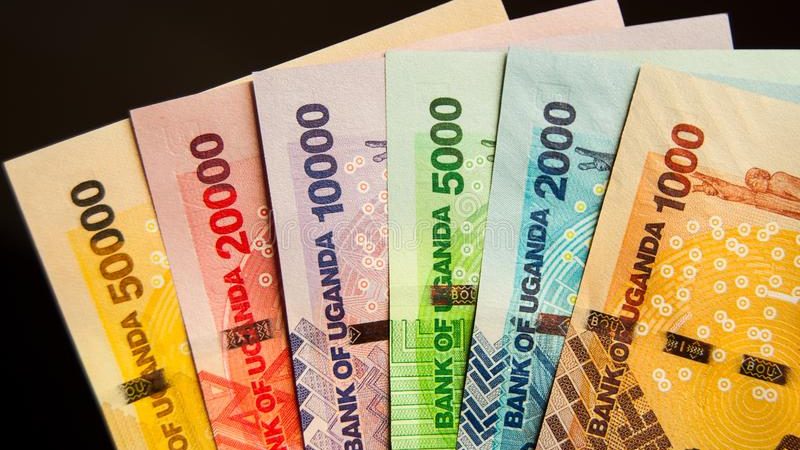

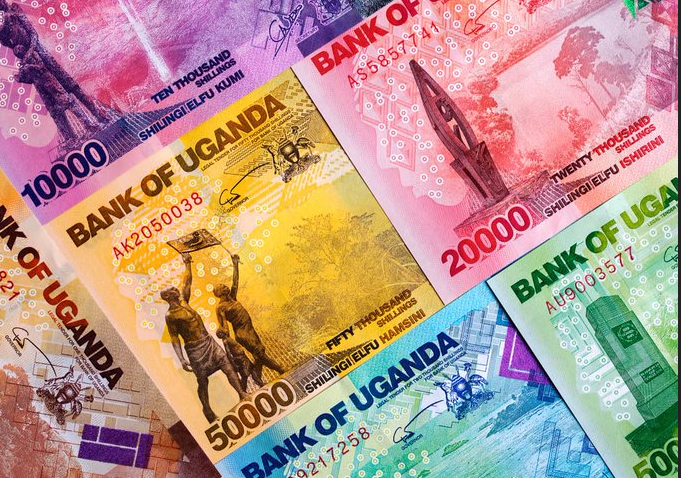
The Uganda shilling came under renewed pressure during the week, weighed down by sustained dollar demand from corporates, commercial banks and select offshore players, market analysts have said.
By Friday, the local currency was trading at around 3,715/3,725, weaker than the previous week’s close of 3,695/3,705. According to Richard Nsubuga, Ag Head of Trading, CIB Markets at Absa Bank Uganda, dollar inflows from commodity exporters and remittance firms were not strong enough to offset the heightened demand in the market.
“The local currency remained under pressure during the week, driven by sustained dollar demand from corporates, commercial banks and select offshore players,” Nsubuga said.
He noted that the shilling is likely to continue trading within a wider band of 3,650–3,800 in the near term, reflecting continued external uncertainty.
In the money markets, liquidity conditions remained relatively tight throughout the week. Overnight and one-week interbank rates averaged 10.62% and 10.79% respectively.
At the latest Treasury bill auction, yields were largely stable, with the 91-day paper closing unchanged at 10.002%. However, the 182-day and 364-day papers eased slightly to 10.75% and 12.00% respectively. The Bank of Uganda raised a total of UGX 243 billion, with no Treasury bill auctions scheduled for the week beginning April 27.
In the regional market, the Kenya shilling held steady within the 129.00/129.25 range. However, traders noted intermittent pressure from pockets of dollar demand, even as steady remittance inflows helped cushion the currency from sharper losses. In the short term, the Kenyan unit is expected to trade between 128.90 and 129.50.
Global oil prices edged higher during the week amid rising concerns over stalled de-escalation efforts between the United States and Iran, which have effectively kept the Strait of Hormuz closed.

Brent crude rose 0.4% to trade above $105.50 per barrel, after earlier gaining as much as 1.9%. The commodity is now on track for its strongest weekly performance since the first week of the conflict, as supply disruptions continue to weigh on global markets.
The Strait of Hormuz remains a critical global energy route, with about 20 million barrels of oil and petroleum products passing through daily before the escalation in tensions.
On currency markets, the US dollar index hovered around 98.8 on Friday and was headed for its first weekly gain in three weeks, supported by safe-haven demand amid stalled US–Iran negotiations.
Markets widely expect the US Federal Reserve to maintain its current interest rate stance at its upcoming meeting and for much of the year, as policymakers assess the inflation and growth implications of the geopolitical risks.
Gold prices eased below $4,700 per ounce and were on course for a weekly decline of about 3%, pressured by rising energy costs and renewed inflation concerns linked to Middle East tensions.
In other currency markets, the euro weakened to below $1.17—its lowest level in two weeks—while the British pound steadied around $1.35 after earlier losses. Despite a partial recovery in UK business activity in April, the pound remains at its weakest level since April 10, as firms brace for potential supply disruptions and rising input costs.