
The race for Speaker of the 12th Parliament entered a decisive stage on Monday after Chief Justice Flavian Zeija formally closed nominations, clearing the way for Members of Parliament to proceed to a secret ballot vote.
The announcement was made in a packed House with 370 MPs present, confirming full quorum for one of the most critical parliamentary processes. Presiding over the sitting, the Chief Justice invoked Rule 5(13) of the Rules of Procedure to officially end nominations and transition the House into the voting phase.
Following the closure, the Clerk to Parliament was directed to read out the procedural guidelines governing the election, paving the way for legislators to cast their votes in secrecy, in line with constitutional requirements.
Three Candidates in the Race
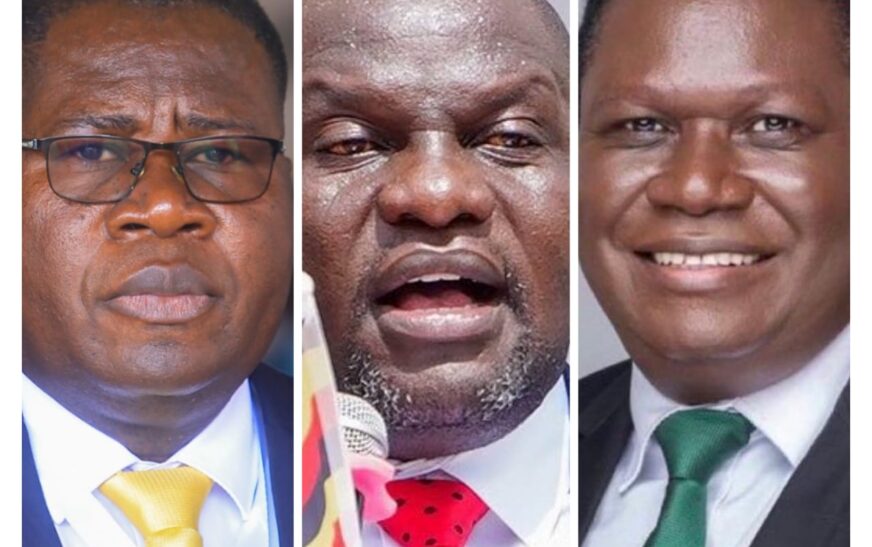
The nomination process confirmed a three-way contest for the powerful position of Speaker.
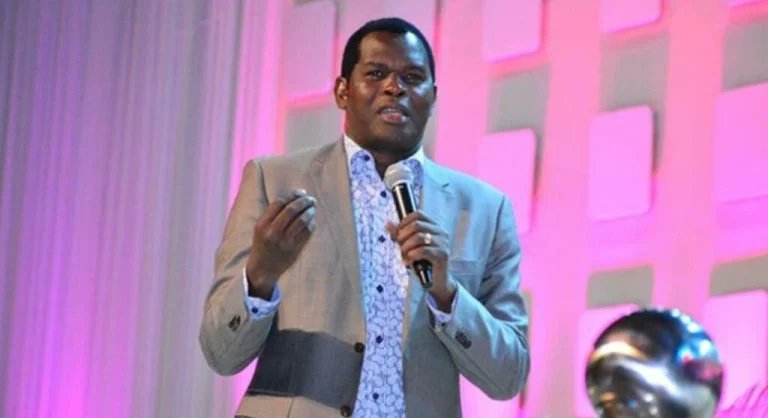
Those in the race include Jacob Markson Oboth, widely seen as the frontrunner with backing from the ruling National Resistance Movement (NRM), Norbert Mao, the Democratic Party President General and current Justice Minister, and Paul Mwiru, representing opposition and independent voices.
Each candidate was duly nominated and seconded on the floor of Parliament, with MPs taking turns to present and endorse their preferred contenders before the close of nominations.
Alupo Backs Oboth
Earlier in the sitting, Vice President Jessica Alupo, also the Woman MP for Katakwi District, formally nominated Oboth Oboth, highlighting his legal expertise and experience in governance.
She pointed to his academic credentials, including a Master of Laws degree from the University of Minnesota Law School in the United States and a Bachelor of Laws from Makerere University, as well as his background in constitutional law, legislative drafting, and conflict resolution.
Her nomination was seconded by Kibale East MP Frank Tumwebaze, who urged MPs to support Oboth, citing his institutional knowledge and leadership capability.

House Moves to Voting
With nominations closed, Chief Justice Zeija declared the end of presentations and endorsements, formally ushering the House into the voting stage.
He announced that the election would be conducted by secret ballot, in accordance with parliamentary rules, and directed the Clerk to guide MPs through the process under Rule 5 of the Rules of Procedure.
The exercise, conducted under judicial supervision, underscores the constitutional requirement that the Speaker is elected independently by MPs, free from open voting pressure.
High-Stakes Decision
The Speaker of Parliament holds a central role in guiding legislative business, maintaining order, and shaping debate within the House, making the election one of the most consequential internal contests.
With three candidates in the race and voting underway, attention has now shifted to the outcome of the ballot, which will determine who takes charge of Uganda’s 12th Parliament.
Results are expected after the conclusion of counting later in the sitting.