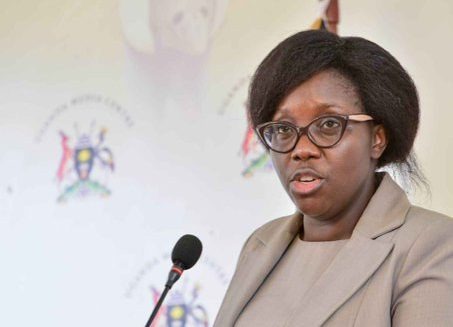


Pressure is piling up on embattled former Trade Ministry Permanent Secretary Geraldine Ssali Busulwa after she was summoned by the Criminal Investigations Department over the controversial Shs 164 billion meant for cooperative societies.
What was meant to uplift cooperatives has now turned into a widening probe, with allegations that the funds were instead shared among politically connected individuals and a few insiders within the system.
Ssali has been directed to report to CID headquarters in Kibuli together with her senior management team that handled the disbursement process, as detectives dig into what investigators describe as “complex and irregular” financial flows.
The summons follows a hard-hitting Parliamentary Committee on Trade, Tourism and Industry report that accused the Ministry of handling the cooperative compensation funds in a lopsided manner, with payments allegedly going to non-qualifying beneficiaries.
Lawmakers also faulted the ministry for bypassing an inter-ministerial committee structure approved by Cabinet, instead setting up internal arrangements that MPs say weakened oversight and opened room for questionable payments.
At the centre of the storm is Bwavu Mpologoma Cooperative Society, which reportedly received large sums of money under circumstances Parliament has repeatedly questioned, alongside claims that individuals linked to the process benefited indirectly.
The Trade Committee, chaired by Mwine Mpaka, had earlier also flagged cost escalations in ministry renovation works at Farmers House in Kampala, where expenditure allegedly rose by billions without clear justification.
Mpaka told Parliament that Ssali bore direct responsibility for what he termed unexplained inflation of contract figures, deepening scrutiny on her stewardship of public funds.
In a related administrative twist, Secretary to the Treasury Ramathan Ggoobi had previously moved to drop her as Accounting Officer over accountability concerns, only for the decision to be overturned following a presidential directive.

President Yoweri Museveni later reinstated Ssali, reigniting debate over political protection versus institutional accountability.
The directive was communicated by Head of Public Service Lucy Nakyobe, who ordered her reinstatement despite earlier findings that had triggered her removal.
Ssali has in recent months remained a recurring name in accountability debates, with Parliament accusing her of running parallel administrative structures and presiding over disputed payments within the ministry.
She has also faced separate allegations of workplace misconduct, further adding to the controversy surrounding her tenure.
With CID now officially entering the picture, investigators are expected to comb through payment approvals, committee decisions, and financial records tied to the multi-billion-shilling cooperative programme.
What began as a development fund for cooperatives has now morphed into a high-stakes investigation—one that could once again put Uganda’s public finance management under the microscope.