
Uganda’s mining sector may be sitting on immense untapped wealth, but stakeholders say turning that potential into real economic gains will require urgent reforms, stronger institutions, and decisive action.
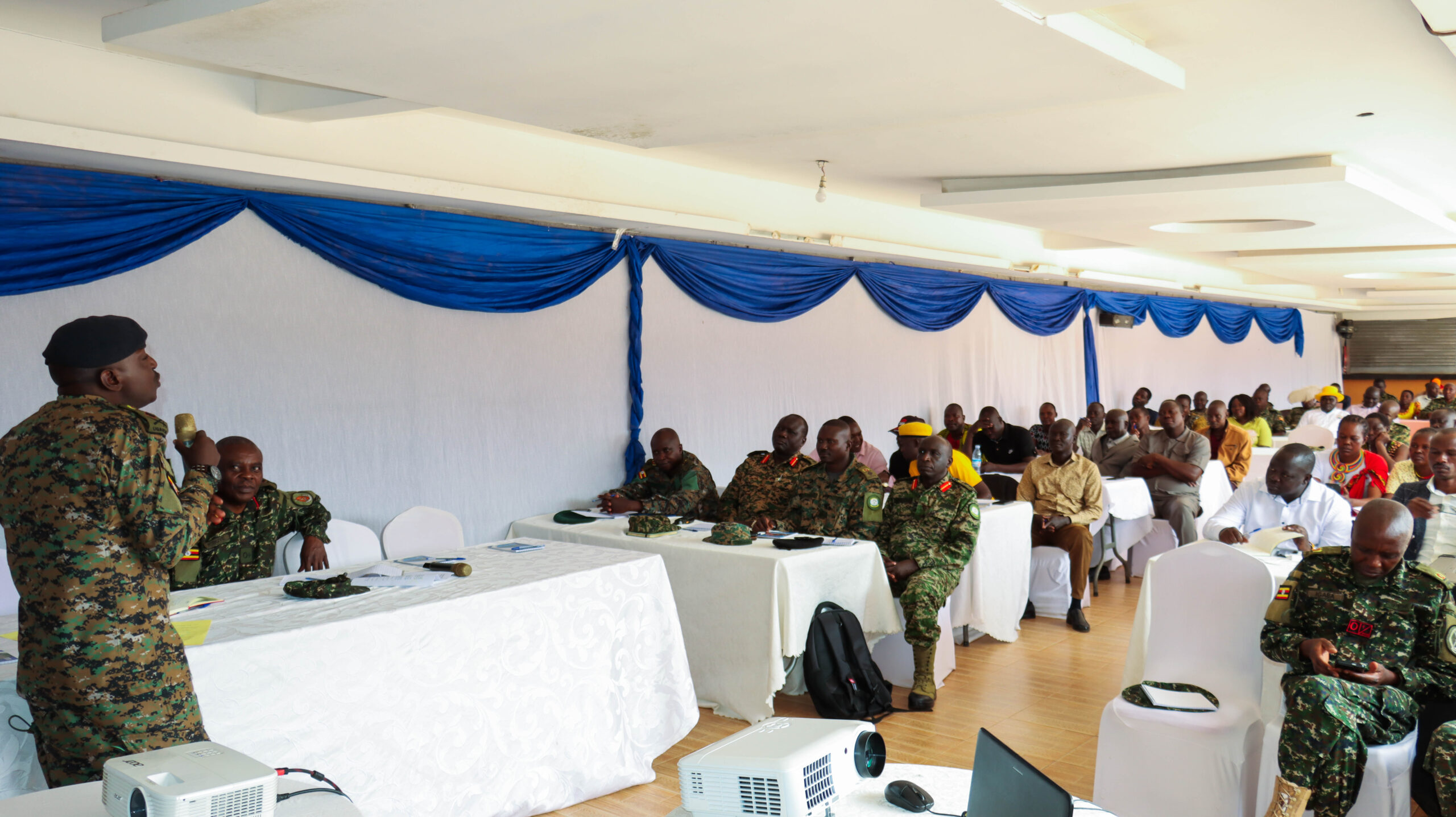
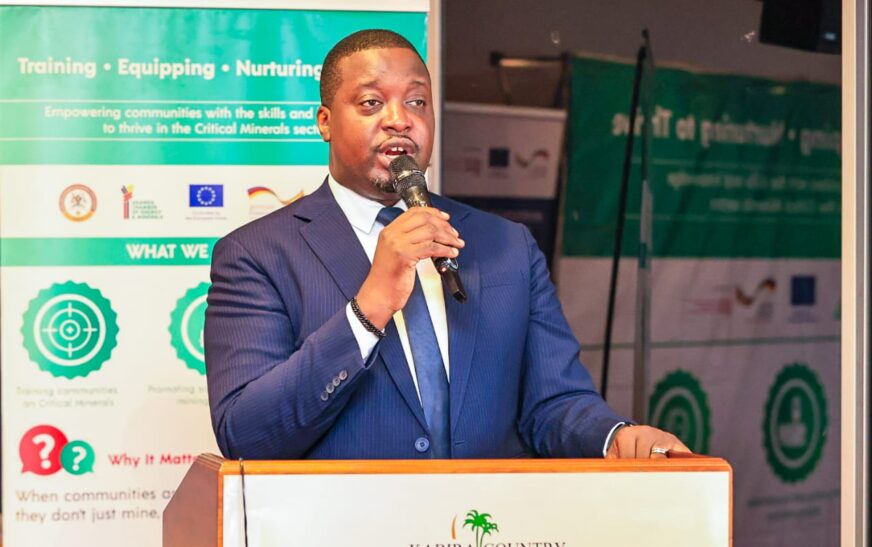
This was the central message at a high-level policy roundtable convened by the Uganda Chamber of Energy and Minerals (UCEM) at Kabira Country Club in Kampala.
The meeting under the TENT Grant Initiative (Training, Equipping and Nurturing to Thrive). Co-funded by the European Union through the Global Gateway Initiative and the German Government, and implemented by GIZ, through the Sustainable Development of the Mining Sector in Uganda (SDMU) programme and is overseen by the Uganda Chamber of Energy and Minerals (UCEM) under the guidance of the Ministry of Energy and Mineral Development (MEMD), brought together government officials, industry leaders, development partners, and policy experts to chart a new direction for the sector.
Uganda’s mining sector is endowed with significant mineral wealth, including an estimated 300 million tonnes of rare earth elements, alongside deposits of nickel, graphite, copper, and cobalt.
According to recent data, the sector contributed 2.2% to Uganda’s GDP in the 2022/2023 financial year, registering an impressive growth rate of 18% in 2021/2022.
Artisanal and Small-scale Mining (ASM) dominates the sector, accounting for approximately 90% of total mineral production. It employs about 60% of the mining workforce, translating to an estimated 600,000 people directly and over 2 million indirectly. Notably, women constitute nearly half of the ASM workforce, though many continue to earn low wages, averaging about $1.40 per day.
Meanwhile, large-scale mining operations are focused on key minerals such as heavy rare earth elements, graphite, gold, copper, and cobalt.
Uganda’s National Development Plan (NDP) IV identifies mineral development as a strategic driver in the country’s transition to an upper-middle-income economy. This is reinforced by the Mining and Minerals Act, 2022, which provides a legal framework to support mining-led industrialisation.
Despite Uganda’s rich deposits of gold, iron ore, tin, tungsten, tantalum, graphite, rare earth elements, phosphates, limestone, nickel, and cobalt, the mining and quarrying sector contributes just 2.2 per cent to GDP.
Government, however, is targeting a jump to 7.9 per cent by the 2029/30 financial year under the Fourth National Development Plan.
UCEM Chief Executive Officer Humphrey Asiimwe said the time for dialogue without action is over.

“Uganda has one of the most diversified mineral bases on the continent, but the sector’s economic impact remains minimal. This roundtable is about moving from talk to implementation agreeing on what must be done and ensuring it actually gets done,” he said.
Discussions zeroed in on persistent bottlenecks holding the sector back, particularly inefficiencies in licensing, weak institutional coordination, and delays in environmental approvals. Stakeholders noted that while policies exist on paper, implementation remains uneven.
Susan Nakanwagi, a consultant under the TENT initiative, warned that Uganda risks missing out on the global critical minerals boom unless it acts quickly.
“The issue is not potential—it is execution. If Uganda is to compete in a global market projected to exceed $770 billion by 2040, we must strengthen governance, separate regulatory and promotional roles, and design policies that reflect the realities of different mineral value chains,” she said.
For Henry Mukasa, project manager of the Sustainable Development of the Mining Sector programme, the focus is already shifting toward practical solutions.
“With €6,250,000 being invested in governance reforms, formalisation of artisanal miners, and value addition, we are addressing the structural weaknesses that have held the sector back. The goal is to position Uganda as a credible and competitive destination for responsible mining investment,” Mukasa said.
Participants also raised concerns about revenue leakages, arguing that without stronger oversight, the country will continue to lose out on its mineral wealth.
“Raising taxes alone will not fix the problem. Without the capacity to enforce compliance, close loopholes, and audit effectively, Uganda will continue to lose revenue. Institutional strength must come before tougher regulations,” one expert observed.
The roundtable is expected to feed into ongoing policy reforms, with stakeholders hopeful that a more coordinated and action-driven approach will finally unlock the sector’s full potential.