

The renewed outbreak of Ebola virus disease in Uganda and the Democratic Republic of Congo is once again testing how quickly global health commitments can translate into real action where it matters most on the ground.
Within 48 hours of confirming new cases, the United States Department of State moved to activate an interagency response framework in Washington, rolling out an emergency assistance package worth $13 million, approximately Shs 48 billion. While the funding is officially directed toward surveillance, laboratory capacity, risk communication, and clinical care, it also reflects a deeper shift in how outbreaks are being understood and managed.
What is unfolding is not just a health response, but a strategic deployment of influence, where epidemic control increasingly intersects with diplomacy, security, and global positioning.
The speed of the American response highlights an evolving doctrine in Washington, one that treats disease outbreaks as both humanitarian emergencies and potential threats to regional and global stability. Under this approach, health interventions are no longer isolated technical efforts but are embedded within foreign policy planning.
Funds are being channelled through both bilateral arrangements and multilateral systems, particularly the United Nations Office for the Coordination of Humanitarian Affairs, where pooled financing mechanisms are intended to accelerate disbursement and reduce bureaucratic delays that have historically slowed emergency responses.
Alongside financial mobilisation, technical and security agencies have been drawn into the response architecture. The Centers for Disease Control and Prevention is providing epidemiological expertise, while the Department of Homeland Security is supporting travel related precautions aimed at limiting cross border spread.
This broad institutional involvement signals a continued shift in global health thinking. Ebola is no longer viewed as a distant outbreak confined to rural Africa. It is increasingly framed as a cross border risk that demands coordination across health systems, migration controls, and security structures.
U.S. embassies across the region, including in Uganda, the Democratic Republic of Congo, Rwanda, and South Sudan, have also activated monitoring mechanisms to track the outbreak and maintain communication with American citizens. These diplomatic outposts are functioning as real time information nodes, feeding data back into central coordination systems in Washington.
Yet even as the response appears rapid and well resourced, public health experts caution against equating speed with effectiveness. The true measure of success will depend on whether resources reach frontline health facilities in time, whether surveillance systems can detect new infections early, and whether communities trust and comply with containment measures.

Both Uganda and the Democratic Republic of Congo face structural vulnerabilities that complicate outbreak control. High population mobility, porous borders, and gaps in rural healthcare infrastructure create conditions where infections can spread faster than detection systems can respond.
For this reason, regional coordination has emerged as a central pillar of the current strategy. U.S. officials are working with international partners through donor platforms in regional hubs to align interventions, minimise duplication, and address persistent gaps in surveillance and staffing.
Beyond the immediate response, American officials point to longer term investments made through bilateral health security programmes. These initiatives have focused on strengthening laboratory networks, training health workers, and improving early warning systems over the past several years.
Even so, Ebola outbreaks continue to reveal enduring weaknesses in global preparedness. Each resurgence underscores familiar challenges, including delayed reporting in remote areas, limited diagnostic reach, and the difficulty of sustaining funding once the urgency of a crisis fades.
The current response has also revived debate around humanitarian financing models. The reliance on pooled funds managed through OCHA reflects a preference for flexibility and speed. Supporters argue that this allows resources to be deployed where they are needed most without delay, while critics warn that such approaches may fall short in building resilient long term health systems.
At the policy level, the United States continues to frame its role as central to mobilising international action. However, the nature of that leadership appears to be evolving. Rather than acting alone, Washington is increasingly operating through coordination, financing leverage, and institutional partnerships.
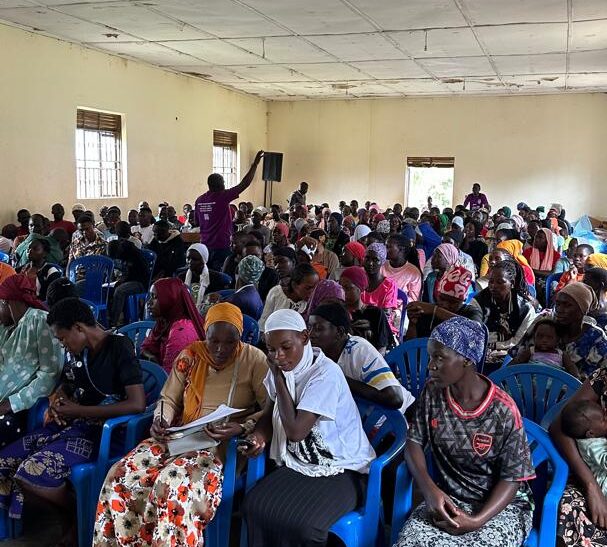
As the situation develops, attention is shifting from announcements in Washington to realities in affected communities. Health workers in rural districts across Uganda and eastern Congo will ultimately determine whether surveillance systems are responsive, whether isolation measures are effective, and whether public trust can be sustained.