
Family Medical Point has called for increased access to contraceptives, warning that limited access to family planning services is contributing to unwanted pregnancies, unsafe abortions and school dropouts among adolescent girls.
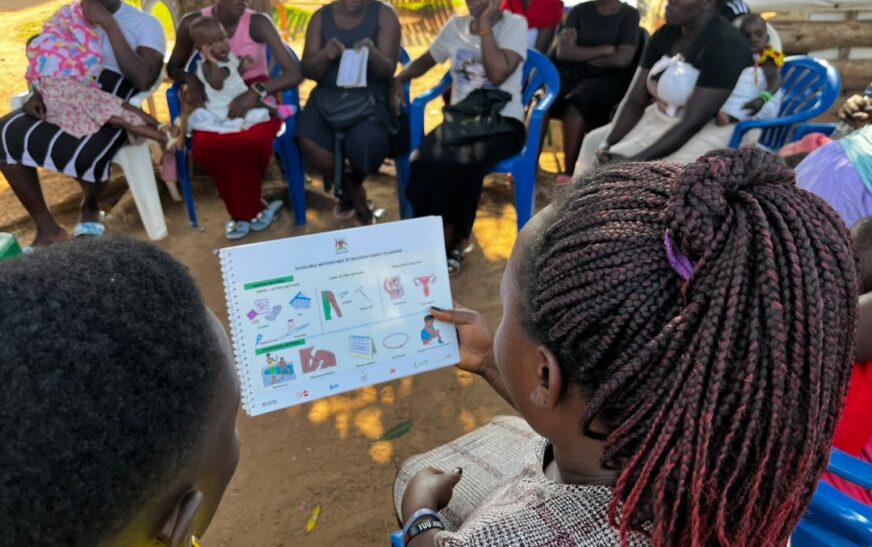
The call was made during activities to mark World Contraception Day at Nakiwogo and Kigungu landing sites in Entebbe.
Polyne Nabwire, head of programmes at Family Medical Point, said adolescents continue to face significant barriers to accessing contraceptives, partly because of restrictions surrounding the provision of family planning services to young people.
She said the restrictions have left many adolescent girls, particularly those from poor families, vulnerable to unintended pregnancies, forcing some to drop out of school.
“Men are often positioned as decision-makers who ‘allow’ or ‘deny’ contraceptive use, yet family planning is a shared responsibility, not permission-based,” Nabwire said.
She called on the government to remove barriers preventing adolescents from accessing contraception and other family planning services.
“We want the government to allow adolescents to access contraceptives and other forms of family planning to curb unsafe abortions and loss of lives,” she said.
Nabwire said limited access to contraception has also contributed to unsafe abortions, which she said have resulted in the loss of mothers at major landing sites in Entebbe and other communities.
According to the World Health Organisation, access to contraception in Uganda remains constrained by frequent stockouts in public health facilities, financial barriers in the private sector and social restrictions targeting young and unmarried people.

Modern contraceptive use among women of reproductive age in Uganda is estimated at between 30 and 33 per cent, while about 18.5 to 22 per cent still have an unmet need for family planning.
Teenage pregnancy also remains a major concern. About 23.5 per cent of girls aged 15 to 19 have begun childbearing, while modern contraceptive use remains low among adolescents.
Only about 22 per cent of married girls and 37 per cent of sexually active unmarried girls aged 15 to 19 use modern contraceptive methods.
Public health facilities also face challenges in providing youth-friendly reproductive health services, while some clinics reportedly decline to provide contraceptives to unmarried adolescents.
Unlike in some neighbouring countries where citizens largely depend on free public health services, many Ugandans rely on private clinics and pharmacies, where they have to pay out of pocket for contraceptives and other reproductive health services.
To address some of these challenges, the Ministry of Health has piloted programmes to train community health extension workers to provide long-acting reversible contraceptives, including implants, at community level.
Family Medical Point said expanding access to such services, particularly for adolescents and young people, would help reduce unintended pregnancies and unsafe abortions and keep girls in school.