
Fintech industry leaders have called for increased investment, stronger consumer protection and supportive regulation to enable Uganda’s digital financial sector to scale and contribute more significantly to economic transformation.
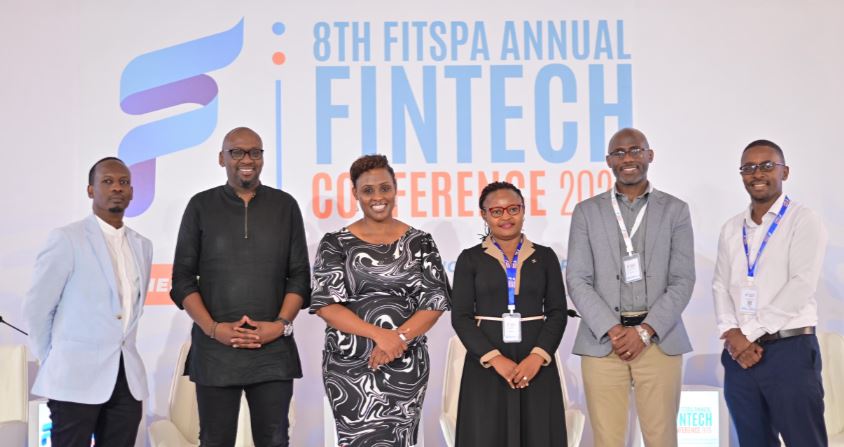
The call was made during the 8th FITSPA Annual Fintech Conference in Kampala, where industry players, regulators and technology entrepreneurs discussed the future of financial technology and its role in driving inclusive economic growth.
Ken Njoroge, founder, investor and technology entrepreneur and chief executive officer of PANI Africa, said the ability of a business to scale starts with its people, particularly its founders.
“The business doesn’t go where you don’t go first,” Njoroge said, urging founders to recognise when their businesses require different forms of leadership as they grow.
He said founders should be willing to step aside when necessary and hold themselves and their teams to higher standards.
“It’s possible for me to remove myself when the business needs a different style of leadership or different energy. It also gives me the moral high ground to raise the standard for everybody else and to remove them if it doesn’t work for the mission. The mission is greater than all of us,” Njoroge said.
Njoroge also challenged regulators and policymakers to create mechanisms that would direct more African capital towards businesses in the “missing middle”.
He said Africa does not lack capital, noting that the continent has about $4 trillion in assets held in pension funds, real estate and other investments.
“What I think regulators need to do is intervene very specifically to change the law to direct that capital into the missing middle because that missing middle employs 70 per cent of the population and contributes half of the GDP to the continent,” he said.
Njoroge said it was unsustainable for businesses that employ millions of Africans to depend largely on foreign capital.
“They’re welcome, but we need to be financing. The gap now is about $500 billion in many estimates. It’s got to come from pension funds and all of that. We need to create that capital pool for our continent,” he said.
He said his current startup is focused on building infrastructure for mentoring and directing capital towards businesses in the missing middle.
Talent and capital
Vincent Tumwijukye, board chairman of FITSPA and chief executive officer of FutureLink Technologies, said Uganda has significant opportunities to use fintech innovation to transform the economy.
He identified talent, high-risk capital and informed media as three critical elements required to drive economic transformation.
“Talent is about our people, our young people who are coming from universities. We have collaboration with universities, reviewing curricula to see that these curricula speak to the needs of the industry,” Tumwijukye said.
He said access to high-risk capital was equally important because innovative ideas could not have a meaningful impact without financing to scale them.
“High-risk capital means that you have innovation but you also have the capital to actually scale this innovation,” he said.
Tumwijukye also called for informed media coverage of the sector to help ordinary Ugandans understand the changes being brought by financial technology.
He said fintech companies were not merely developing new features but were changing traditional business models and the way people access financial services.
“You are going to have people accessing financial services without ever walking into the banking hall. And this is already happening,” he said.
He pointed to mobile applications that allow users to open accounts, save and access credit without visiting traditional banks.
Tumwijukye said Uganda had made progress in establishing a regulatory framework through the National Payment Systems Act and the Financial Intelligence Authority’s mandate on anti-money laundering.
However, he said greater attention was needed on data protection to strengthen public confidence in digital financial services.Data protection is a key element that is able to drive trust.
Industry tackles fraud
Tumwijukye said fintech players and regulators were also working together to combat fraud through the Anti-Fraud Consortium. The consortium brings together the Bank of Uganda, Financial Intelligence Authority, Uganda Bankers’ Association, Payment Service Providers Association and other stakeholders.
He said the initiative would allow people who commit fraud to be listed on a shared platform, making it harder for them to move from one financial service provider to another.
“It’s going to be very risky business very soon for fraudsters, because you defraud one entity and you are basically blacklisted in the entire ecosystem,” Tumwijukye said.
Fintechs reach underserved Ugandans

Dennis Musinguzi, chief executive officer of Furaha Uganda, a fintech operating in the education sector, said his company provides school-fees loans to parents and schools.
The company has developed a platform connected to telecom operators MTN Uganda and Airtel, as well as school payment aggregators including SchoolPay Uganda and PegPay Uganda.
“We’ve integrated with banks to provide the funding that we lend out to parents to pay school fees. The company had served more than 100,000 children in 2026 through its platform, helping keep them in school,” Musinguzi said.
Musinguzi said the FITSPA conference was important because it brings together fintech players and shines a light on the practical impact of technology-driven financial services.
“It also allows other partners to look at what can be done in this industry to make a difference. Uganda had established a strong regulatory framework involving the National Payment Systems Act, Bank of Uganda and the Ministry of Finance, Planning and Economic Development,” he said.
Musinguzi said FITSPA had also created a platform through which fintech companies could develop solutions to local problems.
“They’ve built a platform, a foundation where fintechs can come in, build solutions that are addressing real Ugandan problems, built by Ugandans that understand what the market needs and how to solve those problems,” he said.
Government warns on consumer protection
Rachel Vanessa Muhwezi, assistant commissioner for Microfinance Regulation at the Ministry of Finance, Planning and Economic Development, said government was supporting fintechs as part of the country’s broader digital transformation agenda.
She said the ministry regulates fintechs, microfinance institutions, savings and credit cooperatives and money-lending entities that use digital platforms to provide financial services.
“We look forward to seeing that the fintechs bring solutions into our digital economy, but we are asking them to uphold consumer protection frameworks,” Muhwezi said.
She said digital financial products must be trusted and delivered with integrity.Fintechs were increasingly reaching people who remain underserved by commercial banks, including people using basic feature phones.
“The rails that we have, that loan that you can be able to get on your feature phone, which is not a smartphone, is offered by a fintech. It is offered by a SACCO using a digital rail,” she said.
She said government supported fintechs because they provide alternatives for people who cannot access credit through traditional banks.
“At the convenience of your home, you can get a loan from a feature phone, from a smartphone. You can have a payment done. Most of us now, we cannot even walk into the banking halls because you need to pay a water bill,” Muhwezi said.
However, she warned fintechs against predatory practices, particularly those that could emerge from the use of artificial intelligence.
“We call upon them to uphold consumer protection, to protect their consumers, to avoid any predatory practice that can be done using AI. What we have in financial services, what we hold, is trust. If trust is broken, then we cannot serve those individuals that we are preparing solutions for,” she said.
Airtel seeks wider access
Japheth Aritho, managing director of Airtel Money Uganda, said telecommunications companies had spent more than a decade building infrastructure to expand access to financial services through mobile money.
He said mobile money had enabled Ugandans to make payments, transfer money across the country and pay for services such as water and electricity.
Looking ahead, Aritho said the industry needed to focus on increasing savings, investment and access to digital devices.
“The economy will move when we push more savings into people’s accounts, enable every population to be able to save. When we fix the issue of investment, everyone should be able to participate in the investment,” he said.
Aritho said Airtel and other players were partnering with device manufacturers to make smartphones more affordable through instalment payment arrangements.
“As much as the phones are there in the market, they are not accessible. Customers could pay for devices daily, weekly or monthly in small installments,” he said.
Aritho said greater smartphone access would be necessary as fintech services become more sophisticated.
“There are things you can do with a feature phone, there are things you cannot do with a feature phone,” he said, citing satellite-to-mobile services as an example of technology requiring smartphones.