
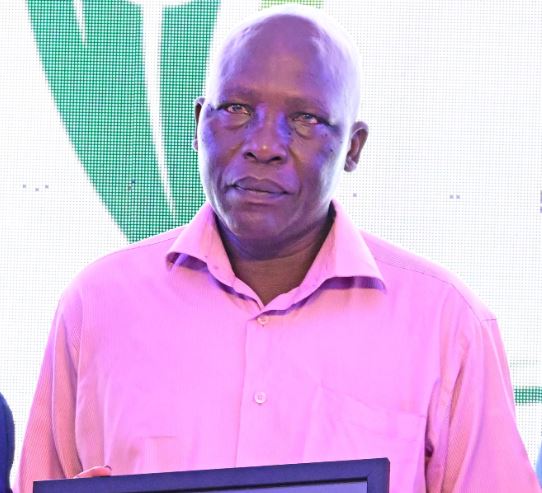
The Best Farmers Awards have become one of Uganda’s most influential platforms for recognising excellence in agriculture, celebrating farmers who are driving innovation, creating jobs and transforming their communities.
Through the initiative, dfcu Bank, in partnership with Vision Group and other partners, has gone beyond recognising success to supporting farmers through access to finance, knowledge-sharing opportunities, mentorship and exposure visits to the Netherlands.
For Zubair Mukaaya, a poultry farmer whose enterprise now produces more than 10,000 chickens every week, winning the Best Farmers Award was both a personal milestone and a validation of years spent building a business. The recognition came with a study visit to the Netherlands, where he gained fresh perspectives on energy efficiency, farm management and sustainable agricultural practices that he now hopes to adapt in Uganda.
We sat down with him to discuss his farming journey, the lessons he brought back from the Netherlands and his plans for the future of poultry farming in Uganda.
Q1: Tell us about your farming journey. What inspired you to venture into agriculture, and how did the business evolve into what it is today?
Zubair: Agriculture has always been something I felt deeply connected to. I started out with local chickens and gradually expanded into the Kroiler breed as I began to understand the commercial opportunities within the poultry sector.
Over time, the business continued to grow. What began as a relatively small enterprise evolved into a much larger operation that now produces more than 10,000 chickens every week. One of the things that encouraged me most was seeing the impact the farm had on people around me. Every delivery created opportunities not only for my business but also for other farmers, traders and households. By 2015, I had started mentoring aspiring farmers from my own farm because I realised that sharing knowledge was just as important as growing production.
Q2: The Best Farmers Awards recognise excellence, innovation and impact. What do you believe set your farm apart and contributed to your recognition?
Zubair: Our biggest strength is the model we have developed around outgrowers and aggregation. We do not operate in isolation. We work with a network of trained farmers who bring their eggs to our facility. We hatch them and nurture the birds alongside our own production until they are ready for market.
That approach allows us to produce at scale while helping other farmers participate in the poultry value chain.
Q3: What did being named a Best Farmers Awards winner mean to you personally and professionally?
Zubair: Winning the award was incredibly rewarding. As farmers, we invest years of hard work, often behind the scenes, so receiving that level of recognition was both motivating and validating.
Professionally, the impact was immediate. More buyers became interested in our products, more aspiring farmers wanted to train with us, and the visibility of the business increased significantly. The award also gave us renewed confidence in our plans for expansion. We are now working towards doubling production from 10,000 to 20,000 chickens per week, and the recognition reinforced our belief that this goal is achievable.
Q4: Access to finance remains a challenge for many agricultural enterprises in Uganda. How has financing supported your growth journey?
Zubair: Access to appropriate financing has been critical to our growth. Poultry farming requires constant investment in feed, equipment, infrastructure and working capital. When production volumes increase, the need for financing grows alongside them.
The ability to access structured agricultural financing has allowed us to maintain consistent production, invest in improvements and manage day-to-day operations more efficiently. Without that kind of support, scaling a business of this size would be much more difficult.

Q5: One of the highlights of the Best Farmers Awards is the study visit to the Netherlands. Before travelling, what were you hoping to learn?
Zubair: I was particularly interested in seeing how advanced agricultural systems operate. I wanted to learn about farm management, large-scale production systems and the technologies that help agricultural businesses remain competitive.
I was also curious about how farms and factories manage their energy needs. In Uganda, energy is a major cost for many businesses, so I wanted to understand how leading agricultural enterprises are dealing with that challenge.
Q6: During the visit, what impressed you most?
Zubair: What stood out immediately was the practical use of solar energy across many agricultural and industrial facilities. It was not treated as something experimental or optional. It was integrated into operations in a very deliberate way.
Q7: How do you plan to share the knowledge you gained with other farmers?
Zubair: Knowledge-sharing has always been part of what we do. Young people, aspiring farmers and entrepreneurs regularly visit the farm to learn about poultry production.
The lessons I gained from the Netherlands, whether about efficiency, energy or farm management, are insights I intend to share widely with people who visit the farm.
Q10: Looking ahead, what opportunities in Uganda’s agricultural sector excite you most?
Zubair: Poultry farming continues to present enormous opportunities. Demand for poultry products is growing, and there is significant potential for farmers who are prepared to approach agriculture as a serious business.
At the same time, there are areas where support is needed. More affordable financing for productivity-enhancing investments, greater access to renewable energy solutions and practical training opportunities would help farmers grow faster and become more competitive.
Q11: As a Best Farmers Awards winner and ambassador for modern agriculture, what legacy do you hope to build over the next five to ten years?
Zubair: Of course, I want to grow the business and achieve our target of expanding production from 10,000 to 20,000 chickens per week. But beyond the numbers, I want to be remembered for helping other farmers succeed.
If more young people can see poultry farming as a viable business opportunity, create employment and improve their livelihoods because of what they have learned from our experience, that would be a meaningful legacy. I want to demonstrate that agriculture, when managed professionally, can transform lives, communities and entire local economies.