
Introduction
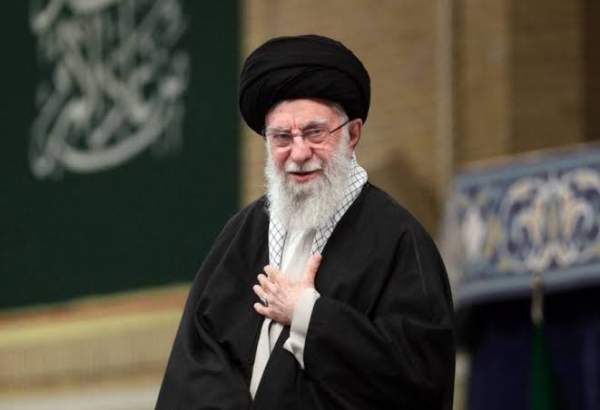
Imam Seyyed Ali Khamenei like all Iranians was born into interpenetrated Persian and Islamic civilisations.
Although Iran existed politically for 189 years (1789-1978) without independent national sovereignty Iranians naturally lived with Persian and Islamic civilizational sovereignty.
The Imam’s task was to maintain the integrity of Iran’s civilizational sovereignty.
Persian civilisation and poetry
As the Imam was a poet it is necessary to refer to the influence of traditional Persian poetry on humanity. The poetry of philosopher-poets like Jalal al-Din Rumi, Shaikh Saadi Shirazi, Hafez-e Shiraz, Nezami Ganjavi, Shah Nematollah Valli, and more draw their inspiration from the allegorical gardens, derived from the unique Persian Garden. Because of the internal force of its wisdom Persian poetry found a worldwide ear. The membrane of Persian civilisation became more porous. It was the earlier porousness that made it possible for Islam to penetrate the open-mindedness of Persia.
Paradise as ideology
The 2500-year-old concept of paradise or pardis (in Persian) functioned as the ideology of Persian empire-building in countries like Spain, Egypt, India and many more. Paradise represents eternal love of trees, flowers, water, and light. It symbolises the excellence of life within a civilisation. Persian poetry bequeathed the word paradise to, at least, eight languages.
The Imam was sensitive to the sovereignty of Persian poetry.
The influence of the Persian Garden
The Persian Garden inspired the development of geometry, art, sculpture, architecture, literature, philosophy, identity, culture, music, perfume, carpet, pool, landscaping, urban planning, green space, herbarium, human-nature interaction, pottery, belief, symbolism, irrigation system, diplomacy – to mention only some of them.
Iranian minds reflect the national consciousness of this sovereignty, rooted in history.
Iran has hundreds of Persian Gardens, nine of which are inscribed on the UNESCO Heritage List.
Iran’s cultural power
Iran relies on its cultural power to assert its civilizational sovereignty through its perennial Persian poetry and cultural assets.
Iran is already a master of civilizational sovereignty because of its centuries-old culture of various kinds. The culture is embedded in its autonomous Persian and Islamic civilisations, within which is rooted belief.
Muslims consider themselves as a supra-national world community of believers who respect diversity and build unity (ummah).
Re-globalization through geo-economics
The present globalized world in the image of USA imperialism is being re-globalized by the Global South countries through new geo-economics by retaining control of raw minerals, beneficiating them into consumer goods, controlling secret technologies, and selling commodities on competitive marketing merits. Iran is using the Strait of Hormuz as a strategic node in global trade route to alter economic relations in its favour and in that of the Global South.
Unity in civilizational diversity
Civilizational sovereignty is beyond the reach of cultural imperialism, in spite of USA’s media overreach.
The UN system, in spite of its systemic bias in favour of USA hegemony allows space for public diplomacy, which Iran fills with its cultural assets. It asserts its civilizational sovereignty from its own decolonial Persian-Islamic perspective.
UN and intergenerational partnership
In 2007 the UNGA adopted a supplement to the World Program of Youth. It proposed action on strengthening families, empowering young women, and intergenerational solidarity between the younger and older generations. It aimed to reduce the social vulnerability of the generations through social protection strategies.
In 2009 the meeting on “Family Policy in a Changing World” recommended partnerships and cooperation between the youth and older persons’ organizations and community-based active ageing centres.

The UN dealt with matters of intergenerational transmission of poverty and ways to prevent it by investing in children, youth, and strong families.
(UN Department of Economic and Social Affairs: Youth: Intergenerational Issues Factsheet – accessed 29 August 2026)
Culture and the struggle to defeat imperialism
The Cultural Congress of Havana, Cuba in 1968 was attended by 470 delegates from 70 countries. It marked a qualitative shift from discussing whether imperialism could be defeated to how to defeat imperialism. It was against the backdrop of the Viet Cong having militarily defeated USA imperialism in 1968 and the USA overextending its occupation for another seven years. The Viet Cong made the cultural struggle as natural as the armed struggle against imperialism.
The five commissions
The five commissions discussed holistically: Culture and National Independence; Integral Formation of Man; Responsibility of the Intellectual; Culture and Mass Media; and Artistic Creation and Scientific-Technical Work. The commissions produced the first international common cultural mandate.
The cultural mandate
The Congress aimed to produce ‘the new human being as developing through revolutionary practice, education, labour, and collective social transformation.’ This was to be an ongoing process.
It treated ‘culture…not merely an auxiliary to political and military struggle but a front of anti-imperialist struggle in its own right.’ It dealt with the unfinished history of Asia, Africa, and Latin America.
It advanced the foundational argument that authentic culture contains how a society produces and reproduces human life.
Its declaration concluded: ‘if the defeat of imperialism is the unavoidable prerequisite for the achievement of an authentic culture, the cultural fact par excellence for an underdeveloped country is the revolution.’
Shift from periphery to centre
It dealt with the diagnosis of how cultural imperialism operates; the praxis of culture within active liberation struggles; the theoretical formulations that emerged from the Congress; the vision of the new human being; and the role of the intellectual worker in the revolution. It extended the strategy of armed struggle into the ideological and cultural terrain. It viewed the armed struggle as an act of culture. The evidence from the guerrillas framed the entire Congress.
It called for the Third World to place itself at the global centre and not the periphery of history.
The decolonial future envisioned by the Congress made itself present at the Congress.
The Appeal of Havana translated the Congress’s conclusions into a programme of practical anti-imperialist action.
(The Cultural Congress of Havana 1968: Tricontinental: Institute for Social Research: August 2026)
Conclusion
About 58 years after the historic Cultural Congress of Havana, Iran can now enrich the Congress declaration with its own 47 years of experience at fighting USA’s military-economic-media war. Culture and education have always been central to Iran’s civilizational sovereignty.
The Imam succeeded in maintaining the integrity of Iran’s civilizational sovereignty.
___________________________________
The purpose of the series of articles on Imam Khamenei is to explain the development of his character as being immersed in the development of the history of Iran. The aim is simple truth from complex facts. It is the intersection of literary biography and scientific history.
By Haroon Aziz, South Africa