
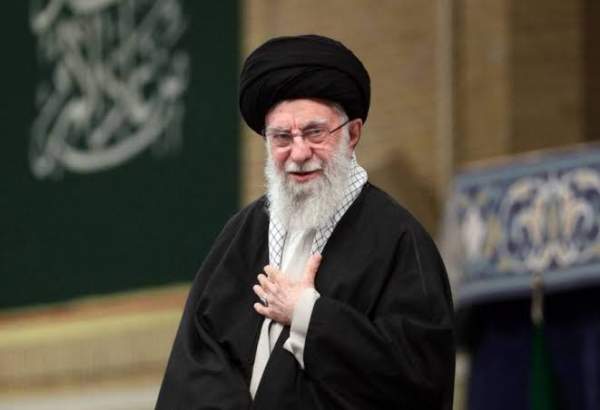
Imam Seyyed Ali Khamenei: implementing a true republican state
Preface
An effect of the 40-Day War on Iran is the increased acceptance that there is not one but many approaches to the struggle for decolonization. Previously, there was one dominant approach – that of the western secular left and liberal.
Iran’s resistance to neo-colonization
The Islamic Republic has authoritatively asserted its resistance to neo-colonization from within its own world outlook and culture. Its assertion is now an intellectual current in decolonial studies, journalism, and reportage. It has its own perspective on human issues. It interpenetrates cognition and emotion and holds faith as its constant. It has its own independent knowledge/wisdom model.
Product of Islamic and Persian civilizations
The Islamic Revolution is not a by-product of colonialism or Shah feudalism. It is the product of its own Islamic and Persian civilizations. It by-passed nationalism as ideology and is guided by the Islamic concept of ummah, which is a kind of supranational and internationalist force embedded in Muslim hearts. It is inherently unifying. It proved that Iranians could liberate themselves from an internal feudal and external imperial orders.
They have deep faith in their own belief-system that combines esoteric and exoteric worlds. They are free of foreign ideologies with sufficient traditional ideological resources to experiment with an original statecraft.
Imam Khomeini and the philosophy of governing
Historically, the task fell upon Imam Khomeini to conceptualise the philosophy of governing. It unfolded in practice as the Islamic Republic of Iran. It took him about 10 years, mostly during his 15-year exile (1964-1979), to conceptualise a novel idea. He shared it clandestinely with only a few trusted scholars. It proved to be a new political theory, foreign to tomes of existing theories, especially, in the west. Its decoloniality posed a threat to colonial theories, which had shaped the imperial order in its own image. Hence, imperialist irrational hatred for the Imam.
Imam Khomeini’s scope of studies
In his study of jurisprudence, philosophy, ethics, and mysticism political and social phenomena soared high. In the 1940s he refuted western secularism, which had widespread appeal in the 1920s in the monarchist Iranian Parliament with a hodgepodge of ‘bourgeois liberal reforms’ under the guise of the notorious ‘White Revolution’ (1963). It resulted in three days of nationwide riots that claimed 400 lives. In the same year he predicted the downfall of the Shah, which materialised 17 years later. It induced a turning point for Islamic perspective of politics. It crystallized the Imam’s idea of a new type of state.
The influence of Belgian colonialism
The Shah monarchy and constitution were modelled on those of Belgium, which had developed the colonial model in Congo for the new world imperial order. The Imam spurned the notion of a monarchical and western ‘liberal’ parliament.
Lessons from Pan-Africanism
Reactive behaviour of Pan-Africanism
Pan-Africanism was caught up in its own reactive anti-colonial, anti-racist, and anti-slavery ideology crying for reparations from unyielding colonial and imperial powers. Germany paid reparations only to Israel.
Armed struggle versus passive resistance
It became divided over armed struggle and passive resistance. It lost its focus on the sovereignty of its natural wealth. Those who used armed struggle failed to prepare for post-liberation nation states. They failed to develop multiple strategies to govern as sovereign nations. Ghana over-relied on its own raw extractive cocoa harvest; Zambia on copper; and Egypt on cotton. Overreliance on a single metal or crop served as a pivot to neo-colonialism and neo-colonial ‘liberal democracy’ as Cambridge University and the British Foreign Office had imagined for them – steeped in inculturation and acculturation.
Inculturation and acculturation
Inculturation is an insidious colonial process in which colonial ideas and practice adapt to local indigenous system, with its core colonial ideas intact.
Acculturation is another insidious colonial process in which foreign and local cultural and psychological phenomena collide. But the local indigenous system finally adapts to foreign colonial ideas.
Both occur simultaneously and bear the birthmarks of colonial violence.
Trap of Eurocentrism
The neo-colonial states that followed seamlessly from colonialism were born entrapped in Eurocentrism with all its western political jargons that denied recognition of national civilizations and cultures. At best, they mimicked the Russo-centric USSR model. They practised inculturation and acculturation, which betrayed their inferiority and dependency complexes on a ‘superior’ Euro-culturation even though Europe and USA continued to plunder their sovereign natural wealth.
Pan-Africanist divisionism
One strain of Pan-Africanism accepted Lenin’s concept of the ‘native question’, which the Comintern in 1920 gave it a generalised Pan-Africanist twist but abandoned it in 1935 under the weight of new colonial realities. The paternalistic issue was how should the Eurocentric communist parties support anti-colonial struggles.
Congress of African Peoples
The Congress of African Peoples held in Accra in 1958 took decisions that proved to be more rhetorical than real material and military solidarity. Its decision to ‘pledge themselves to create a militia whose duty is to support the African peoples fighting for their independence’ proved to be a paper-pledge.

In 1960 Frantz Fanon, the ideologue of Pan-Africanism and socialism had written, ‘The greatest danger that threatens Africa is the absence of ideology’.
After the assassination of Patrice Lumumba he had written, ‘the UN is the legal card used by imperialist interests when the card of brute force has failed.’
Fanon’s support for armed struggle
In acknowledging colonialism as violence, Fanon argued against Gandhian non-violence because the armed struggle was not only necessary to overthrow colonialism but also it functioned as a cure for ‘colonial neurosis’ and inferiority complex. It made people fearless.
(Pan-Africanism History: Political figures from Africa and the Diaspora since 1787: Hakim Adi and Marika Sherwood: Routledge – Taylor & Francis: London and New York: 2003)
(Pan-Africanism & Communism: an interview with Prof. Hakim Adi: Salvage: 2 March 2018)
True republican state: no compromise on sovereignty & no to modern colonialism
Theory and implementation
Imam Khomeini created the theory of a unique and original republican state. Imam Khamenei implemented it creatively.
The two Imams stood in defiance of all the then known forms and substances of modern states originating from Eurocentrism. States like those of Russia, China, North Korea, Cuba, and Vietnam were amended to be centric to their own civilisations and cultures.
It is necessary to compare and contrast the Pan-Africanist state with the new Islamic republican state for their didactic values.
Merits of independent republicanism
Islamic Republicanism in comparison and contrast
The Islamic republican state was at its origin centric to Persian and Islamic civilizations and cultures. The new state practised transculturation, which recognised the equality of all cultures, especially, mind-cultures. Iran proudly determined its own physical, mental, and spiritual prospects.
Iran’s traditional cures for ongoing traumas
Although colonialism produces ongoing traumas in the oppressed Islamic culture had its own psychotherapies combined with religious/political education. They were so entrenched that colonialism failed to destroy their cultural system of psycho-social values.
Culture remained an ideological weapon of resistance in Iranian hands. It prevented their dehumanisation, depersonalization, and alienation. Iranian indigenous social structures continued to serve human needs. Its rural-based madrassah and hakimi health system continued to take care of their educational and medical needs.
Imperialism’s failure to corrupt the new Iranian leaders
Imperialism failed to make secret deals with the new uncompromising leaders as it had done with the leaders of the new parasitical comprador-nationalist bourgeoisies in many former colonies.
Iran’s public diplomacy and the blooming of a hundred flowers
Iran has about 102 embassies and 26 consulates and in some countries cultural consulates. Their works include public diplomacy in engagement with civil society formations. It widens the scope of political and economic diplomacy and engages with a wide spread of ideologies – transculturally. The engagement includes left-wing and liberal thinkers, academics, researchers, cultural groups, and inter-faith leaders.
One of the many examples of this type of engagement was the recent one held in mid-June 2026 at the Iranian Embassy in the Vatican. The theme was ‘Human Dignity and Human Rights in the Teachings of Imam Reza (AS)’. The participants were distinguished professors, researchers, and intellectuals in the fields of law, philosophy, theology, and the humanities (Tasnim News: 15 June 2026).
Multiple approaches to decolonisation
The Vatican event is evidence of the fact that there is not one but many approaches to the struggle for decolonization as democratic practice with ideological maturity.
Next article: Imam Seyyed Ali Khamenei: managing complexity and simplicity of life
The purpose of the series of articles on Imam Khamenei is to explain the development of his character as being immersed in the development of the history of Iran. The aim is simple truth from complex facts. It is the intersection of literary biography and scientific history.
By Haroon Aziz, South Africa