
Introduction
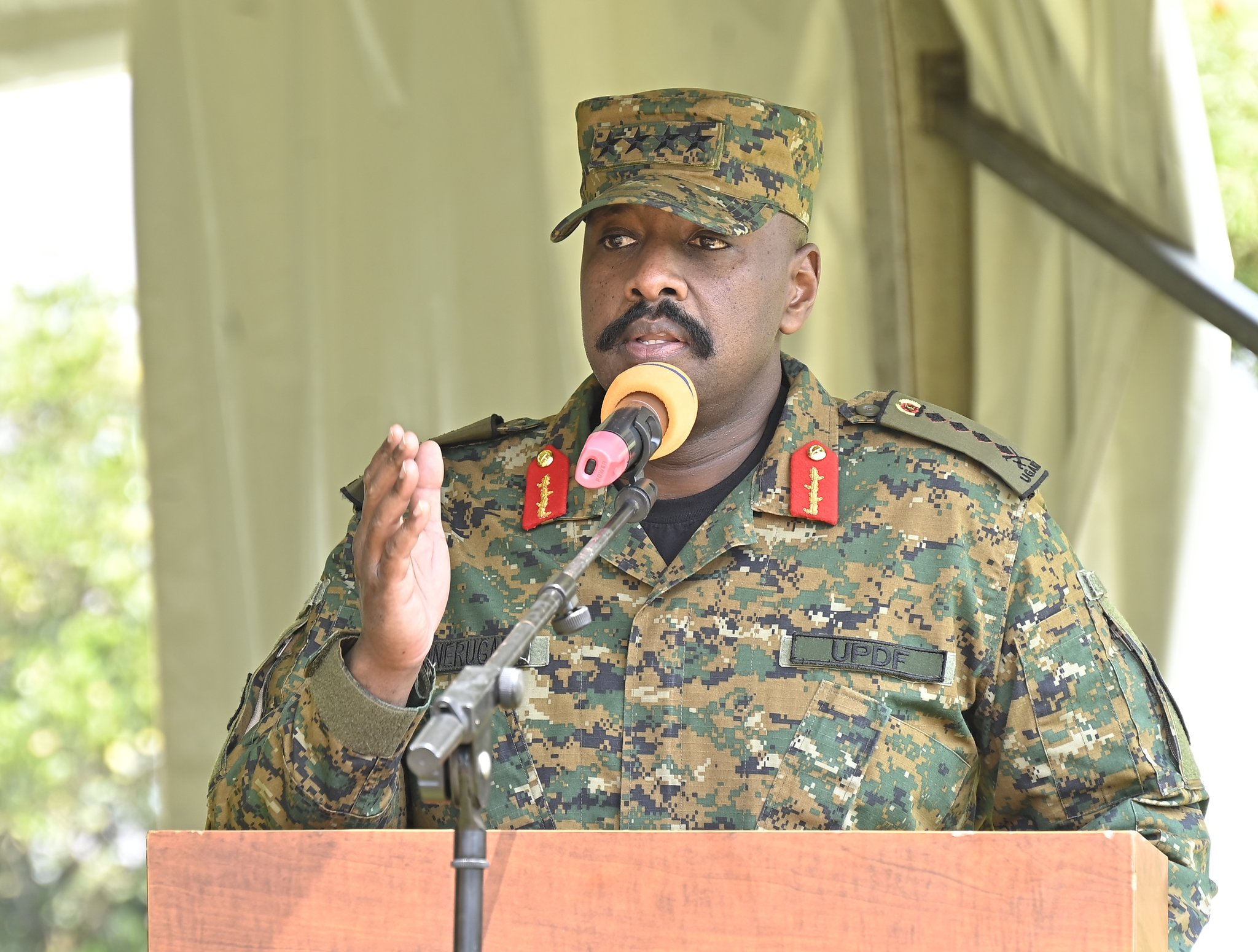
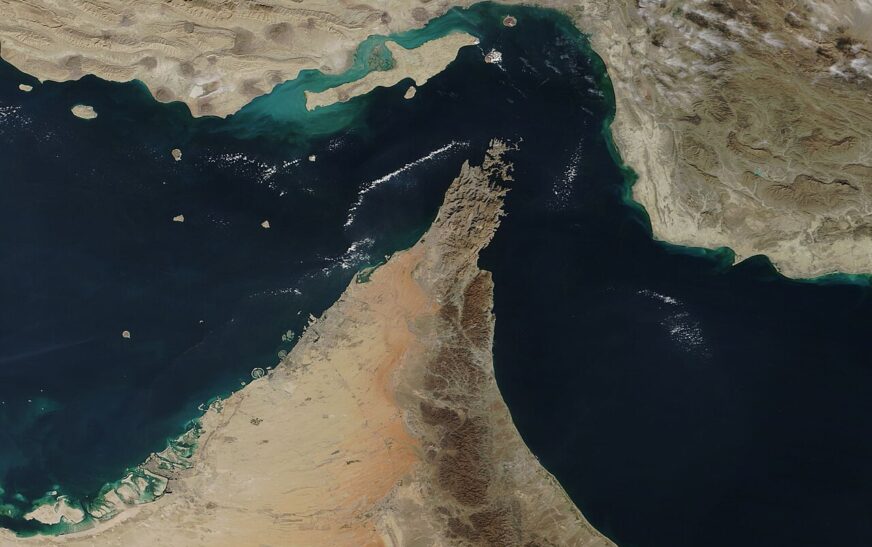
The Islamic Republic of Iran, under the decisive leadership of Imam Khamenei, is asserting its maritime sovereignty over the Strait of Hormuz. It is critical for the transport of diesel, which keeps the whole world economy functioning and producing real wealth. Iran’s assertion has disrupted that functionality and productivity.
As the USA has already lost its military war against Iran it seeks to extend it to economic war through sanctions. It aims to continue its military enforcement of the dying petrodollar as the central part of its foreign policy and national security.
The Imam’s decision needs an economic explanation that is historical.
Erosion of USA’s paper-money power
The perceived hegemonic power that the USA had was based, on the 75% of the monetary gold reserve that it held in 1945, which was increased to 80% before its Korean War (1950). The Bretton Woods Agreement (1944) destroyed all that power and it shifted to paper-money power. Until then the USA could dictate the terms of war and peace as its foreign policy for many decades while it enjoyed the freedom of maritime, land, and air trade corridors.
The taming of Arab Gulf states
The Gulf states were compelled to invest their incomes from surplus oil trade locked in recyclable USA treasury bonds, which they could not sell without severe penalties. While Arab monies support USA to balance its payments the Arabs have to borrow dollars to fund the non-oil sectors of their economies. They were prohibited from buying majority shareholdings in major USA industries. They were gold-chained to economic slavery but free to build glass towers.
Quadrupling of oil price
In 1974 Saudi Arabia and other Arab monarchies collaborated with the USA to quadruple the price of oil after the USA had already quadrupled the price of its grain. The extra 75% income from oil sales had to be invested in USA bonds, as a precondition.
Hence, the huge Arab investments in bonds and loans to USA banks, which then lent them money to build glass towers.
Degradation of paper-based economy
The USA now faces the real threat of its paper-based economy degrading from inflation to deflation to war-induced depression that is not only speeding up its own de-industrialisation but also pulling the whole world economy down. It is worsened by the boom in militarized AI bubble economy and digital neo-colonialism. Its financialised economy is like a glittering casino dependent on luck and chance like it was before the 1929 depression. There is a dichotomy between the financial system and the real economy of real good production. The banks have shirked their role in the formation of industrial capital, which the stock market has inherited.
Its hoped-for control of the Strait of Hormuz is critical to halt this trend. But it can’t.
Failure to destroy Islamic civilization
As the USA has failed to regain control of Iranian oil it explicitly aims to destroy Iran – civilization and all. In addition, it has seized Iraqi oil to recover wasted war costs on its invasion of Iraq.
Golden necklace of wars
USA crafted and curated its necklace of wars in Afghanistan, Iraq, Syria, Libya, Yemen, and Iran – all Muslim countries while the Gulf states felt ‘safe’ under USA ‘security’ tutelage. USA is choking on its own necklace. Iran is tightening the chokehold. On 11 March 2026 Iran changed its war strategy and its tactical principles of strikes, which engulfed the Gulf states and their USA military bases. Iran showed its preparedness to fight for another decade.
Shift in power relationships
The multi-dimensional shift in power relationships between Iran and USA pivots on the Strait of Hormuz in favour of Iran – with the greatest visibility in USA’s loss of control of diesel and the weakening of its petrodollar coercion. The political symbiosis of the monarchies and USA is fracturing and degrading into antibiosis though they continue to support USA military attacks on Iran and Israeli genocide in Palestine. As at 6 May 2026, there were four USA refuelling airplanes in the Emirates airport in readiness to support military attacks on Iran.
The monarchies are incurring huge losses in oil revenue that will result in their inability to service their loans from USA banks. Nor are they allowed to sell freely their ‘secure’ bonds – mainly blocked by Blackrock military investment company that controls the Pentagon budget.
Swap agreements
The USA treasury has offered the monarchies ‘swap agreement’ as a means to keep their investments locked in bonds because of the high increase in usurious interest rates. In terms of the ‘voluntary’ swap the treasury lends billions of dollars to them to be used only in their own currencies. This evades the crush of the USA financial system. For how long? Is this the postponement of the 1929 ‘great depression’? Will it not result in the deformation of world capitalism?
Biden-era debts

The treasury is still burdened with debts from the Biden-era that it borrowed to finance its wars in Muslim countries. The Fed lent to private banks at 0.1% wholesale, which they retailed at 2% or more. The Fed functioned as a recycling bin while Arab money was used to service USA debts (now valued at $41-trillion). The USA does not produce enough real wealth to service its annual interest of $1-trillion.
Locked in wars for profits
The USA has to keep itself locked in ongoing wars and military-industrial production to keep recyclable paper dollars as fictious GDP. The lock is so tight that the USA cannot loosen its power of debt leverage. This is a chokehold of its own making worse than the chokehold of the Strait of Hormuz. The banks are profiteering from trade in paper securities rather than from real industrial investment.
The war on Iran threatens the sell-off of USA securities that would bring down the prices of the securities, which are as fragile as the military ‘security’ it contractually signed with the tragic Arab monarchies.
Pentagon advice to President Trump
The Pentagon has already advised President Trump that it cannot win that war by military but by diplomatic means. But Trump takes his instructions from billionaire class that is heavily invested in the war industry. There is much more money to be made from illegal insider trading and cryptocurrencies, on the side – plodded by Trumpian vague and contradictory statements.
(Central Bank Swap Arrangements: Federal Reserve Bank of New York: accessed 25 October 2026)
No lessons learnt from Vietnam War
The USA has not learnt any lessons from the Vietnam War. It inherited the War from the French after the Viet Minh forces defeated the French in 1954 at the Battle of Dien Bien Phu. The USA continued the War until they, too, were defeated in 1968. They prolonged the War for another seven years by pouring 20-million gallons of toxic herbicides (Agent Orange) on 5-million acres of forest and 500000 acres of farmland land. It also dropped 346000 long tons of napalm bombs on civilian population and forests while the guerrillas were in underground tunnel base camps.
Increase in ground forces
The USA increased its ground forces from 16000 (1963-1965) to 485600 (1967), a year before its military defeat. Its final diplomatic defeat was in 1973-1975. It ended the USA’s capacity to mobilise ground forces. It resorted to creating and funding proxy forces like ISIS and Al Qaeda.
Abandonment of monetary gold standard
The War caused stagflation in 1972 and recession in 1973, which compelled the USA to abandon the gold standard and feel free to print paper dollars to fund regional wars, which condition still continues.
Costs of Vietnam War
The French, Japanese, and USA occupation of Vietnam lasted for 88 years (1887-1975). The cost of the War to USA was in current dollar value the equivalent of $1-trillion (old equivalent of $168-billion) plus current $22-billiom per year in war compensation to its veterans and their families.
(Kimberly Amadeo in The Balance: 20 September 2024)
Conclusion
- This is a brief economic explanation of Imam Khamenei’s decisive leadership on the Strait of Hormuz.
- The USA, because of its billionaire class, lacks the capability to renounce the barbarism of its amorphous ‘western civilization’.
International Quran News Agency
Next article: Imam Seyyed Ali Khamenei’s solidarity with revolutionary Yemenis
The purpose of the series of articles on Imam Khamenei is to explain the development of his character as being immersed in the development of the history of Iran. The aim is simple truth from complex facts. It is the intersection of literary biography and scientific history.
By Haroon Aziz, South Africa