

Strapline: About 1,875 foreigners have so far been registered, with 1,500 Alien Identification Cards ready for collection
The National Identification and Registration Authority (NIRA) has started issuing identification cards to legally resident foreign nationals in Uganda, introducing a new identification system that authorities say will make it easier for foreigners to access services while improving the government’s record of people living and working in the country.
The first Alien Identification Cards (AIDs) were issued in Kampala on Thursday, marking the next phase of a registration exercise that began on June 10, 2026.
NIRA spokesperson Osborn Mushabe said the authority was pleased to begin handing over the cards after completing the initial registration of foreign nationals.
“We kickstarted registration for aliens on June 10, 2026, and today we are glad to inform the general public that we are going to be issuing out our first Alien ID,” Mushabe said.
The cards are different from the National Identification Cards issued to Ugandan citizens, but NIRA says they will enable legally resident foreigners to access a range of services, including registering SIM cards, opening bank accounts and establishing businesses.
However, the cards do not confer citizenship rights.
Mushabe particularly sought to dispel concerns that issuing identity cards to foreigners could allow them to participate in Uganda’s elections.
“Aliens can access all the services. Like Ugandans, they can register SIM cards with the telecoms. They can register and get bank accounts. They can even start up businesses and so on, but they are not allowed to vote,” he said.
He urged foreign nationals to first regularise their stay in Uganda through the Directorate of Citizenship and Immigration Control (DCIC) before applying for an Alien ID.
The registration process therefore links immigration status with national identification, meaning foreigners must first obtain the appropriate legal residency documentation before being registered by NIRA.
NIRA registrar Claire Ollama said 1,875 foreign nationals had so far been registered, with about 1,500 Alien IDs ready for collection.
“You will collect your card at the place where we registered you from,” Ollama said.
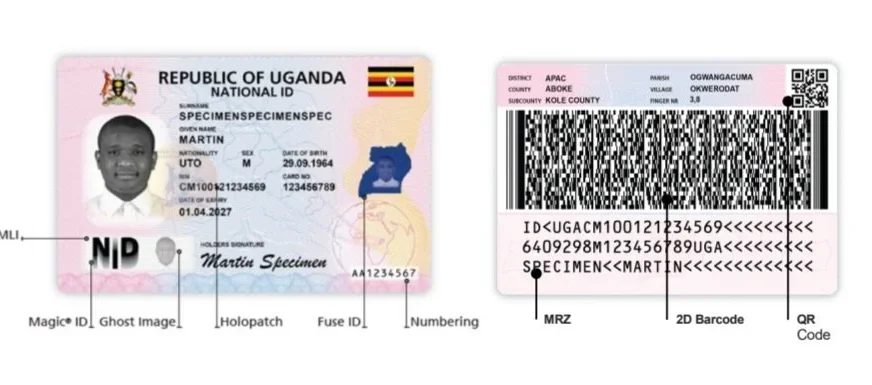
Unlike the National ID issued to Ugandan citizens, the Alien ID contains security features designed to distinguish foreigners from citizens.
Ollama said the card carries a photograph covered partly by a hologram, as well as a ghost image whose placement differs from that on a citizen’s National ID.
“For the citizen, the ghost image falls in Uganda, in the map of Uganda. For the foreigner, the image falls inside the global map,” she said.
The identification numbers also differ. Ugandan citizens are identified using a National Identification Number (NIN), while foreign nationals receive a separate identification number under the Alien ID system.

Another major difference is the validity of the cards.
While Uganda’s National IDs do not have expiry dates, Alien IDs are tied directly to the period of a foreigner’s legal stay in the country.
“Our cards (National IDs) do not have expiry and date of issue because these people are guests in Uganda. We put a date when their facility started, and we also put a date when their facility expires,” Ollama said.
“For example, if you’re on a work permit for two years, your Alien Card will be valid for two years.”
The system means that the validity of an Alien ID will change with a foreign national’s immigration status, providing authorities with a mechanism to keep identification records aligned with residency permits.
Ollama warned foreign nationals against ignoring the registration requirement, saying failure to obtain the card could eventually affect access to services.
“Without this card, ladies and gentlemen, if you’re a foreigner, very soon the service ecosystem will lock you out,” she said.
However, not every foreign national in Uganda is required to obtain an Alien ID under the new system.
Ollama said diplomats and their dependants are exempt from the registration, while refugees will continue using identification documents issued through the refugee registration system.
The Alien ID costs $100, with the fee payable to the government through the Uganda Revenue Authority (URA).
“The fee for the Alien Card is $100, payable to the Government of Uganda through URA. This payment covers for everybody, from child all the way to adult,” Ollama said.
The rollout marks an attempt by the government to bring the identification of legally resident foreigners into the country’s wider identification and service-delivery system.
NIRA says the exercise will not only give foreign nationals a recognised form of identification but also help government maintain a more accurate register of foreigners living and working in Uganda.
The cards, however, stop short of granting foreigners the political rights reserved for Ugandan citizens, particularly the right to vote.