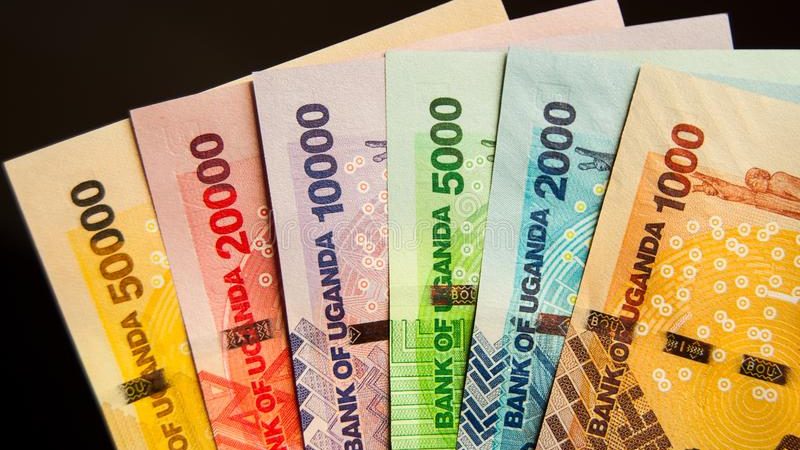

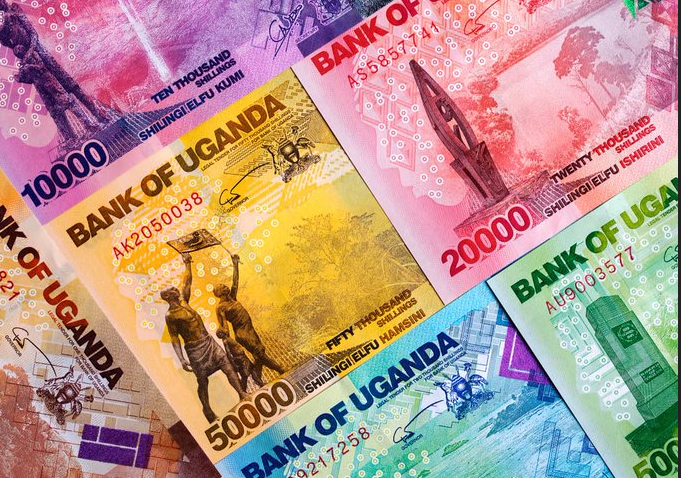
The Uganda shilling is expected to remain under pressure in the near term as renewed demand for the US dollar from offshore investors and large corporate importers weighs on the local currency.
The shilling had a volatile but broadly stable week, with intermittent foreign-currency inflows from commodity exporters, charities and other sources providing temporary support against persistent dollar demand.
The local unit opened the week at Shs3,930/3,940 against the dollar before strengthening to Shs3,895/3,905 as hard-currency demand remained subdued.
Healthy interbank and offshore dollar inflows ahead of the Treasury bond auction pushed the shilling to an intraday high of Shs3,890/3,900 on Tuesday. However, the gains were short-lived as renewed offshore demand reversed the appreciation, with the shilling closing the week at Shs3,925/3,935.
Richard Nsubuga, the head of trading at CIB Markets, Absa Bank Uganda, said the shilling has weakened by about 5.34 per cent since the beginning of September and 12.03 per cent over the past 12 months.
Nsubuga said the currency could face further pressure from dollar demand by offshore investors and large corporate importers, particularly companies in the energy, manufacturing and telecommunications sectors.
The depreciation pressure could also be compounded by high international oil prices, offshore portfolio adjustments and uncertainty surrounding the Middle East conflict.
However, inflows from government securities, commodity exports, charities and remittances, coupled with tight liquidity in the money markets, could periodically support the shilling and limit the extent of its decline.
“In the near term, the currency is expected to trade within the 3,880-4,000 range against the US dollar, with the balance of risks remaining tilted toward further weakness should offshore and corporate demand intensify,” Nsubuga said.
Liquidity tightens
Meanwhile, money-market conditions tightened towards the end of the week, with overnight funding rates rising from 9.42 per cent to 9.75 per cent early in the week before jumping to 11.50 per cent on Thursday.
The increase followed the implementation of the new 13.50 per cent cash reserve ratio, which requires commercial banks to hold a larger proportion of their deposits as reserves.
The higher reserve requirement reduced liquidity available to commercial banks, resulting in an adjustment in short-term interbank liquidity and funding costs.
Analysts expect liquidity conditions to remain relatively tight as banks adjust to the higher reserve requirement, potentially keeping interbank funding rates elevated and putting further upward pressure on government securities yields.
At the Treasury bond auction, the reopened two-year and 25-year bonds cleared at higher yields of 12 per cent and 16.25 per cent respectively, while the five-year bond yield was broadly unchanged at 13.74 per cent.
The newly issued 15-year benchmark bond cleared at 15.25 per cent, although only Shs89.4 billion in bids were accepted.
Overall, the auction recorded an acceptance rate of 86 per cent, with securities worth Shs1.2 trillion in face value accepted.
Demand was heavily concentrated in the 25-year bond, which accounted for Shs1.036 trillion of the total allocation.
Secondary-market activity remained subdued after the auction as investors adopted a cautious approach.
Kenya shilling stable
Across the border, the Kenya shilling remained broadly stable against the dollar, weakening marginally towards the end of the week as dollar demand increased.
The Kenyan currency opened at about KSh129.50 to the dollar on Monday, with balanced flows in the client and interbank markets keeping the exchange rate relatively stable.
Trading remained range-bound during the first half of the week as improved interbank liquidity allowed larger transactions to be absorbed with limited impact on the exchange rate.
However, corporate and interbank dollar demand increased from Wednesday, pushing the shilling to KSh129.45/55.
Month-end conversions by corporates and non-governmental organisations, together with remittance inflows, helped moderate the pressure.

The Kenyan currency is expected to remain broadly range-bound, supported by diaspora remittances, NGO inflows and adequate foreign-exchange reserves.
Oil prices diverge
On international markets, oil prices recorded divergent movements, with West Texas Intermediate (WTI) falling 1.1 per cent to $94.74 per barrel, while Brent crude rose 6 per cent to $106.37.
Prices initially declined after Saudi Arabia made progress in restarting its East-West pipeline and crude loadings recovered to about 5.6 million barrels per day, easing immediate supply concerns.
Brent later rallied sharply as disruptions to Persian Gulf exports persisted and uncertainty remained over negotiations to reopen the Strait of Hormuz.
The developments widened Brent’s premium over WTI from $4.56 to $11.63 per barrel, reflecting Brent’s greater exposure to global supply risks.
The prospect of a US diesel export ban also added volatility, pushing European diesel prices higher relative to US prices and raising concerns about refining incentives and future fuel supplies.
Market direction will depend on the Saudi pipeline restart, progress in US-Iran talks over the Strait of Hormuz and whether Washington proceeds with restrictions on diesel exports.
Gold falls
Gold prices fell about 2.4 per cent during the week to $4,273.97 an ounce, although the precious metal remains about 14 per cent higher than a year ago.
The decline was driven largely by a sharp rise in US 10-year real yields to 2.80 per cent, their highest closing level in about 18 years.
Higher real yields increase the opportunity cost of holding gold, which does not pay interest.
Hawkish comments from several US Federal Reserve officials and stronger-than-expected US economic data also strengthened expectations of further interest-rate increases, contributing to a 1.7 per cent decline in gold during Wednesday’s trading session.
Gold remained sensitive to oil-price movements, with higher energy costs increasing inflation concerns and expectations of tighter monetary policy.
Euro, sterling weaken
The euro and British pound also weakened against the dollar during the week as broad-based US dollar strength continued.
The euro fell 0.97 per cent against the dollar, from 1.1486 to 1.1375, while sterling declined 1.32 per cent, from 1.3395 to 1.3218.
The dollar was supported by resilient US economic data and hawkish comments from Federal Reserve officials, which reinforced expectations of further interest-rate increases.
Oil prices approaching $100 a barrel added pressure on European economies by raising inflation concerns while weighing on growth prospects.
Hawkish signals from the European Central Bank and market expectations of further rate increases provided some support to the euro but were insufficient to offset the dollar’s yield advantage and safe-haven demand.
Sterling underperformed the euro despite higher UK government bond yields and expectations of further Bank of England tightening.
Mixed UK economic data and uncertainty over whether the Bank of England will deliver the rate increases currently priced by markets weighed on the pound.
As a result, the euro-pound exchange rate rose 0.37 per cent to 0.8606.
Going forward, both currencies are expected to remain sensitive to US interest-rate expectations and energy prices, while ECB policy signals will remain important for the euro and confidence in the Bank of England’s tightening path will be a key driver for sterling.